article / March 23, 2026
DR Congo: How Savings Groups Transformed Dolly Mudongo’s Life and Livelihood
Dolly Mudongo, a mother of seven from Khoma village, transformed her life through participation in a Saving and Internal Lending Community (SILC) supported by the GAINS Tuya Kumpala project. Previously struggling with unstable income and limited resources, she gained access to savings and small loans that allowed her to grow her soap-making business. Within months, her earnings increased, enabling her to meet her family’s basic needs and improve their food security. Today, Dolly enjoys greater financial stability and looks to the future with confidence, illustrating the impact of community-based savings groups in empowering vulnerable households.

article / March 23, 2026
DR Congo: Small Plot, Big Change: How Jacqui Tshela Transformed Her Future Through Farming
This article tells the inspiring story of Jacqui Tshela, a young farmer in rural DR Congo who transformed her livelihood through improved agricultural practices learned in a Farmer Field School. After years of low yields and discouragement, she adopted new techniques and significantly increased her cassava production on a much smaller plot. Her success highlights how training, quality seeds, and community support can boost food security, restore hope, and empower vulnerable households.

article / March 11, 2026
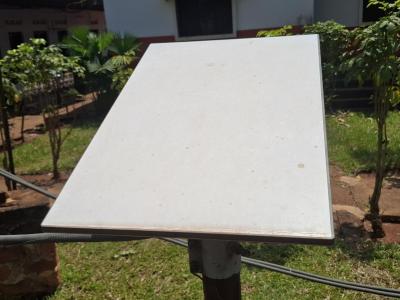
DR Congo: How Starlink is Transforming Connectivity and Improving Our Operations Impact
In FY26 Q1, World Vision in the Democratic Republic of the Congo transitioned from costly VSAT internet services to Starlink to improve connectivity across its field operations. The move is expected to save more annually, allowing resources to be redirected to programmes that support vulnerable children and communities. Beyond cost savings, the new system provides faster, more reliable internet in remote areas, enabling better data collection, quicker reporting, stronger collaboration, and more efficient programme delivery.
article / March 23, 2026
DR Congo: Kaungula Farmer Field School Reaps its First Harvest of Trust
In Kaungula, a group of farmers transformed their livelihoods through a Farmer Field School supported by the GAINS Tuya Kumpala program. Moving away from traditional, low-yield practices like bush burning, they adopted improved techniques, better seeds, and sustainable methods. Their first harvest—over 400 kg from a small plot—symbolized not just increased productivity but renewed confidence and collective success. The initiative is helping farmers boost food security, improve nutrition, and build more resilient, self-sustaining communities.

article / March 23, 2026
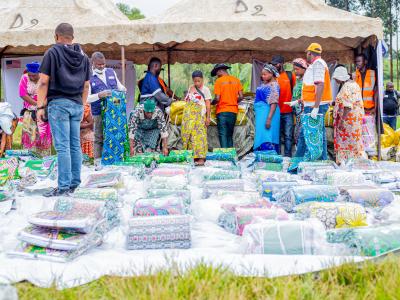
DR Congo: 622 Women Supported With Kits to Rebuild Their Lives and Those of Their Children
This article highlights how 622 women in North Kivu, DRC, received kits containing yards of cloth, tools, and essential items to rebuild their livelihoods and support their families. Through this initiative, women gain the means to start income-generating activities, empowering them economically while improving the well-being and stability of their children. The piece emphasises resilience, hope, and the transformative impact of targeted support for displaced and vulnerable communities.
article / February 5, 2026
DR Congo: How Falene Left Her Life As a Stone Breaker to Fully Dedicate Herself to her Studies
Falene’s life transforms as her family gains livelihoods and clean water, easing child labour pressures and giving her time to learn, play and hope again.

article / March 11, 2026
DR Congo: World Vision's Men Care Approach Is Transforming Male Roles For the Benefit of Families
In DRC, World Vision is helping transform traditional gender roles through its Men Care approach, supported by Aktion Deutschland Hilft (ADH). The programme trains community facilitators who lead discussions with fathers on positive parenting, shared household responsibilities, girls’ education, and non-violent family relationships. In its first phase, 660 men from Nyangezi and Nyantende participated. The initiative is already producing visible changes in families, with many men becoming more involved in domestic tasks, communication, and childcare. By encouraging fathers to play a more active and supportive role at home, World Vision aims to strengthen families, reduce domestic tensions, and create safer, more nurturing environments for children.

publication / March 19, 2026
Armenia Country Profile FY25
World Vision Armenia, active since 1988, delivers aid and development via six offices, supports 500,000 children, strengthens systems, drives policy, and builds resilient communities.

article / March 11, 2026
DR Congo: Community Mobilization And Supply Support Strengthen The Cholera Response In Kolwezi
A cholera outbreak that began in December 2025 in the Manika Health Zone of Kolwezi, Democratic Republic of Congo, has prompted a coordinated response from health authorities, community health workers, and humanitarian partners. With support from World Vision, essential medical supplies, water treatment materials, and sanitation equipment were provided to strengthen prevention, treatment, and community awareness efforts. Community health workers have played a central role in educating families about hygiene practices, water chlorination, and early referral of suspected cases. Through these combined efforts, thousands of residents in high-risk neighbourhoods have received clean water and cholera prevention messages. While the response is helping reduce transmission risks, health authorities warn that continued vigilance and community mobilisation remain essential due to ongoing population movement and the risk of the outbreak spreading to neighbouring areas.

article / March 12, 2026
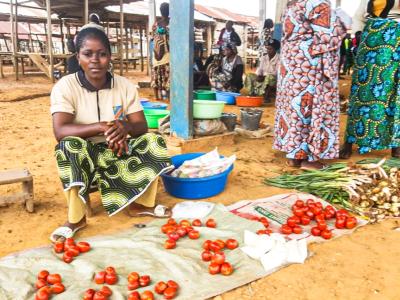
From Displacement to Determination: Neema Rebuilds Her Life Through Savings
In Mabalako, a small loan of about 105 US dollars from a Village Savings and Loan Association helped Neema, a 28-year-old mother displaced by violence, rebuild her life. After fleeing attacks by the Allied Democratic Forces with her husband and five daughters, the family struggled to survive through daily labor. Through the Empower project, implemented by World Vision with support from Irish Aid, Neema joined a savings group where she accessed small loans to start selling vegetables and tomatoes in the local market. The business allowed her to repay the credit, cover her children’s basic needs, and begin building a home with her husband. Neema’s story highlights how community savings groups are strengthening the economic resilience and self-reliance of conflict-affected families in eastern Democratic Republic of the Congo, offering hope in a region long affected by insecurity and poverty.