
publication / March 23, 2026
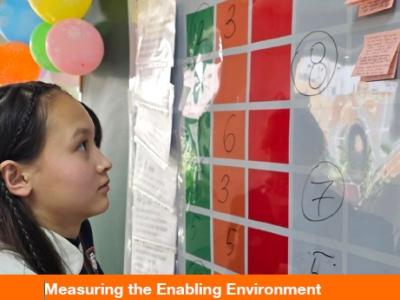
Measuring the Enabling Environment of Children's Groups
A Technical Report on research data from Cambodia and Mongolia, measuring the enabling environment of children's groups.
publication / March 12, 2026
2025 Child‑Friendly Impact Report
Children are at the heart of everything we do, their voices, dreams, and well-being drive our mission. We are excited to share that amid the ever-growing humanitarian needs we reached 16.4 Million children in the East Africa Region.

publication / March 23, 2026
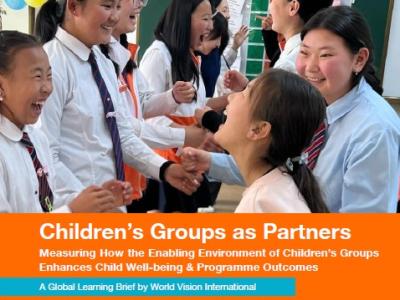
Children's Groups as Partners: Global Learning Brief
A Global Learning Brief on measuring how the enabling environments of children's groups enhances child well-being and programme outcomes.
article / February 12, 2026
A breath of hope for the children of Torodi: the impact of the "Child-Friendly Space"
In Torodi, Niger, where insecurity and displacement disrupt children’s lives, World Vision’s “Integrated Emergency & Recovery Assistance” project provides a safe Child-Friendly Space supporting learning, emotional recovery, and social cohesion for over 300 vulnerable children.

opinion / March 24, 2026
Cost of Treeless Farms Is Child Hunger: Kenya’s Case for Farmer Managed Natural Regeneration
FMNR offers a proven, farmer‑led way to restore trees, boost harvests, strengthen food security, and improve children’s nutrition

publication / March 16, 2026
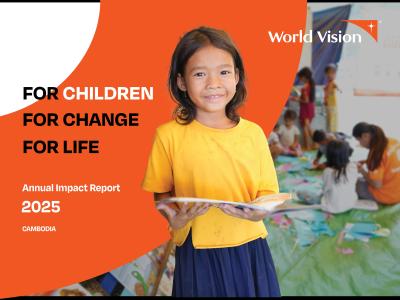
Annual Impact Report 2025
World Vision International in Cambodia’s 2025 Impact Report highlights a year of resilience, adaptation, and collective action amid significant humanitarian and development challenges. In a rapidly changing context shaped by sector‑wide disruptions and escalating border‑related conflict, World Vision Cambodia worked closely with government authorities, partners, communities, and donors to respond to urgent needs while sustaining long‑term development efforts. In 2025, World Vision Cambodia reached 5.4 million people, including 3.1 million children, nearly one third of Cambodia’s population. Humanitarian response remained a critical priority, supporting over 144,000 displaced people across 100 displacement sites, including children and people with disabilities, through life‑saving assistance such as water, sanitation, food and non‑food items, cash assistance, education, health and nutrition services, protection, and psychosocial support. Beyond emergency response, progress was achieved across education, child protection, WASH, nutrition, livelihoods, climate action, social accountability, and inclusive programming. The year also marked 55 years of World Vision’s long‑term commitment in Cambodia, reflecting sustained partnership and a shared vision for every child to experience life in all its fullness.
article / March 18, 2026
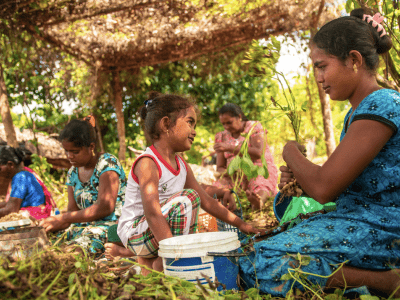
Visible and Undeniable: Validating Women’s Leadership in Rural South Asia through Natural Farming Research
How does natural farming dismantle gender barriers? This DFAT-funded study uses the "River of Life" tool to reveal how women in South Asia are moving from the margins to become primary decision-makers, overcoming the global polycrisis through localized leadership.
opinion / March 19, 2026
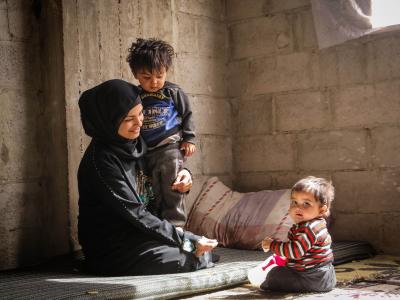
Beyond organisational structures: Why trust is central to child-focused humanitarian action in Syria
Nokuthula S. Khumalo, Technical Director Global Humanitarian Surge, highlights that in prolonged crises like Syria, it is not organisational charts that protect children, but trust. As humanitarian systems shift under funding pressure and political change, Thula reflects on how internal instability shows up in delayed care, weakened safeguarding, and broken continuity for children.
Opening offices is quick; earning staff confidence after years of uncertainty is not. Thula emphasises that listening, presence and honest communication matter more than procedural fixes when certainty is impossible.
Fourteen years into the Syria crisis, if children are to experience continuity, safety, and care during humanitarian transitions, then staff stability and trust must be funded as deliberately as security, supply chains or monitoring systems. Trusted frontline teams are the backbone of safe, child-focused action.
publication / March 19, 2026
Country profile Bosnia and Herzegovina FY25
World Vision has been working in Bosnia and Herzegovina (BiH) since 1994, first providing relief to a war-torn country and then working on community development. For over three decades, we provided sustainable livelihoods to the disadvantaged and needy, improved quality of education, and empowered families and communities to seek access to their rights. Child protection and participation are at the core of our work on all levels. WV BiH engages with children and families empowering them to engage in decision-making processes, as active seekers of services they are entitled to. We collaborate with decision-makers and service providers to improve child welfare systems and advocate for long term system-level solution that have the best interest of the child in focus.
