
publication / March 9, 2026
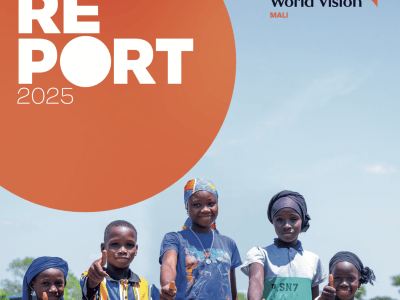
World Vision Mali 2025 Annual Report
World Vision Mali’s 2025 Annual Report highlights key achievements improving children’s lives through education, WASH, nutrition and humanitarian assistance.
article / March 3, 2026
Donor Generosity Saves Preterm Babies at Zabzugu Hospital
New life‑saving equipment from donor generosity and World Vision Ghana transformed care at Zabzugu District Hospital, giving over 120 preterm babies a chance to survive and restoring hope to families and the community.

press release / March 8, 2026
The drought–conflict reality for women and girls in Sudan, South Sudan and Somalia
International Women’s Day (IWD) 2026 calls for “Rights. Justice. Action. For ALL Women and Girls.” (United Nations). In Sudan, South Sudan and Somalia, these words resonate in contexts where drought and conflict collide - driving displacement, hunger, and protection risks while stretching already fragile services for women and girls. As the Inter-Agency Working Group (IAWG), we issue this joint call to recognise and respond to the compounded realities facing women and girls across these crises.
publication / March 12, 2026
Country Profile - Syria Response 2025
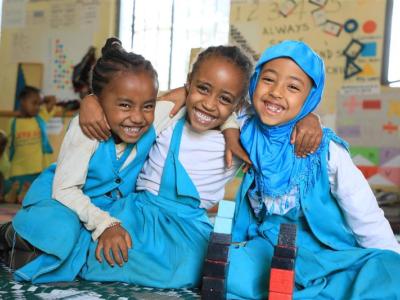
World Vision Syria Response (WVSR) continues to address the ongoing humanitarian crisis in Syria, where 16.7 million people, including 7.4 million children, require assistance. In FY2025, WVSR supported over 4.2 million individuals across Syria, Jordan, and Türkiye through programs in health, education, WASH, child protection, and livelihoods.

publication / March 12, 2026
2025 Child‑Friendly Impact Report
Children are at the heart of everything we do, their voices, dreams, and well-being drive our mission. We are excited to share that amid the ever-growing humanitarian needs we reached 16.4 Million children in the East Africa Region.

publication / March 9, 2026
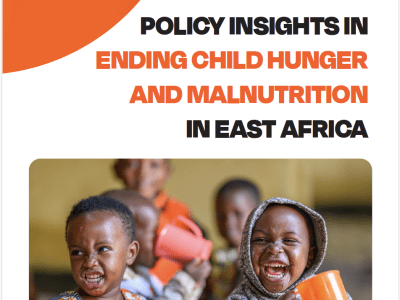
Policy Insights in Ending Child Hunger and Malnutrition
This policy brief introduces the ENOUGH Campaign in East Africa and invites you to be part of a practical response rooted in bold hope to end child hunger and malnutrition. It explains the challenge clearly, highlights what is working, and sets out actions that governments, donors, businesses, civil society, communities and friends of children can take together. The goal is simple and urgent: to make sure every child has ENOUGH of the right food to grow well, learn in school and thrive.
publication / March 12, 2026
Lebanon Response Sitrep 2026 #3
The escalation of hostilities in Lebanon is intense and rapidly expanding, resulting in nearly 820,000 forcibly displaced people - more than 200,000 of them children - in less than two weeks. Evacuation orders are expanding, with the country to the south launching the ‘South of Zahrani River’ initiative. Evacuation orders now encompass the entire region south of the Litani River, triggering waves of mass displacement as well as repeated displacement among already vulnerable families.
In several Christian-majority towns in the South, residents initially resisted leaving their homes, but were ultimately evacuated under the escort of UNIFIL for civilian protection. Hostilities are increasingly affecting areas beyond the ‘traditional’ frontline zones, a troubling trend that points to a more aggressive escalation than that of 2024. Recent airstrikes hit the neighborhoods of Haret Saida, Tyre, Aramoun, Ramlet El Bayda, areas deemed safer, in one case targeting a car nearby displaced families staying in tents. Targeting of central Beirut is new - with strikes on hotels and residential buildings that inevidably affect civilians in the surrounding areas. An estimated have been killed, with 81 children killed since March 1. UNICEF estimates that 10 children per day are killed.
Lebanon’s Ministry of Social Affairs reports 822,600 internally displaced people self-registered on the Government’s digital platform, indicating that overall displacement is significantly higher than that captured through collective shelter reporting. In addition, almost 84,000 Syrians and more than 8,000 Lebanese have crossed into Syria since 2 March.
Violations to International Humanitarian Law continue, with frontline responders at great risk. To date, 14 paramedics were killed, including one member of the Lebanese Red Cross, underscoring the growing risks faced by emergency personnel.
opinion / March 6, 2026
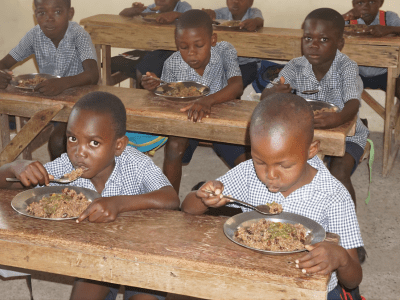
Why School Meals Accountability Must Define the Future of Education and Social Protection
Why School Meals Accountability Must Define the Future of Education and Social Protection
publication / March 4, 2026
Lebanon Response Sitrep 2026 #1
The current escalation follows prolonged instability and military activity despite the 27 November 2024 cessation of hostilities. Since the ceasefire came into effect, more than 10,000 air and ground violations have been recorded, resulting in at least 335 people killed and 973 injured as of 5 January 2026. Reported incidents have included airspace incursions, cross-border fire, and military activity in Baalbek, Hermel, and southern areas, alongside the continued presence of foreign military forces in five border villages. Prior to the renewed escalation in March 2026, an estimated 62,000 to 90,000 people remained internally displaced from earlier conflicts, underscoring the protracted nature of the crisis and the heightened humanitarian vulnerability across affected regions.
Over the weekend, regional tensions escalated following developments involving the United States and Iran, with hostilities expanding into the country to the south of Lebanon and Lebanon on 2nd of March. Airstrikes were reported across multiple areas, including the southern suburbs of Beirut, Bekaa, Baalbek-Hermel, and South Lebanon. According to Disaster Risk Management (DRM) Unit sources, an estimated more than 81,791 internally displaced persons (IDPs) including 9,000 children, have been recorded thus far, primarily in Beirut & Mount Lebanon (BML), Bekaa, Baalbek, and southern governorates. So far, over 60 people have been reported killed and at least 154 injured, with figures continuing to evolve. Warnings have been issued to evacuate over 200 towns across Lebanon, contributing to significant population movement from border areas and high-risk locations, while shelter data remains fluid due to continued secondary displacement and movement between collective sites.
