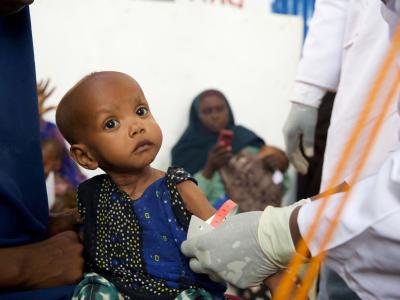
article / August 24, 2026
“I Dont Want My Children to Die of Hunger”: One Family's Fight Against a Famine Somalia Has Seen Before
As funding dwindles, needs are outpacing resources in Somalia. Some locations are already showing famine conditions as humanitarian organisations scale down or close operations.
press release / September 2, 2026
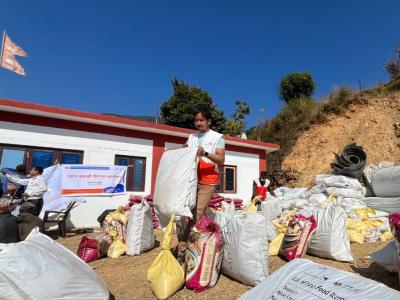
‘I left everything behind’: Nepal flash flood, children face trauma, displacement and uncertainty and growing protection risks
As the humanitarian crisis deepens, with more than 1,000 confirmed fatalities and thousands still missing, strengthened child protection measures are urgently needed to support displaced children and their families.
article / August 21, 2026
Standing with Children Through Crisis and Recovery
Having lived through the 2015 earthquake himself, Surendra Ratna Shakya has dedicated his career to supporting vulnerable children and families through crisis and recovery.
article / August 21, 2026
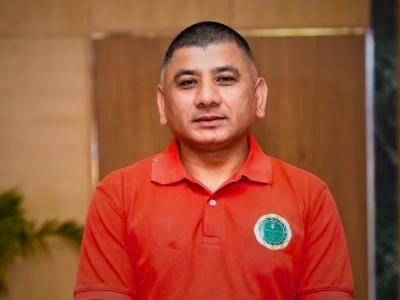
At the Frontline of Crisis and Recovery
From earthquakes to landslides, Nanda Budha reflects on leading humanitarian responses and standing with communities in crisis.
press release / September 2, 2026
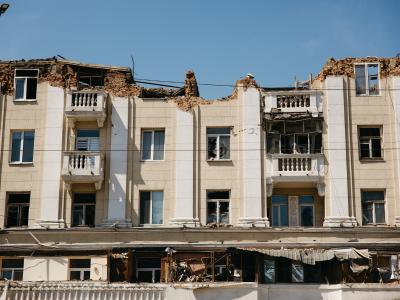
Two in Three Ukrainian Children Missing School Say Shelling Is the Reason
Two in three Ukrainian children miss school because of shelling or fighting, according to a needs assessment by World Vision.
press release / September 3, 2026
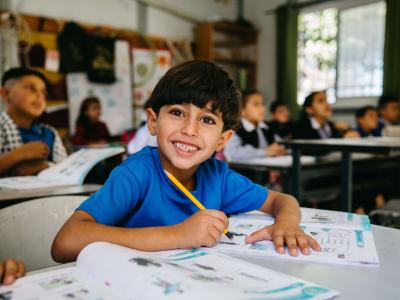
New EU-Funded Project to Restore Safe, Inclusive Education for Over 22,000 Conflict-Affected Children in the West Bank
World Vision, in partnership with the Teacher Creativity Center (TCC) and the Palestinian Ministry of Education, today announced the launch of a new EU-funded two-year project to safeguard access to safe, inclusive and dignified education for the most vulnerable conflict-affected children across the West Bank.
publication / September 4, 2026
Global Accountability Report 2025
Explore World Vision's 2025 Accountability Report, highlighting transparency, safeguarding, financial stewardship, resilience, and community impact.
publication / September 4, 2026
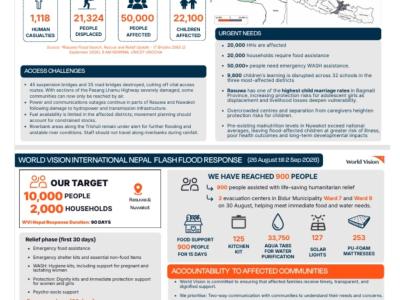
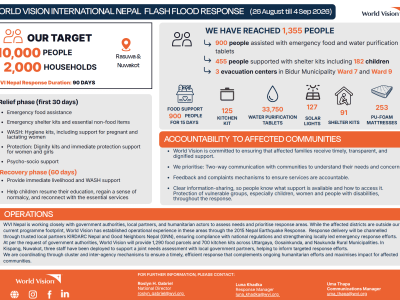
Situation Report 2: Nepal Flash Floods Response 2026
World Vision Reaches 1,355 People Following Nepal Flash Floods
landing page / August 18, 2026
United Nations Office for the Coordination of Humanitarian Affairs (UNOCHA)
publication / September 3, 2026
Situation Report 1: World Vision International Nepal | Nepal Flash Floods Response 2026
As of 2 September 2026, World Vision International Nepal's Flash Flood Response Situation Report 1 provides an overview of the humanitarian impact of the devastating floods affecting Rasuwa, Nuwakot, Dhading, and surrounding districts. With 50,000 people affected and more than 21,000 displaced, the report highlights urgent needs in food security, shelter, WASH, child protection, and education. It outlines World Vision's 90-day emergency response targeting 10,000 people across 2,000 households and reports that 900 people have been reached with life-saving assistance, including food support, kitchen kits, shelter kits and essential non-food items, water purification supplies, solar lights, hygiene kits, dignity kits for women and girls, and psychosocial support.