article / May 9, 2026
Beyond the Role of Caregiver This Mother’s Day
Exploring the intersection of women’s agency and child well-being, World Vision’s GEDSI Senior Adviser Mona Stella Mariano discusses shifting development models from reinforcing caregiving burdens to fostering genuine empowerment for women and communities.

article / April 20, 2026
Tenderness Becomes National Public Policy
World Vision’s Balm of Tenderness is now part of Peru’s national parenting policy, promoting positive, violence-free parenting for millions of children.

publication / May 11, 2026
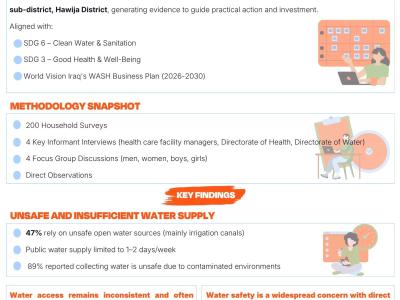
Infographic: When Water Becomes a Health Risk
New WASH research from Abassi sub-district in Hawija District highlights critical challenges related to water quality, sanitation, hygiene, and public health, providing evidence to guide sustainable WASH investments and coordinated action.
article / May 12, 2026
Faith and development builds bridges between divided families in Tonj North County
This feature story highlights how Faith and Development is building peace in Tonj North County through the leadership of Rev. Mary Awien. Once divided by tribal conflict, communities are now reconnecting through peace dialogues, shared markets, and reconciliation songs. Supported by World Vision’s Faith and Development programme, over 300 church leaders have been trained, reaching more than 1,620 community members.

article / April 30, 2026
Dr Tinah Mukunda Crowned Development Queen of Kenyasi No. 3
World Vision Ghana's country crowned the development queen of Kenyasi No. 3.

press release / April 20, 2026
World Vision Cambodia Reaches 5.4 million People in 2025 As Humanitarian and Development Challenges Persist
World Vision International in Cambodia reached 5.4 million people, including 3.1 million children, in 2025, delivering life saving humanitarian assistance while sustaining long term development programmes across multiple provinces.

publication / April 20, 2026
WV Rwanda Annual Report 2025
In Fiscal Year 2025, World Vision Rwanda(WV Rwanda) advanced child well-being through integrated programmes in child protection, education, health, WASH, livelihoods, and humanitarian response, reaching hundreds of thousands of children and families across the country. Through strong partnerships, community engagement, and innovative approaches, WV Rwanda continued to support resilient families and thriving communities where children can reach their full potential.

publication / April 17, 2026
World Vision’s Parenting in Crisis Chatbot in Ukraine and Georgia: Learning report
Explore the results of the "Batkivska Opora" pilot report, a digital parenting chatbot providing evidence-based psychosocial support and crisis guidance to Ukrainian and Georgian families affected by war and displacement.

publication / May 14, 2026
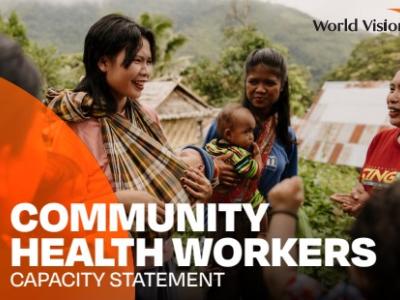
Community Health Workers Capacity Statement
World Vision’s Community Health Workers Capacity Statement highlights global impact, evidence, and systems support across 43 countries.