Home

Get Involved

  • Donate
  • Get Involved
English
  • French
  • Spanish
  • Deutsch
  • Georgian
  • Arabic
  • Armenian
  • Bosnian
  • Albanian
  • Vietnamese
  • Portuguese, Portugal

Main navigation

  • Who We Are
    • About Us
      • Our History
      • Our Leadership
      • Our Vision & Values
      • Our Faith
      • Our Partners
      • Our Structure
    • Our Approaches
      • Advocacy
      • Emergency Relief
      • Our Global Strategy
      • Transformational Development
    • Contact Us
      • Careers and Internships
    • FAQ
  • What We Do
    • Focus Areas
      • Child Protection
      • Clean Water and Sanitation
      • Education
      • Fragile Context Programming
      • Health & Nutrition
      • Livelihoods
      • View All Sectors
    • Emergency Response
      • Afghanistan Emergency Response
      • El Niño Drought Response
      • Emergency Mpox Response
      • Global Hunger Crisis
      • Middle East Crisis Response
      • Myanmar Earthquake Response
      • Sudan Crisis Response
      • Syria Crisis Response
      • Ukraine Crisis
      • Venezuela Crisis
      • Yemen Emergency Response
    • Campaigns
      • ENOUGH food for every child
      • Ending Violence Against Children
  • Where We Work
    • Africa
      • Angola
      • Burkina Faso
      • Burundi
      • Central African Republic
      • Chad
      • Congo
      • Eswatini
      • Ethiopia
      • Ghana
      • Kenya
      • Lesotho
      • Malawi
      • Mali
      • Mauritania
      • Mozambique
      • Niger
      • Rwanda
      • Senegal
      • Sierra Leone
      • Somalia
      • South Africa
      • South Sudan
      • Sudan
      • Tanzania
      • Uganda
      • Zambia
      • Zimbabwe
    • Americas
      • Bolivia
      • Brazil
      • Canada
      • Chile
      • Colombia
      • Costa Rica
      • Dominican Republic
      • Ecuador
      • El Salvador
      • Guatemala
      • Haiti
      • Honduras
      • Mexico
      • Nicaragua
      • Peru
      • United States
      • Venezuela
    • Asia Pacific
      • Bangladesh
      • Australia
      • Cambodia
      • China
      • Hong Kong, SAR
      • India
      • Indonesia
      • Japan
      • Laos
      • Malaysia
      • Mongolia
      • Myanmar
      • Nepal
      • New Zealand
      • North Korea
      • Papua New Guinea
      • Philippines
      • Singapore
      • Solomon Islands
      • South Korea
      • Sri Lanka
      • Taiwan
      • Timor Leste
      • Thailand
      • Vietnam
      • Vanuatu
    • Middle East and Europe
      • Afghanistan
      • Albania
      • Armenia
      • Austria
      • Belgium
      • Bosnia and Herzegovina
      • Cyprus
      • European Union
      • Finland
      • France
      • Georgia
      • Germany
      • Iraq
      • Ireland
      • Italy
      • Jordan
      • Lebanon
      • Moldova
      • Netherlands
      • Romania
      • Spain
      • Syria
      • Switzerland
      • Türkiye
      • Ukraine
      • United Kingdom
      • West Bank
      • Yemen
  • Resources
    • News
    • Impact Stories
    • Thought Leadership
    • Publications
      • Annual Report
Home
wvi

Main navigation

  • Who We Are
    • About Us
      • Our History
      • Our Leadership
      • Our Vision & Values
      • Our Faith
      • Our Partners
      • Our Structure
    • Our Approaches
      • Advocacy
      • Emergency Relief
      • Our Global Strategy
      • Transformational Development
    • Contact Us
      • Careers and Internships
    • FAQ
  • What We Do
    • Focus Areas
      • Child Protection
      • Clean Water and Sanitation
      • Education
      • Fragile Context Programming
      • Health & Nutrition
      • Livelihoods
      • View All Sectors
    • Emergency Response
      • Afghanistan Emergency Response
      • El Niño Drought Response
      • Emergency Mpox Response
      • Global Hunger Crisis
      • Middle East Crisis Response
      • Myanmar Earthquake Response
      • Sudan Crisis Response
      • Syria Crisis Response
      • Ukraine Crisis
      • Venezuela Crisis
      • Yemen Emergency Response
    • Campaigns
      • ENOUGH food for every child
      • Ending Violence Against Children
  • Where We Work
    • Africa
      • Angola
      • Burkina Faso
      • Burundi
      • Central African Republic
      • Chad
      • Congo
      • Eswatini
      • Ethiopia
      • Ghana
      • Kenya
      • Lesotho
      • Malawi
      • Mali
      • Mauritania
      • Mozambique
      • Niger
      • Rwanda
      • Senegal
      • Sierra Leone
      • Somalia
      • South Africa
      • South Sudan
      • Sudan
      • Tanzania
      • Uganda
      • Zambia
      • Zimbabwe
    • Americas
      • Bolivia
      • Brazil
      • Canada
      • Chile
      • Colombia
      • Costa Rica
      • Dominican Republic
      • Ecuador
      • El Salvador
      • Guatemala
      • Haiti
      • Honduras
      • Mexico
      • Nicaragua
      • Peru
      • United States
      • Venezuela
    • Asia Pacific
      • Bangladesh
      • Australia
      • Cambodia
      • China
      • Hong Kong, SAR
      • India
      • Indonesia
      • Japan
      • Laos
      • Malaysia
      • Mongolia
      • Myanmar
      • Nepal
      • New Zealand
      • North Korea
      • Papua New Guinea
      • Philippines
      • Singapore
      • Solomon Islands
      • South Korea
      • Sri Lanka
      • Taiwan
      • Timor Leste
      • Thailand
      • Vietnam
      • Vanuatu
    • Middle East and Europe
      • Afghanistan
      • Albania
      • Armenia
      • Austria
      • Belgium
      • Bosnia and Herzegovina
      • Cyprus
      • European Union
      • Finland
      • France
      • Georgia
      • Germany
      • Iraq
      • Ireland
      • Italy
      • Jordan
      • Lebanon
      • Moldova
      • Netherlands
      • Romania
      • Spain
      • Syria
      • Switzerland
      • Türkiye
      • Ukraine
      • United Kingdom
      • West Bank
      • Yemen
  • Resources
    • News
    • Impact Stories
    • Thought Leadership
    • Publications
      • Annual Report
English
  • French
  • Spanish
  • Deutsch
  • Georgian
  • Arabic
  • Armenian
  • Bosnian
  • Albanian
  • Vietnamese
  • Portuguese, Portugal

Get Involved

  • Donate
  • Get Involved

Error message

  • The page you requested does not exist. For your convenience, a search was performed using the query development publication concepts about print.
  • The page you requested does not exist. For your convenience, a search was performed using the query publication summary guide using compendium indicators high level indicators cwbo.

Popular searches:

  • Careers
  • Child Sponsorship
  • Childhood Rescue
  • Emergency Response
Search results: 1 - 10 of 17263
publication / March 23, 2026

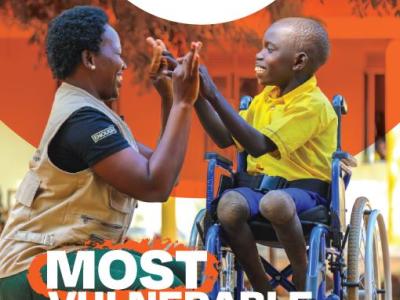
Most Vulnerable Chidren Report

The overarching objective for this report was to review alignment to the World Vision strategic imperative in Our Promise 2030 of deepening our commitment to the most vulnerable children (MVC) specifically to; identify the MVC in World Vision Uganda Area Programmes, determine where the MVC are concentrated, examine changes in MVC status in the communities, determine whether World Vision Uganda geographical footprint is in areas with higher concentrations of MVC, identify the most common vulnerability markers affecting MVC and their families, and guide the identification and prioritization of MVC and their families in beneficiary selection and targeting.
Image
publication / March 16, 2026

WV Rwanda FY26 - FY30 Strategy Summary

World Vision Rwanda (WV Rwanda) presents its strategy for the period of 2026-2030. The strategy aims at holistically empowering and transforming the well-being of 2.5 million most vulnerable children. It builds upon the previous five-year strategy, which empowered over 2 million most vulnerable children.
World Vision Rwanda Strategy Summary
article / February 26, 2026

WORLD VISION NIGER – 2025 EXECUTIVE SUMMARY AND 2026 PRIORITIES

A comprehensive overview of World Vision Niger’s 2025 results and 2026 priorities, highlighting key impacts in health, nutrition, WASH, education, resilience, advocacy, humanitarian response, and the launch of the new 2026–2030 national strategy.
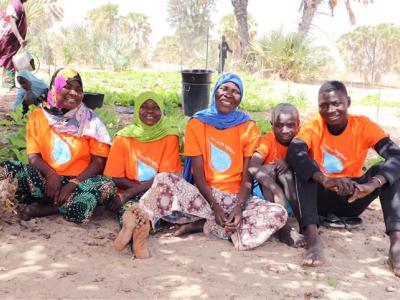
Famille beneficiaire de plusieurs interventions de World Vision ici toute souriante
publication / March 18, 2026

Working with Partners Policy - Summary

World Vision’s approach to working with partners promotes locally led, equitable collaboration to deliver lasting impact for children and communities.
Working with partners policy summary - cover
publication / March 24, 2026

ENOUGH Campaign Report 2025 - West Africa Region

World Vision’s ENOUGH Campaign Report 2025 highlights progress on child nutrition, school feeding, and policy change across West Africa.
ENOUGH Campaign 2025 Report - West Africa - Cover Page
publication / March 23, 2026

Measuring the Enabling Environment of Children's Groups

A Technical Report on research data from Cambodia and Mongolia, measuring the enabling environment of children's groups.
A young girl looks at a whiteboard with various colored papers and notes taped on. The title of the report is in the middle of the image.
publication / March 17, 2026

World Vision's Approach to Localisation

World Vision’s localisation approach promotes locally led development and humanitarian action through equitable partnerships, shared power, and community leadership.
Localisation Position video
publication / March 23, 2026

Impact of the Unlock Literacy Project Model on the reading results for girls and boys in early grades in Uganda

World Vision is implementing the Unlock Literacy Model, which aims to empower schools, parents, and communities to support children’s literacy development and to promote strong literacy habits among early grade learners both inside and outside the classroom.
Image
publication / March 16, 2026

Lebanon Response Sitrep 2026 #4

The escalation of hostilities in Lebanon has now entered day 15, while regional tensions linked to the wider conflict continued for 17 days, with no immediate indication of de-escalation. Evacuation orders continue to expand across South Lebanon, Beirut, Mount Lebanon, and the Bekaa Valley, with warnings issued by the country to the south instructing residents to evacuate and indicating that return will not be permitted until further notice. Reports state that entire families who chose to remain in their homes in some affected areas have been killed during strikes, highlighting the severe protection risks facing civilians. In recent days, strikes have increasingly targeted critical infrastructure and transport routes, including two key bridges connecting major towns in South Lebanon, further disrupting civilian movement and humanitarian access. Trucks transporting goods are reportedly warned not to move along the southern coastal road, further constraining assistance delivery. Airstrikes also impacted central Beirut and residential areas in Mount Lebanon, reflecting the continued expansion of hostilities beyond traditional frontline zones. Meanwhile, displacement continues to rise, and shelter capacity remains under severe strain. With collective shelters overcrowded or at full capacity, many displaced families have been forced to seek alternative arrangements, including unfinished buildings, informal shelters, and makeshift tents along the coastal Corniche from Saida to Beirut. Recent heavy rainstorms and falling temperatures have further worsened conditions, destroying displacement tents and flooding temporary sites, leaving displaced households exposed to harsh weather and heightened risks. The prolonged escalation is also contributing to pockets of civil unrest, as well as heightened social tensions in several areas, with growing fears among communities that prolonged displacement and political polarization could increase the risk of localized sectarian tensions.
Mariam
publication / March 9, 2026

Lebanon Response Sitrep 2026 #2

According to Lebanon’s Ministry of Public Health (MoPH), attacks between 2 and 8 March have resulted in 394 people killed and 1,130 injured, with figures Increasing daily. Displacement orders issued in the last days, including renewed orders affecting areas south of the Litani River and the entirety of Beirut’s southern suburbs, have triggered further population movements and repeated displacement for many households. As of 8 March, the Disaster Risk Management (DRM) Unit reports 117,228 displaced individuals residing in 538 collective shelters. The Government of Lebanon has launched a national self-registration platform for internally displaced persons, with over 517,000 people, indicating the potential scale of displacement beyond those recorded in collective shelters. Recent days have seen hostilities expand beyond traditional frontline areas, including blanket evacuation orders affecting Beirut’s southern suburbs, warnings and subsequent strikes targeting branches of the Al-Qard- Al-Hassan Association. Airstrikes have also impacted locations outside the declared warning zones, including a hotel in central Beirut and an earlier strike on a hotel in Hazmieh, both situated outside the primary red-zone areas. These incidents highlight the widening geographic scope of the conflict and the continued risks to civilians and humanitarian operations across areas.
boy shelter

Pagination

  • Page 1
  • Page 2
  • Page 3
  • Page 4
  • Page 5
  • Page 6
  • Page 7
  • …
  • Next page Next ›
  • Last page Last »

World Vision

Footer

  • About Us
    • Our Vision & Values
    • Our History
    • Our Leadership
    • Our Structure
    • Our Partners
    • Accountability
    • FAQ
  • Our Approaches to Change
    • Child Sponsorship
    • Global Campaign
    • Our Global Strategy
    • The Role of Faith
  • Work with Us
    • Our Culture
    • Careers & Internships
    • Explore Open Positions
    • Internships
    • Open Tenders
  • Connect With Us
    • Facebook
    • Youtube
    • Twitter
    • Instagram
    • LinkedIn
    • Contact Us
    • World Vision in Your Country/Region
    • Report a Concern

Get Our Newsletter

form-submit-link on the Mailchimp signup in the footer

Accountable Now

Footer Legal

  • © 2026 World Vision International
  • Privacy Policy
  • Terms of Use