landing page / August 18, 2026
United Nations Office for the Coordination of Humanitarian Affairs (UNOCHA)
article / August 27, 2026
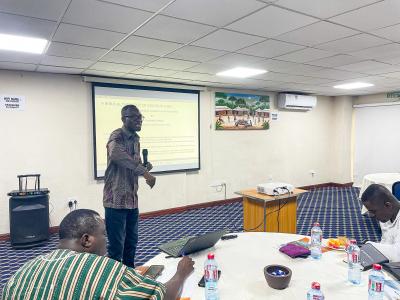
World Vision Ghana Advances Child-Centred Creation Care Through National Consultative Workshop
World Vision Ghana convened a three-day consultative workshop in Accra, bringing together faith leaders, theological institutions and development practitioners to strengthen child-centred Creation Care and advance environmental stewardship and climate action through churches.
publication / August 28, 2026
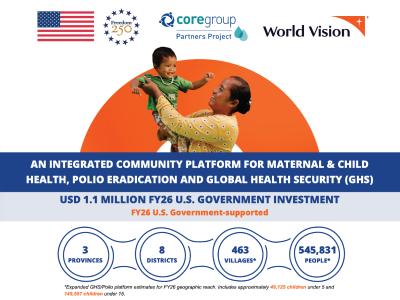
CORE Group Partners Project (CGPP) An Integrated Community Platform for Maternal & Child Health, Polio Eradication and Global Health Security (GHS)
CORE Group Partners Project (CGPP) An Integrated Community Platform for Maternal & Child Health, Polio Eradication and Global Health Security (GHS)
article / September 2, 2026
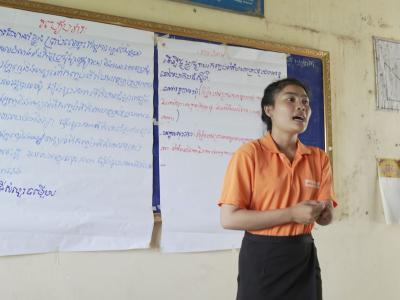
Forging an Inclusive and Gender Equitable Climate Action: Amplifying the Leadership of Girls and Women with Disabilities
Persons with disabilities make up the world’s largest minority—80% live in low- and middle-income countries. In Asia Pacific alone, nearly 108 million children with disabilities face mounting climate risks, for instance, more treacherous typhoons, floods and heatwaves.
press release / August 25, 2026
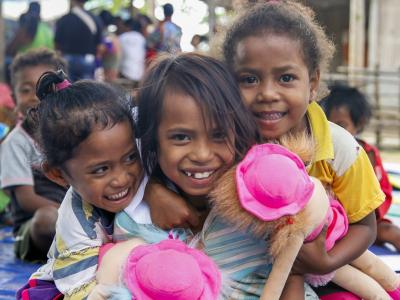
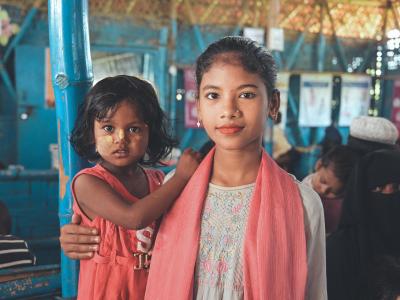
Nine Years of Struggle: Rohingya Children Caught Between Climate Disasters and Plunging Aid
Nine years into protracted displacement, escalating climate disasters and a 24% aid cut threaten 1.2 million Rohingya refugees, prompting World Vision to call for global responsibility-sharing and durable, nexus-driven solutions for children and host communities.
press release / September 3, 2026
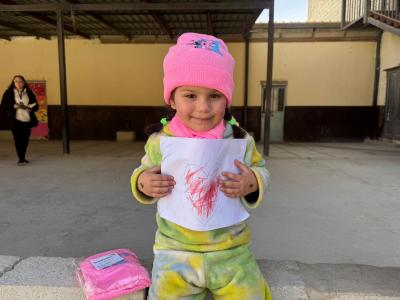
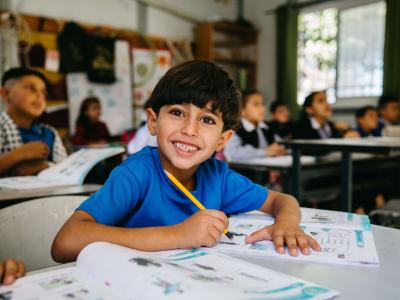
New EU-Funded Project to Restore Safe, Inclusive Education for Over 22,000 Conflict-Affected Children in the West Bank
World Vision, in partnership with the Teacher Creativity Center (TCC) and the Palestinian Ministry of Education, today announced the launch of a new EU-funded two-year project to safeguard access to safe, inclusive and dignified education for the most vulnerable conflict-affected children across the West Bank.
press release / September 2, 2026
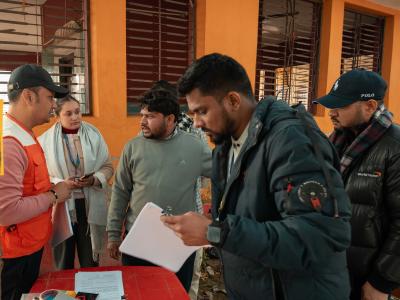
‘I left everything behind’: Nepal flash flood, children face trauma, displacement and uncertainty and growing protection risks
As the humanitarian crisis deepens, with more than 1,000 confirmed fatalities and thousands still missing, strengthened child protection measures are urgently needed to support displaced children and their families.
press release / September 2, 2026
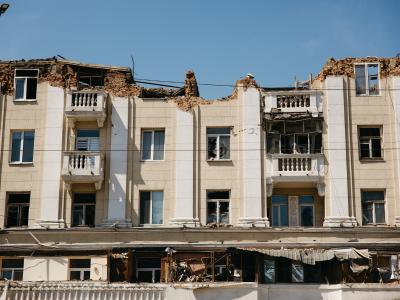
Two in Three Ukrainian Children Missing School Say Shelling Is the Reason
Two in three Ukrainian children miss school because of shelling or fighting, according to a needs assessment by World Vision.