

Annual Report 2025
For over 50 years, World Vision has supported Palestinian children through integrated development, relief, and advocacy programmes that strengthen protection, resilience, and well-being. Focused on the most vulnerable, its work spans education, child protection, mental health, emergency response, and climate adaptation, reaching over 521,000 people across 200 villages with the support of dedicated staff and community volunteers.
Learn more from our annual report for 2025.
West Bank
Related Resources
World Vision started to work in the occupied Palestinian territory in 1975 in a context of violence, military occupation and a high level of poverty. Since October 2023, the humanitarian situation in the West Bank has worsened dramatically. Communities are facing ever-tightening restrictions on movement, rising levels of violence, and deepening economic hardship. What was already a fragile daily reality has become increasingly unbearable for many families, as essentials like food, clean water, shelter, and healthcare are getting harder to access.
According to OCHA, more than 1,000 people have lost their lives and 10,000 have been injured between October 2023 and October 2025, largely due to frequent and large-scale military operations across towns in the West Bank. As of October 2025, an estimated 30,000 individuals – among them 14,000 children – remain displaced by these operations. At the same time, alarmingly high levels of violence by armed civilians have driven a record number of communities from their land, creating a climate of fear and impunity that continues to devastate lives across the West Bank.
Communities across the West Bank have also been forced to contend with expanded road closures, a sharp increase in checkpoints, and growing restrictions on movement between towns. At times, nearly 900 such obstacles have been recorded, with devastating consequences for employment, agricultural production, and supply chains. These restrictions have also delayed urgent medical referrals and severely disrupted access to education.
The Palestinian economy contracted sharply in both 2024 and 2025 – by an estimated 25–28% – driven largely by a steep decline in economic activity and employment, particularly due to the widespread loss of work permits in Israel and its settlements. This economic collapse has triggered a major surge in poverty, fuelling a rise in food insecurity. A significant number of families can no longer afford the most basic necessities, while 70% of them are frequently skipping meals and are at heightened risk of malnutrition.
Since October 2023, the Palestinian Authority has lost much of its financial income, leading to a severe liquidity crisis that has drastically curtailed its ability to pay civil servants' salaries. This, in turn, has had a serious impact on the provision of essential public services. Primary and secondary schools are now offering face-to-face education only three days a week at most, compared to the usual five. Making matters worse, most local health clinics are operating just one day a week and have extremely limited supplies of essential medicines. The crisis has been further deepened by the breakdown in cooperation between local banks and Israeli institutions, exacerbating the liquidity shortage for Palestinian authorities, businesses, and families alike.
For 50 years, World Vision has worked to nurture Palestinian children, improve their resilience and bring them hope. Combining development, emergency response and advocacy programmes, World Vision ensures that children, especially the most vulnerable, are protected in their families and communities, and that they develop the skills and resilience they need for healthy lives. Since October 2023, World Vision International has also implemented a multisectoral emergency response that aims to provide urgent lifesaving aid to families, increase protection for children, provide mental health support, improve access to health care and strengthen access to safe education.
Our Impact
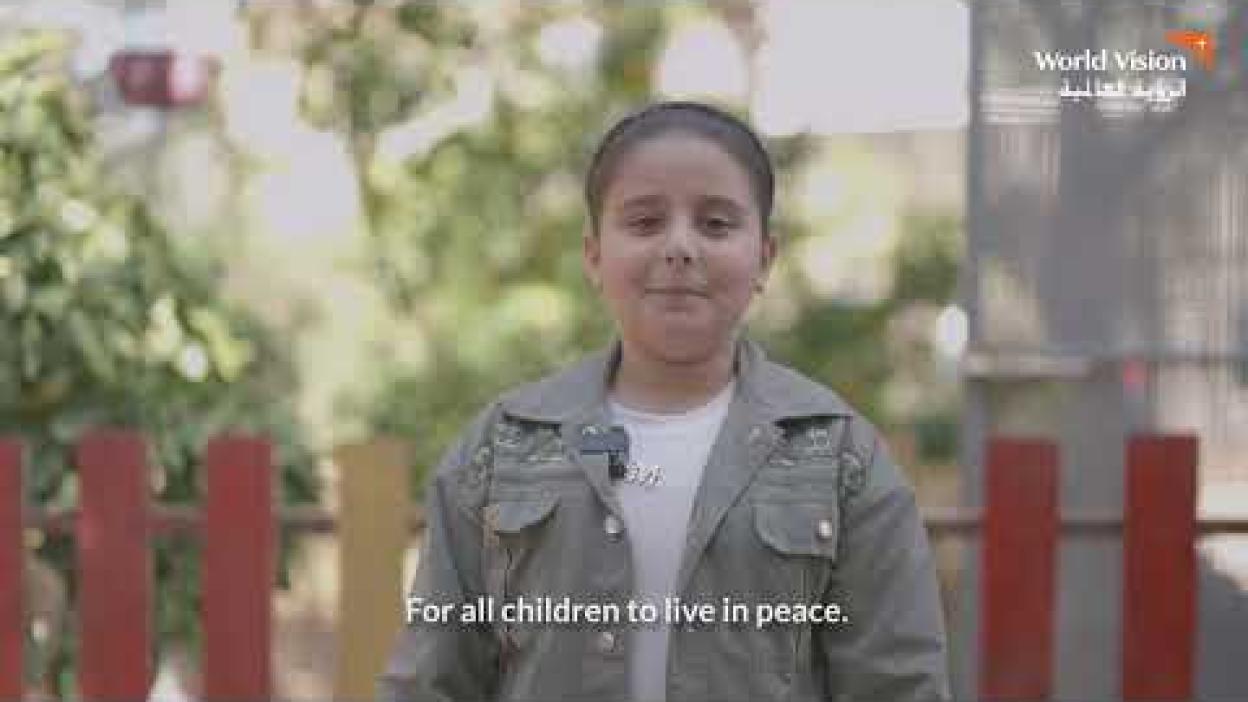
Hope and Resilience: Palestinian children talk about the impact of the current crisis on their lives
Our Approaches

Early Childhood Development
World Vision International's Early Childhood (ECD) programme aims to support mothers during pregnancy and continue to support children (along with their caregivers) until they reach the age of six, so they achieve their full potential. The programme's goal is to promote children's development and improve their early learning abilities in secure and stimulating environments. This holistic ECD approach, implemented in partnership with the Ministry of Education and the Ministry of Health, encompasses two project models that serve children of varying age groups. Moreover, World Vision International assists these ministries in developing pertinent national policies and technical tools.

Education in Emergencies
Our approach includes several components:
- World Vision support the rehabilitation of schools to ensure they are child-friendly and equipped with learning materials, water, and accessible sanitation facilities.
- Our programmes also include a Disaster Risk Reduction component to ensure the safety of children in schools and their ability to continue learning during times of disaster or emergency, in collaboration with the Ministry of Education, Civil Defence, the Palestine Red Crescent Society, the Palestinian police, village councils, and local communities.
- World Vision also implements activities focused on Mental Health and Psychosocial Support (MHPSS) to assist children and educational staff in managing stress, coping with trauma, and preventing behavioural issues, depression, anxiety, and post-traumatic stress disorder (PTSD).

Child Protection
In collaboration with the Ministry of Education, the Ministry of Social Development, and the Public Prosecution Office - Child Justice Division, World Vision International implements a comprehensive child protection programme. Employing a system-based approach, or child-centred approach aims to strengthen the protective environment across four domains of change (social-ecological framework), establishing circles of care and protection.

Child and Youth Resilience and Life Skills
To address these issues, World Vision International’s programmes strengthen youth resilience and build life skills through two main approaches:
- Children Clubs (6- to 14-year-olds): Through these clubs, children acquire and effectively apply knowledge, attitudes, and skills necessary to set and achieve goals, show empathy towards others, establish positive relationships, and make responsible decisions.
- Adolescent Clubs (12- to 18-year-olds): These clubs empower adolescents to become active citizens, equipped with competencies, confidence, and social connectedness. The adolescents are also trained and supported to identify and lead projects responding to the needs of their communities, such as the environmental protection, child protection or road safety for example.
Related Stories
Related Publications
Related Press Releases

ENOUGH
Responding to the Growing Food Insecurity in the West Bank