

From Local Roots to Global Reach: How we are impacting children in the world’s toughest places

Disaster Management
Our Approaches
Before. During. After. We are there. And we stay.
Before disaster strikes, we work hard to make sure children and their families understand how to reduce their vulnerability to disasters. During humanitarian crises, our staff on the ground in nearly 100 countries are in communities helping children. We have worked and lived through decades of humanitarian emergencies from the Korean war in the 1950s, to 1970s cyclone in Bangladesh, 1980s famines in East & West Africa, 1990s Balkans war and the Rwandan genocide, through 2004’s Asian tsunami, Haiti’s 2010 earthquake and this decade's conflict in Sudan, we have been on the ground with children and families, responding to their immediate needs, adapting and learning what works best to restore children’s hopes, and belief in the future. And we are still there.
A Changing World. An Unchanging Mission for Children
Humanitarian needs are soaring, with 239 million people now requiring assistance as conflict, climate shocks, and displacement intensify. A record surge in global violence is impacting 1 in 5 children, while food crises are worsening, leaving 295 million people hungry across 50 countries. Extreme weather is inflicting far greater human costs than the $200 billion counted each year, with children facing unprecedented lifetime risks. Aid workers are operating in the deadliest conditions on record as misinformation and insecurity surge. Meanwhile, collapsing humanitarian funding, now at its lowest in a decade, threatens to unravel the principles that protect the world’s most vulnerable.
Delivering Hope and Humanity in a Time of Growing Need
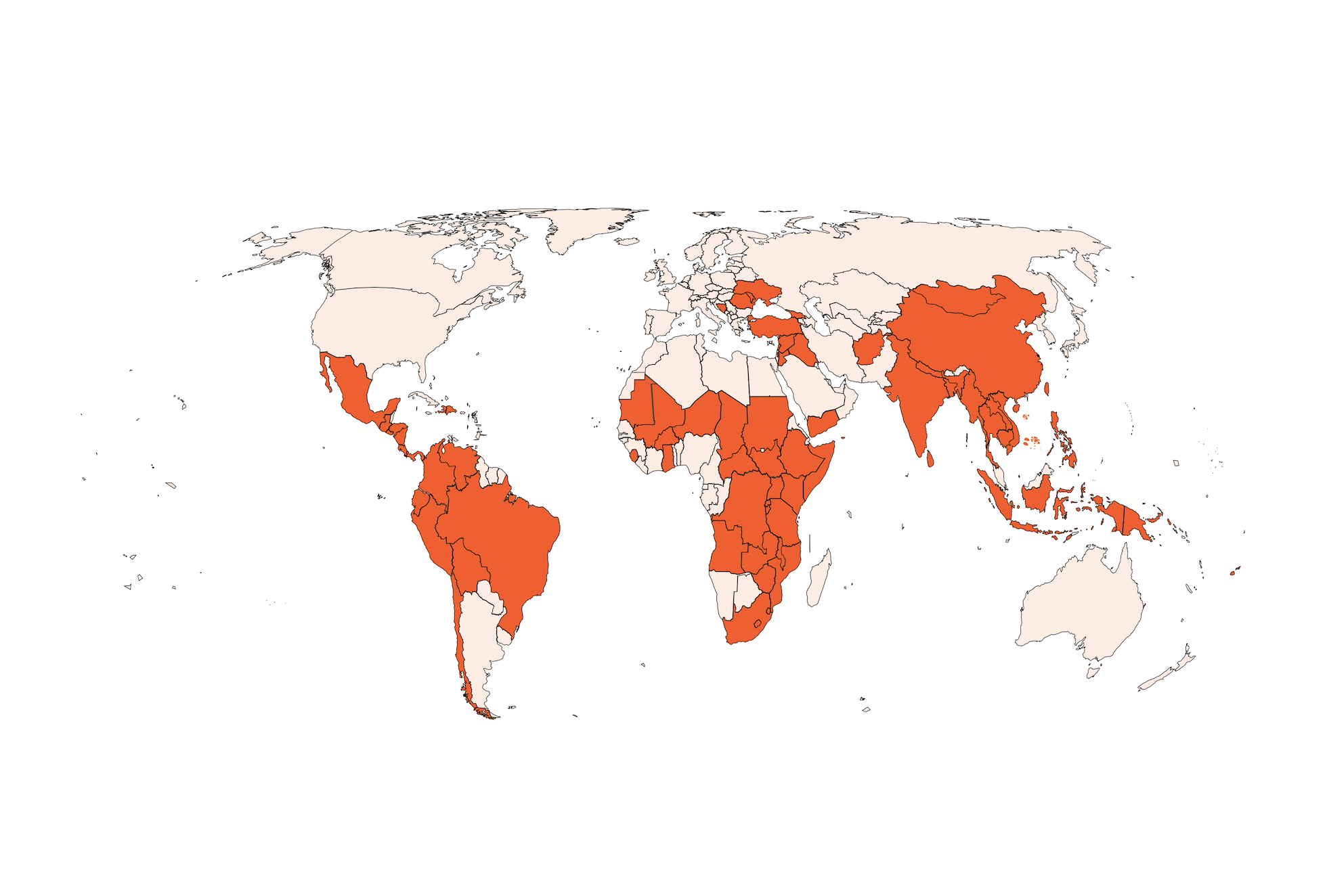
Amid escalating turbulence, shrinking budgets, tightening access, and rising threats to humanitarian workers, we stayed firmly focused on what matters most: reaching children and their families with life-saving assistance. Across 104 emergencies, we reached 35.6 million people, including 18.6 million children, with food and cash assistance, child protection services, health and education support, and WASH and livelihoods programming. The scale and breadth of this reach underscore a consistent commitment to delivering principled, high-quality assistance, even in the most complex and volatile environments.
35.6 M
1 in 2
85%
Our Humanitarian Footprint In 2025

Our Sectoral Programmes







The Names Behind The Numbers Matters The Most
Advocating and Partnering for Greater Impact
In the face of rising need and funding cuts, World Vision continues to:
Advocate
Influence
Ensure
Updates

The Future of Humanitarian Action Starts with Children
At ECOSOC HAS 2026, World Vision helped shape global conversations on hunger, localisation and humanitarian reform. As humanitarian needs rise and resources shrink, World Vision helped keep the focus on children, communities and locally led solutions.

Joint Child Rights Initiative Statement for Global Refugee Forum Progress Review 2025
World Vision delivers this statement on behalf of the Initiative for Child Rights in the Global Compacts, a coalition of over 30 agencies committed to child rights, which leads on the Multistakeholder Pledge on Child Rights.

Protecting Children Where Hunger Strikes: Why Integration Matters
At World Vision, we believe no child should have to choose between survival and safety. That’s why we’re championing integrated approaches that protect children while addressing their most basic needs, because children deserve to thrive, not just survive.

World Vision welcomes the Declaration for the Protection of Humanitarian Personnel
World Vision International’s President and CEO welcomes the Declaration for the Protection of Humanitarian Personnel, a vital step forward in safeguarding those who risk everything to serve communities in crisis and to protect humanitarian access.

Children in Conflict: A Window into Global Solidarity and Humanitarian Resolve
Reflections on the urgent need to protect children affected by armed conflict, highlighting the importance of preserving humanitarian access and defending the integrity of the Children and Armed Conflict (CAAC) mandate.

People-driven humanitarian action to build sustainable pathways against child hunger
The number of people experiencing acute hunger has tripled since 2016 and doubled since COVID-19 in 2020. In 2024, 295 million people faced high levels of acute food insecurity in 53 countries/territories.

It takes a Coalition to combat Conflict & Hunger
In 2024, World Vision and eight other civil society organisations founded the Coalition Against Conflict and Hunger, to turn the tide on conflict-induced hunger by committing to working on the prohibition of starvation as a weapon of war, the protection of civilians and the humanitarian space in conflict contexts.
Our Partnership with World Food Programme

Get to Know Our Experts


Thought Leadership Articles

Why refugee children demand a humanitarian rethink

Why Children Must Be Central to the Global Humanitarian Agenda
Lora Boll, a Humanitarian Policy and Advocacy Advisor, World Vision International, highlights how children remain sidelined in global humanitarian decision-making and financing despite bearing the brunt of conflict, climate shocks and funding cuts. Lora argues that centring children’s rights, voices and services is not only a moral imperative but one of the most cost‑effective ways to build stable, resilient societies.

Beyond organisational structures
Nokuthula Khumalo, Technical Director Global Humanitarian Surge, highlights that in prolonged crises like Syria, it is not organisational charts that protect children, but trust. As humanitarian systems shift under funding pressure and political change, Thula reflects on how internal instability shows up in delayed care, weakened safeguarding, and broken continuity for children. Opening offices is quick; earning staff confidence after years of uncertainty is not. Thula emphasises that listening, presence and honest communication matter more than procedural fixes when certainty is impossible.

With every cut to aid and failure to invest in resilience, the future of South Sudan’s children hangs in the balance
Drawing on firsthand experience from one of the world’s most fragile contexts, Paul Kinuthia, Senior Director, Food, Cash & Markets, Disaster Management, argues that repeatedly cutting food, health, and protection services traps communities in endless crisis. He makes the case that narrowing aid to short‑term survival is a false economy that drives higher costs, deeper instability and repeated emergencies. The solution, the author provides, is urgent investment in resilience alongside life‑saving aid. This investment should be seen as a credible way to protect children and reduce the need over time.

Holding the Line for Children: Why Shrinking Aid is a Dangerous Choice
Isabel Gomes highlights how children are paying the highest price for a shrinking aid system. She also sheds light on how cuts to humanitarian funding are forcing impossible choices—who eats, who learns, who survives. Signaling about a system under strain, where children risk being pushed to the margins, she urges that governments, decision-makers, and donors ensure solidarity triumphs over indifference.

No Room at the Inn? An Urgent Global Call to Action for Refugee Children
Amid record global displacement, Fola Komolafe, CEO World Vision UK, urges leaders to put compassion and children’s rights at the heart of refugee policy, challenging rhetoric that focuses on borders over humanity. She calls for bold, coordinated action, funding resilience, supporting host nations, enabling safe returns, and expanding third-country solutions, to turn promises into progress for refugee children.

Another Silent “Reset”: Equipping Human(itarian)s and AI to Serve the Forgotten Children in fragile contexts
Dr. Kathryn Taetzsch explores the transformative impact of artificial intelligence on the humanitarian workforce, urging a proactive and ethically grounded response to its rapid integration. While AI is enhancing efficiency in disaster response, climate forecasting, and displacement prediction, it cannot replace the human-centric values—empathy, adaptability, and community focus—that define humanitarian work.

Why in the world’s most dangerous and fragile contexts, a school meal can be a child’s best hope
Amanda Rives, Senior Director for Global Humanitarian Partnerships & Policy Advocacy and advisory board member of The State of School Feeding report, underscores the lifesaving role of school meals in fragile and conflict-affected settings.
Publications and Research Reports


