


Beyond organisational structures: Why trust is central to child-focused humanitarian action in Syria
Nokuthula Khumalo, Technical Director Global Humanitarian Surge, highlights that in prolonged crises like Syria, it is not organisational charts that protect children, but trust. As humanitarian systems shift under funding pressure and political change, Thula reflects on how internal instability shows up in delayed care, weakened safeguarding, and broken continuity for children. Opening offices is quick; earning staff confidence after years of uncertainty is not. Thula emphasises that listening, presence and honest communication matter more than procedural fixes when certainty is impossible.
Fourteen years into the Syria crisis, if children are to experience continuity, safety, and care during humanitarian transitions, then staff stability and trust must be funded as deliberately as security, supply chains or monitoring systems. Trusted frontline teams are the backbone of safe, child-focused action.
The global humanitarian system is under strain. Funding is drying up. Humanitarian space is shrinking, and morale among frontline workers is under pressure. This means devastating consequences for one in five children worldwide caught in conflict or displacement.
In prolonged instability, trust is the real operating model
When humanitarian organisations experience disruption and change, the instinct is to fix what’s visible: structures, roles, and systems. But for children, these structural fixes are not enough. What determines whether support reaches them and protection holds, is far more powerful: trust.
As UNICEF’s published competency framework puts it, effective organisations “earn the trust and confidence of colleagues through respectful, honest behaviours, displaying openness and tolerance.” In humanitarian contexts, beyond good workplace practice, this is part of what enables organisations to remain credible and dependable for children and communities under pressure.
Transition in Syria Response exposed the trust gap
Currently, in Syria, there are 7 million children in need of humanitarian assistance. I joined World Vision’s Syria Response at a moment when stability was widely anticipated but had not yet materialised. This was eight months after a significant political change, as plans were taking shape to expand operations into Damascus while sustaining work in western and northern Syria. From an organisational perspective, this appeared to mark a transition toward greater stability. In reality, uncertainty still defined daily operations. Regulatory frameworks were evolving. People systems had to be constantly recalibrated around taxation, social security, and legal employment obligations.
The response was no longer operating in a purely emergency mode, yet the environment remained deeply complex and unpredictable. Funding pressures, shifting strategies, and a move toward a more integrated “whole of Syria” approach reshaped how the response functioned across Jordan, Türkiye, and Syria. These changes were necessary, but they landed in an environment where staff confidence had been worn down by years of instability and change. In such contexts, the assumptions that usually guide organisational development do not hold. Without trust, systems strain, people disengage, and programme stability becomes harder to maintain.
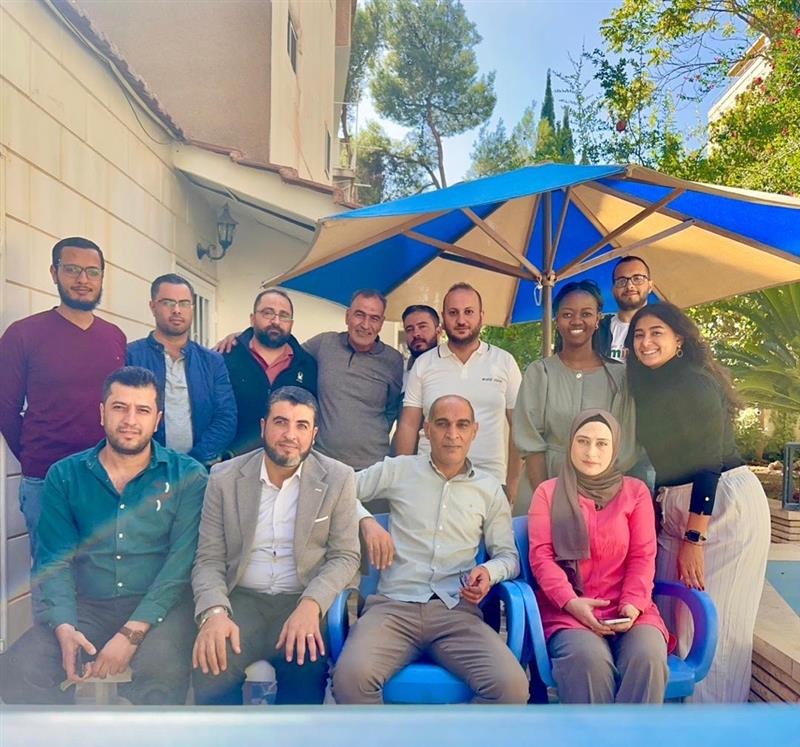
Trust inside teams is part of accountable, child-focused action
Opening the office in Damascus taught me a hard lesson: offices can be opened relatively quickly. Trust takes far longer. For many colleagues, this change represented another shift in the ground beneath their feet; an added uncertainty layered onto years of instability. The systems we relied on to communicate, reassure, and manage change suddenly felt hollow. They felt too neat and procedural from what people were experiencing. This mattered not only to staff but also to children.
When organisations are unsettled, staff are unsure, overstretched or unconvinced, the consequences show up in delayed case management, weakened referral pathways, interrupted psychosocial support, and other aspects of service delivery. We often treat trust and predictability as soft issues, a nice-to-have, but secondary to delivery.
In reality, they are integral to delivery and responsible for child‑centred humanitarian action. Without them, even the best‑designed programmes falter. In fragile contexts, stability inside organisations is part of our duty of care, not just to staff, but to the children whose lives depend on our ability to show up consistently, calmly, and with credibility.
From updates to reassurance: Why email alone wasn’t enough
What became clear, very quickly, was that speed was not what was missing. It was listening.
At the request of our senior leadership team, I spent a week in our different operating locations sitting with staff, not to rush decisions or roll out fixes, but to listen. For many colleagues, years of conflict had made their voices hard to reach. This was about creating space to be heard, with clarity, consistency, and dignity taking precedence over speed.
Staff spoke candidly about uncertainty, workload, and working conditions. But they also spoke, repeatedly, about children. About the strain of holding programmes and safeguarding together through another transition. Their commitment never wavered. But their confidence in the structures meant to support them often did.
Being present mattered. No report or virtual update could replace listening face-to-face. Staff needed more than an email explaining what was happening. They needed reassurance that their experience counted, that it would shape decisions rather than be smoothed over by them. What emerged from those conversations shaped leadership choices going forward.
What the experience revealed
- Lesson 1: Trust comes before transition
Trust must be built alongside change. Without credibility, predictability, and confidence, even the best systems fail and struggle to take hold.
- Lesson 2: Clarity stabilises when certainty isn’t possible
Staff do not expect perfect answers; they expect honesty. Clear communication about what is known, changing, or unknown. Silence or over-optimism can be more destabilising than transparent ambiguity.
- Lesson 3: Showing up matters
Physical presence signals seriousness and respect in ways systems and virtual engagement cannot, especially where staff have long been distant from decision making.
- Lesson 4: Listening must be intentional
Engagement with staff cannot be symbolic. Listening must be sustained, and followed through. Creating space for voice is what makes transition possible.
- Lesson 5: People decisions carry reputational weight
In uncertainty, Human Resources decisions are read as signals of organisational values. How they are sequenced, communicated, and enacted can either restore confidence or deepen instability.
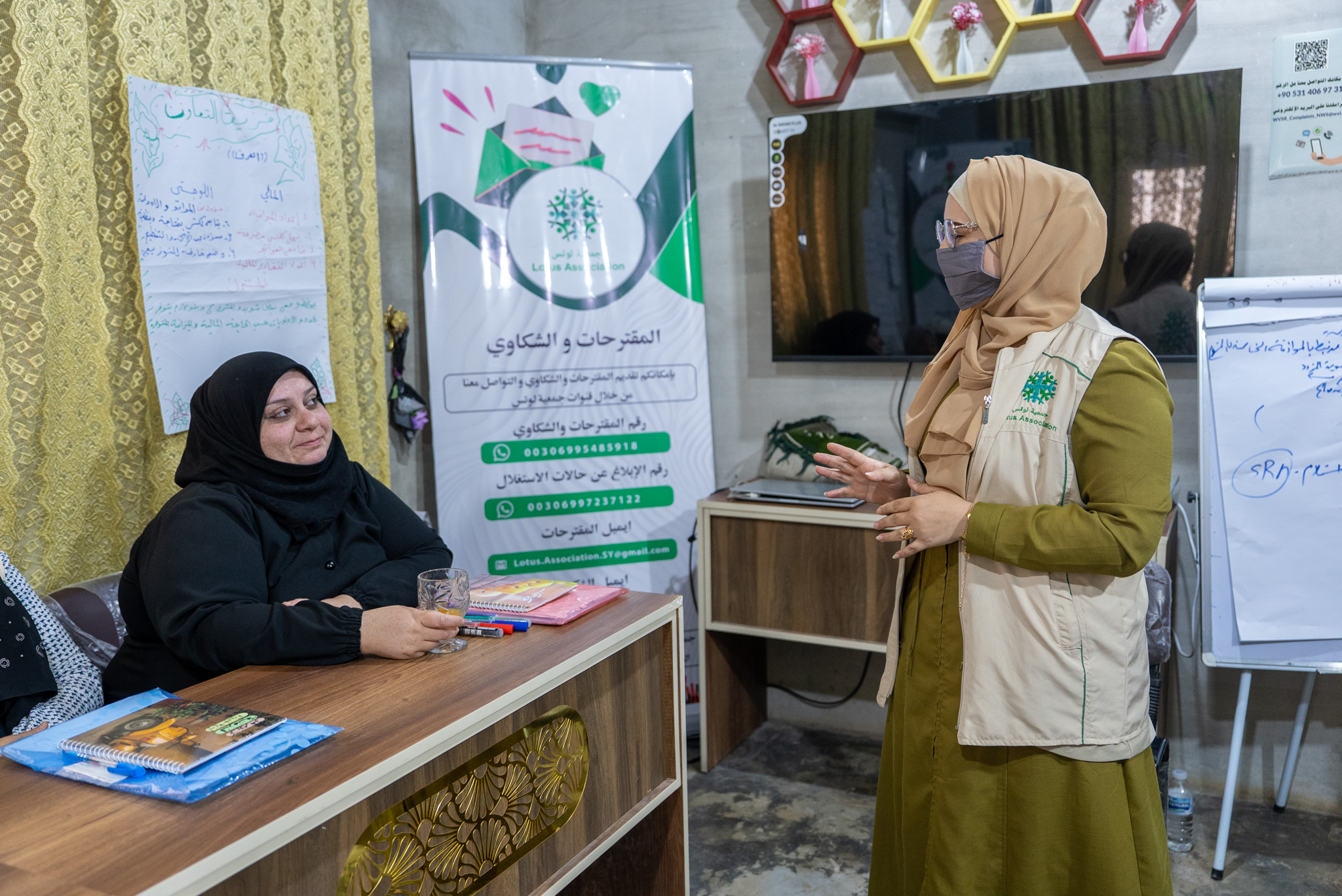
Resourcing trust, like any other critical system
Fourteen years into the Syria crisis, if children are to experience continuity, safety, and care during humanitarian transitions, then staff stability and trust must be funded as deliberately as security, supply chains or monitoring systems. Trusted frontline teams are the backbone of safe, child‑focused action. In 2025, World Vision’s programmes in Syria reached over 4.22 million people, including 2.53 million children. One of our most important partners in this is WFP, whose own People Policy states that "..its reputation for saving lives and changing lives depends on its commitment to the people who work for it, on the value attributed to their contributions and on their commitment to its mission.”
What resourcing trust looks like in practice
- Build trust into the plan: Listening circles, open forums, field visits, and feedback loops must be built into transition plans, with clear ownership and follow‑through.
- Fund presence, not just messaging: Trust grows through presence, not PDFs. Budgets should make space for leaders to show up, sit down, listen and discuss, repeatedly.
- Protect time and capacity to listen: Dedicated capacity for staff engagement matters with clear roles across people, operations, safeguarding and leadership, and real systems to track and answer questions.
- Treat trust as operational data: Signals like response times, frequency of engagement, and staff confidence in decision‑making help leaders see when stability is strengthening or quietly eroding.
- Resource follow-through: Staff need to see what will change, what will not, and why. Publishing themes, tracking commitments, and closing feedback loops is how trust becomes tangible.
World Vision’s own core values state that we ‘give priority to people before money, structure, systems, and other institutional machinery.’ So, when trust is treated as critical infrastructure rather than a soft ideal, teams can sustain programmes, safeguard children, and hold steady together.
About the author:
Nokuthula Khumalo is a global workforce and organisational strategy leader working at the intersection of humanitarian action, systems design, and talent mobility. As Technical Director for Global Surge within the Humanitarian and Development Capacity & Capabilities (HDCC) team at World Vision International, she leads the governance, digitisation, and optimisation of global surge capacity, enabling the rapid, accountable deployment of talent across both emergency responses and development field offices. Her work is grounded in a clear belief: trusted, well-governed workforce systems are critical to sustaining impact for children and communities in complex, evolving contexts.
Subscribe to see more content like this
Related Resources

The Fig Tree That Wouldn't Die: Storytelling Idea Helps Syrian Kids Go Green

I Only Lost My Shoe. They Lost Their World.
