

Why refugee children demand a humanitarian rethink
At just 15, *Shufa’s childhood (*name changed to protect identity) has already been shaped by displacement and loss. Three years ago, her family fled the violence engulfing Sudan, leaving behind their home and crossing into South Sudan in search of safety. Their journey is one shared by millions.
In the camp, food assistance is scarce and opportunities to earn a living are almost non-existent. Like so many displaced girls, *Shufa has been forced to make an impossible trade-off: education for survival. She has dropped out of school to collect and sell firewood, helping her mother keep the family afloat. What should have been years of learning and growth have instead become a daily struggle to meet basic needs.
*Shufa’s story is why World Refugee Day matters. Marked on 20 June, it is a moment to recognise the resilience of those forced to flee conflict and persecution. But it is also an indictment of a system that continues to fail them. Behind these numbers are children like *Shufa, children with names, dreams that are quietly slipping further out of reach.
For *Shufa, and millions like her, acknowledgement is not enough. Their lives demand action that matches the scale and urgency of the crisis they endure.
This year marks a sobering milestone: 25 years since the first World Refugee Day, and 75 years since the Refugee Convention. These anniversaries should prompt reflection, not only on how far we have come, but how far we have failed to go.
The scale of displacement today tells its own story. We are looking at a future where 136 million people, including children, are projected to be forcibly displaced or stateless by 2026, according to the UN Refugee Agency, and many are among the 318 million facing acute levels of food insecurity, as the World Food Programme (WFP) reports. These crises are deeply intertwined. Conflict drives hunger and hunger deepens vulnerability and displacement. Yet our responses remain fragmented, too often treating symptoms rather than causes.
In 2026, World Vision International, in collaboration with WFP, sought to confront this reality head-on and conducted a multi-country study among forcibly displaced people and host communities across eight hunger hotspots: Bangladesh, Burundi, Chad, Colombia, the Democratic Republic of the Congo (DRC), Myanmar, South Sudan and Uganda. It offers a stark picture of what it means to be displaced in a world of shrinking resources, escalating conflict, climate crisis and rising need. We see the same patterns emerging: fragile safety nets, restrictive policies, limited access to livelihoods, and communities caught in cycles of dependence.
Across all eight countries, hunger is the norm. More than half of families face moderate or severe food insecurity, rising to over 80% in in the DRC and South Sudan. Four in ten refugee households reported eating nothing, or barely one meal, the day before the survey, and in 57% of households, someone had gone to sleep hungry in the past month.
Hunger is driving a cascade of harms: child labour (22%), disrupted schooling (21%), separation from parents (11%) and early marriage (8%).
That strain is intensifying. The research coincided with a sharp contraction in global humanitarian funding, with a roughly 40% drop in 2025 compared to 2022, leaving more than 72% of humanitarian needs unmet in 2025.
Globally, children like *Shufa pay the price of shrinking humanitarian financing. One in five children now lives in or is fleeing conflict and nearly half of all children are exposed to extreme climate risks. Today, children make up over 40% of the world’s refugees and in 2026, more than 200 million are expected to require humanitarian assistance.
And yet, the evidence points to a way forward that should provoke a fundamental rethink in current humanitarian approaches. Where families can support themselves, hunger decreases and children are less exposed to harm. Self-reliance is a powerful protective factor and a pathway to dignity and stability.
Higher self-reliance among displaced people and host communities is associated with a 56% reduction in children resorting to begging, 33% reduction in child marriage, and 38% reduction in children leaving school to work or beg. Strengthening self-reliance must become a core pillar of humanitarian responses.
*Shufa’s story shows current responses fall short. A single cash payment or short-term food assistance may keep a family alive, but without sustained access to livelihoods and services, recovery and long-term resilience often remain out of reach.
Emergency assistance remains essential. But without the addition of longer-term investment in livelihoods, financial inclusion and access to economic opportunity, insufficient resources will continue to trap families in cycles of dependency.
We need to move beyond endless crisis response. Rhetoric must give way to reform. Governments need to enact policy changes that protect the rights of forcibly displaced people, and donors must back these reforms with sustained investment in livelihoods and economic inclusion as the foundation of resilience rather than an afterthought. Today, too many refugees are still locked out of the very systems meant to support them, denied the right to work, restricted in their freedom of movement, or unable to access basic services. These are policy choices and not inevitable constraints, and they can be changed.
We have enough evidence. Humanitarian and development actors, from host governments and donors to the private sector, civil society and UN agencies, must move decisively towards a more holistic approach. We need to pair food assistance with sustainable livelihoods, financial inclusion and real economic opportunity. Without this shift, we will continue to manage vulnerability rather than reduce it.
On World Refugee Day, *Shufa’s story should stop us in our tracks. We cannot afford to respond to her story and the experiences of millions of others forced to leave home with only sympathy.
They ask something harder of us, that we see them, listen to them, and act differently now, before more children’s futures slip beyond reach. If we are to build genuine, long-term wellbeing, we must confront uncomfortable truths, rethink outdated approaches, advocate for systemic change that fulfils the rights of forcibly displaced people, and invest in solutions that enable people not just to survive, but to rebuild their lives with dignity.
About the author:
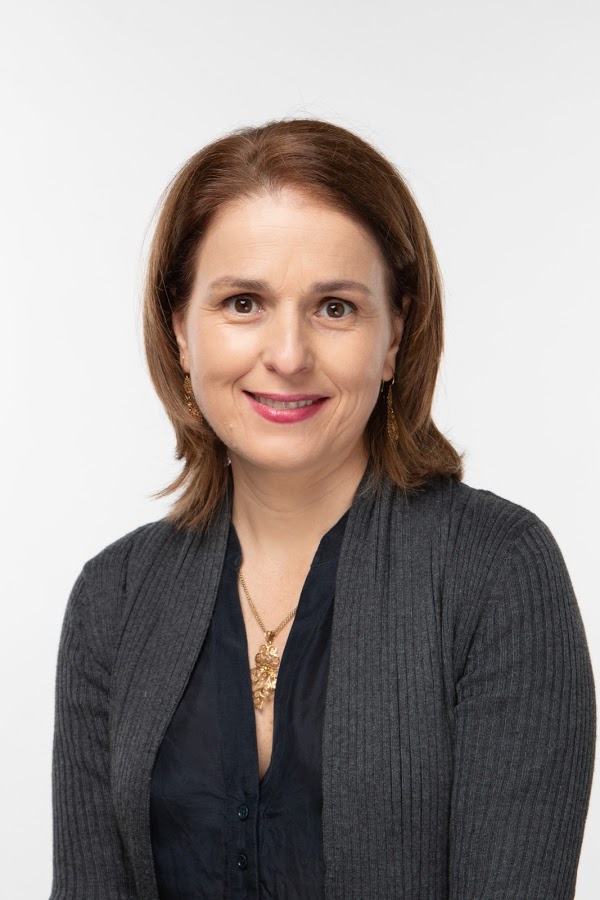
Isabel Gomes oversees the organisation’s humanitarian responses, with a focus on decreasing the vulnerability of millions of children before, during and after disasters. Currently based in Geneva, Switzerland, Isabel’s experience spans 25 years in the humanitarian sector, with recent experience in global donor engagement, resource development, strategy, operations and policy.
After beginning her career working with demobilised soldiers in Angola, Isabel worked in a variety of roles responding to humanitarian crises across 15 countries and some of the world’s most challenging contexts, including East Timor, Liberia, Sudan, Pakistan, Indonesia and Mozambique.