
article / August 31, 2026
Reclaiming Time, Restoring Childhood: Clean Water Arrives in Manguar After Decades of Need
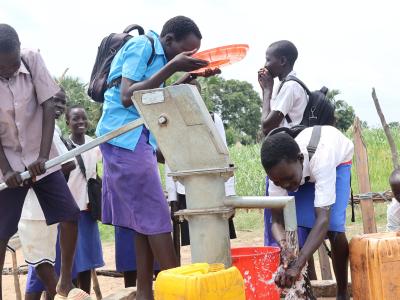
The new borehole at Manguar Primary School was made possible through the Enhancing Community Resilience and Local Governance Project Phase II (ECRP II), a government-led initiative funded by the World Bank and implemented by the Ministry of Finance and Planning and the Local Government Board, in partnership with World Vision.
article / August 25, 2026
Water close to home, Hope close to heart
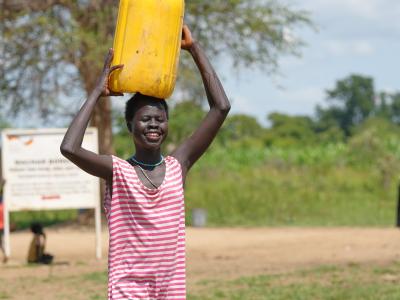
World Vision assessed the situation and rehabilitated the borehole through the funding of the German Federal Foreign Office (GFFO) Project as they saw the urgent needs of the community. The new borehole was built above ground level so it would be protected from contamination and accessible at all times of the year, as the Mangar-Tong area is affected by seasonal flooding.
publication / September 4, 2026
Situation Report 2: Nepal Flash Floods Response 2026
World Vision Reaches 1,355 People Following Nepal Flash Floods
article / August 6, 2026
Water for Life: Guidan Kane Katshinawa Transformed by a Water Well
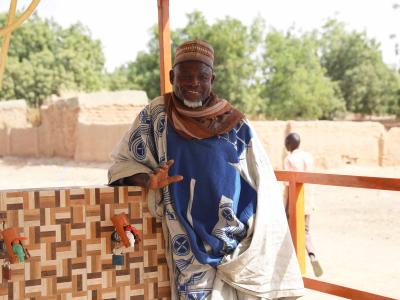
A World Vision-supported borehole is improving access to safe drinking water and strengthening health and wellbeing in Guidan Kane Katshinawa, Niger.
publication / September 3, 2026
Situation Report 1: World Vision International Nepal | Nepal Flash Floods Response 2026
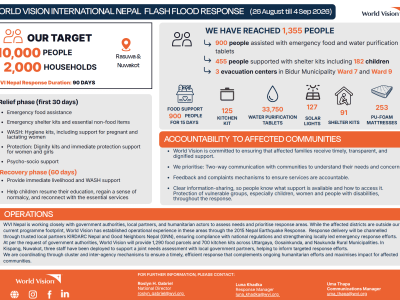
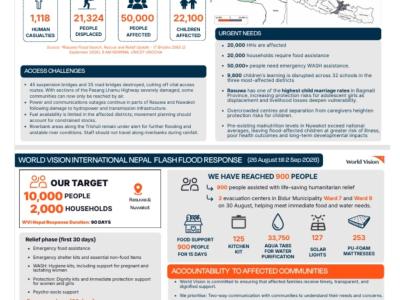
As of 2 September 2026, World Vision International Nepal's Flash Flood Response Situation Report 1 provides an overview of the humanitarian impact of the devastating floods affecting Rasuwa, Nuwakot, Dhading, and surrounding districts. With 50,000 people affected and more than 21,000 displaced, the report highlights urgent needs in food security, shelter, WASH, child protection, and education. It outlines World Vision's 90-day emergency response targeting 10,000 people across 2,000 households and reports that 900 people have been reached with life-saving assistance, including food support, kitchen kits, shelter kits and essential non-food items, water purification supplies, solar lights, hygiene kits, dignity kits for women and girls, and psychosocial support.
article / July 15, 2026
DR Congo: Clean Water and Better Hygiene Are Transforming Lives in Bambo and Kibirizi Health Zones
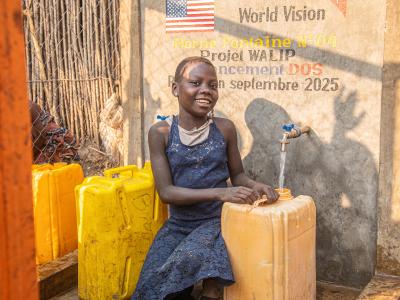
This human-interest article highlights how access to safe drinking water is transforming lives in the Bambo and Kibirizi Health Zones of North Kivu, eastern Democratic Republic of the Congo. It showcases the impact of a World Vision WASH project, funded by the U.S. Department of State, in improving access to clean water, promoting hygiene and sanitation practices, and reducing waterborne diseases. Through the voices of community members, children, parents, and health officials, the story illustrates tangible improvements in health, school attendance, personal hygiene, and community well-being. It also demonstrates how behavioural change, combined with sustainable water and sanitation infrastructure, is fostering healthier and more resilient communities. While celebrating the project's achievements, the article underscores the continued need to expand water and sanitation services so that every family can benefit from safe, reliable access to clean water.
article / September 1, 2026
A Well of Hope
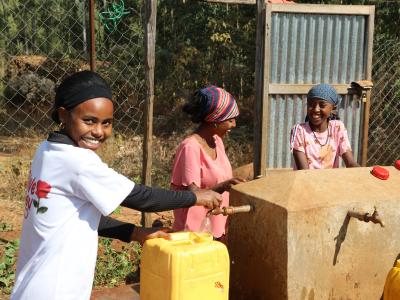
Once walking hours for unsafe water, Ebbise now has time to study and pursue her dream of becoming a doctor thanks to clean water in her community.
video / September 2, 2026
World Vision Donated Soap Brings Hygiene Support to Families in Ngwenyameni
World Vision’s Gifts-in-Kind Programme donated soap to learners in Ntondozi, helping families improve hygiene, practise handwashing and reduce the risk of preventable diseases.
article / August 31, 2026
I Only Lost My Shoe. They Lost Their World.
Golden light kissed shattered homes where memories slept beneath the mud. A red teddy bear lay silent in the ruins, carrying the echoes of childhood dreams swept away by the flood. I lost a shoe to the sludge, but thousands lost their homes, their safety, and the ordinary tomorrows they once imagined. Yet resilience rose like a river reed through the silt, bending beneath the torrent but refusing to break, as Bimala, a mother of a sponsored child, walked forward with quiet courage.
And above the wreckage, hope stood like sunlight after rain, stubborn as a seedling pushing through stone, refusing to be washed away.
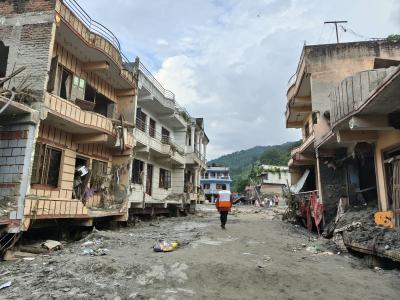
press release / September 2, 2026
‘I left everything behind’: Nepal flash flood, children face trauma, displacement and uncertainty and growing protection risks
As the humanitarian crisis deepens, with more than 1,000 confirmed fatalities and thousands still missing, strengthened child protection measures are urgently needed to support displaced children and their families.