article / March 18, 2026
New Water Sources Improve the Learning Environment in Central Mozambique
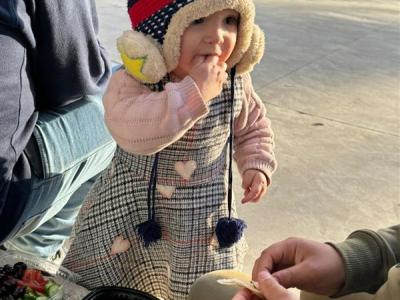
With a new borehole, healthy habits are fostered among children at school. With access to clean water, children not only wash their hands properly but also have more time to focus on their lessons.
World Vision Mozambique, with support from World Vision Hong Kong, installed five boreholes and 10 handwashing stations in the provinces of Zambézia and Nampula.
article / March 25, 2026
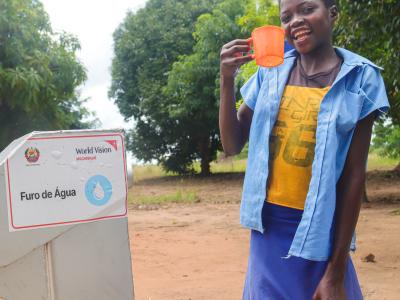
From Long Walks to Lasting Change: How Water is Transforming Lives in Mabalane
In Mabalane, Mozambique, improved access to safe water is transforming lives, reducing long walks, restoring dignity, and creating new opportunities for families.
article / November 20, 2025
From Mae Hong Son to the Hospital Ward: Fon’s Inspiring Path to Nursing
From Mae Hong Son to the Hospital Ward: Fon’s Inspiring Path to Nursing

article / March 3, 2026
Beyond Survival: Empowering Families Through Saving for Transformation
The EPIC project in Juba County empowers displaced families like Rejoice Poni’s through savings groups and affordable loans. By building trust in financial institutions and supporting small businesses, EPIC strengthens livelihoods, restores dignity, and promotes resilience among vulnerable urban households in South Sudan.
publication / March 24, 2026
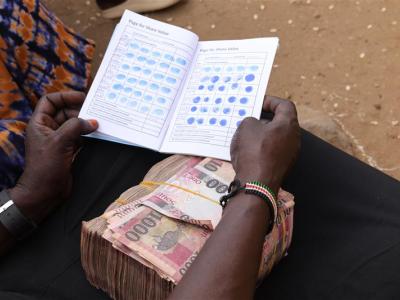
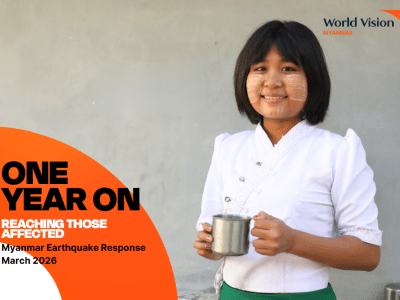
Myanmar Earthquake Response_One Year On Report
Many families continue to struggle to rebuild their lives one year after the devastating 7.7 magnitude earthquake that struck Myanmar on 28 March 2025. UN experts caution that reduced international attention and shrinking humanitarian funding may lead to devastating consequences for Myanmar’s already vulnerable communities. World Vision is providing life-saving relief assistance and recovery support to children and families affected by the earthquake: Through our humanitarian efforts, both immediate relief and long-term recovery, we aim to support 560,353 people, including 172,000 children. As of 18 March 2026, we have reached 581,269 people affected by the earthquake, including 194,748 children (107,016 girls and 87,732 boys).
publication / March 17, 2026
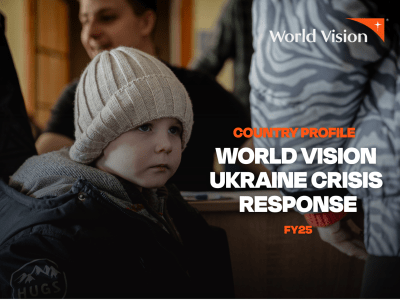
Response Profile: World Vision’s Humanitarian Efforts in Ukraine
World Vision Ukraine has supported over 2.3 million people since 2022, providing essential aid and protection to conflict-affected communities across most regions of Ukraine.
publication / March 16, 2026
Lebanon Response Sitrep 2026 #4
The escalation of hostilities in Lebanon has now entered day 15, while regional tensions linked to the wider conflict continued for 17 days, with no immediate indication of de-escalation. Evacuation orders continue to expand across South Lebanon, Beirut, Mount Lebanon, and the Bekaa Valley, with warnings issued by the country to the south instructing residents to evacuate and indicating that return will not be permitted until further notice. Reports state that entire families who chose to remain in their homes in some affected areas have been killed during strikes, highlighting the severe protection risks facing civilians.
In recent days, strikes have increasingly targeted critical infrastructure and transport routes, including two key bridges connecting major towns in South Lebanon, further disrupting civilian movement and humanitarian access. Trucks transporting goods are reportedly warned not to move along the southern coastal road, further constraining assistance delivery. Airstrikes also impacted central Beirut and residential areas in Mount Lebanon, reflecting the continued expansion of hostilities beyond traditional frontline zones.
Meanwhile, displacement continues to rise, and shelter capacity remains under severe strain. With collective shelters overcrowded or at full capacity, many displaced families have been forced to seek alternative arrangements, including unfinished buildings, informal shelters, and makeshift tents along the coastal Corniche from Saida to Beirut. Recent heavy rainstorms and falling temperatures have further worsened conditions, destroying displacement tents and flooding temporary sites, leaving displaced households exposed to harsh weather and heightened risks. The prolonged escalation is also contributing to pockets of civil unrest, as well as heightened social tensions in several areas, with growing fears among communities that prolonged displacement and political polarization could increase the risk of localized sectarian tensions.

publication / March 16, 2026
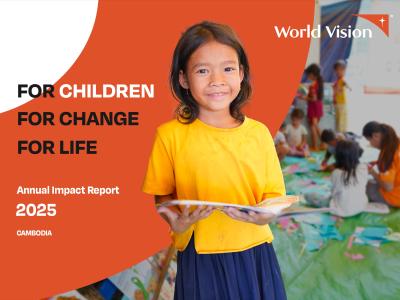
Annual Impact Report 2025
World Vision International in Cambodia’s 2025 Impact Report highlights a year of resilience, adaptation, and collective action amid significant humanitarian and development challenges. In a rapidly changing context shaped by sector‑wide disruptions and escalating border‑related conflict, World Vision Cambodia worked closely with government authorities, partners, communities, and donors to respond to urgent needs while sustaining long‑term development efforts. In 2025, World Vision Cambodia reached 5.4 million people, including 3.1 million children, nearly one third of Cambodia’s population. Humanitarian response remained a critical priority, supporting over 144,000 displaced people across 100 displacement sites, including children and people with disabilities, through life‑saving assistance such as water, sanitation, food and non‑food items, cash assistance, education, health and nutrition services, protection, and psychosocial support. Beyond emergency response, progress was achieved across education, child protection, WASH, nutrition, livelihoods, climate action, social accountability, and inclusive programming. The year also marked 55 years of World Vision’s long‑term commitment in Cambodia, reflecting sustained partnership and a shared vision for every child to experience life in all its fullness.
publication / March 12, 2026
Lebanon Response Sitrep 2026 #3
The escalation of hostilities in Lebanon is intense and rapidly expanding, resulting in nearly 820,000 forcibly displaced people - more than 200,000 of them children - in less than two weeks. Evacuation orders are expanding, with the country to the south launching the ‘South of Zahrani River’ initiative. Evacuation orders now encompass the entire region south of the Litani River, triggering waves of mass displacement as well as repeated displacement among already vulnerable families.
In several Christian-majority towns in the South, residents initially resisted leaving their homes, but were ultimately evacuated under the escort of UNIFIL for civilian protection. Hostilities are increasingly affecting areas beyond the ‘traditional’ frontline zones, a troubling trend that points to a more aggressive escalation than that of 2024. Recent airstrikes hit the neighborhoods of Haret Saida, Tyre, Aramoun, Ramlet El Bayda, areas deemed safer, in one case targeting a car nearby displaced families staying in tents. Targeting of central Beirut is new - with strikes on hotels and residential buildings that inevidably affect civilians in the surrounding areas. An estimated have been killed, with 81 children killed since March 1. UNICEF estimates that 10 children per day are killed.
Lebanon’s Ministry of Social Affairs reports 822,600 internally displaced people self-registered on the Government’s digital platform, indicating that overall displacement is significantly higher than that captured through collective shelter reporting. In addition, almost 84,000 Syrians and more than 8,000 Lebanese have crossed into Syria since 2 March.
Violations to International Humanitarian Law continue, with frontline responders at great risk. To date, 14 paramedics were killed, including one member of the Lebanese Red Cross, underscoring the growing risks faced by emergency personnel.