
New Water Sources Improve the Learning Environment in Central Mozambique

Until very recently, children in Zambézia province, central Mozambique, had to bring water in small containers for daily hygiene and consumption.
Every drop of water was used carefully throughout the entire learning period because no water source was available on the school premises. Nevertheless, the water wasn’t enough.
“Sometimes we didn’t have enough water to wash our hands after using the latrine,” said Cecília. The scarcity extended beyond the school, for even households struggled to have sufficient, decent water for daily needs.
“I had to wake up early before sunrise to walk to the river to fetch water. But water wasn’t enough to have at least two baths a day,” said Lameque, a 3rd-grade student, remembering the difficult days.
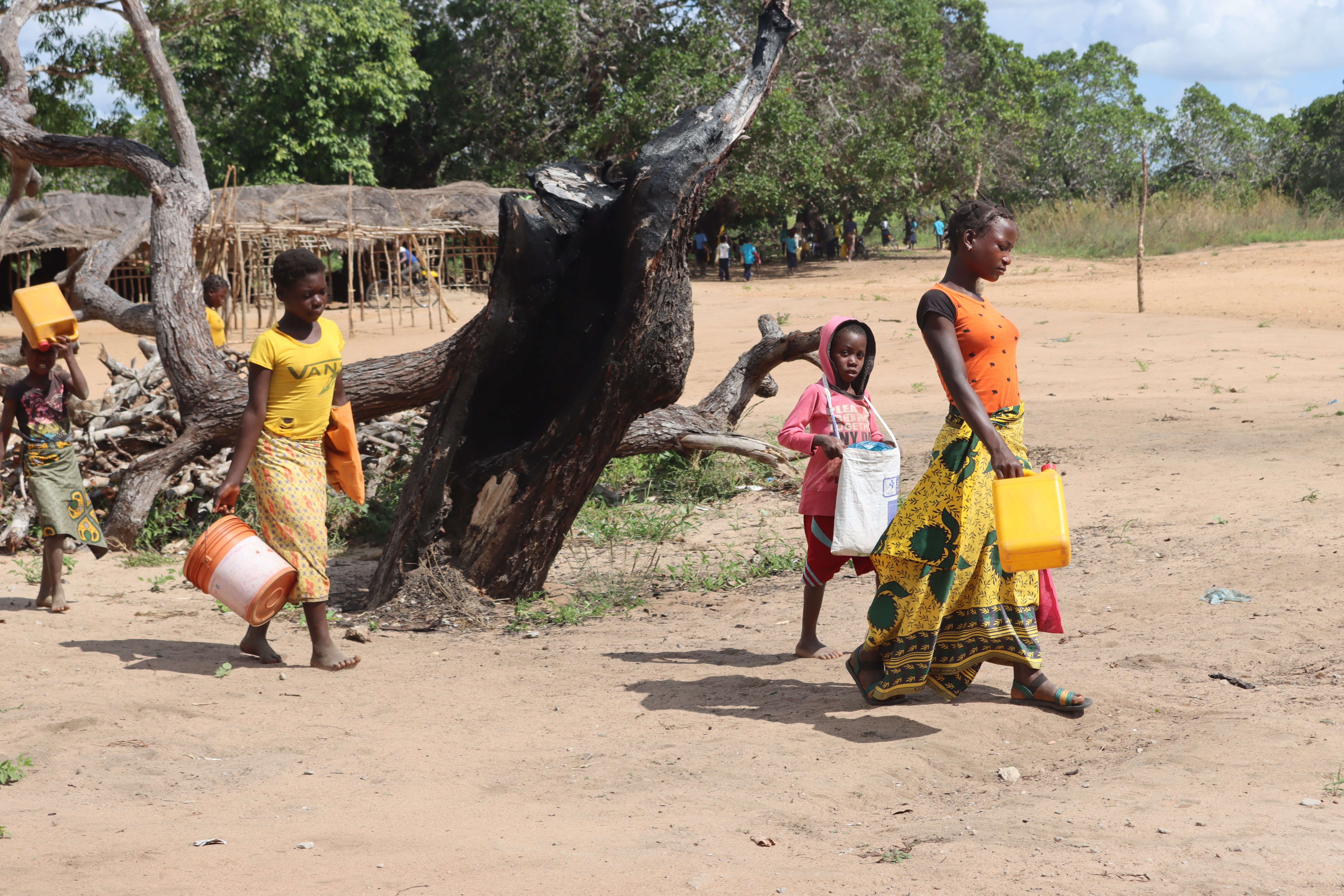
In the summer, the situation was more dire for the school and the surrounding communities.
“As the river flow grew thinner, people had to dig holes in the riverbed to find what was left of murky water,” said the school director.
The school provides daily meals for 373 students, and water is essential for cooking dishes such as rice with lentils and vegetables, which are staple foods on the school menu.
Angelina, a kitchen volunteer, remembers how she and other colleagues “would make five trips daily to the nearest river to fill water gallons and buckets to cook the meals for the students”.
With a new borehole, healthy habits are fostered among children at school. With access to clean water, children not only wash their hands properly but also have more time to focus on their lessons.
“This borehole is a sign of development for our community, and we are committed to give our contribution to keep this infrastructure functional for many years to come,” said Mr. Calembera, representing the School Council.
World Vision Mozambique, with support from World Vision Hong Kong, installed five boreholes and 10 handwashing stations in the provinces of Zambézia and Nampula.