
A BAG OF HOPE: HOW ONE STUDENT FOUND HER WAY BACK TO LEARNING

For years, students in Syrian schools carried dreams far bigger than the resources available to them. Many arrived each morning with worn-out bags, shared pencils, and the quiet worry of not having enough. Teachers did everything they could to fill the gaps, but the challenges were too heavy for them to carry alone.
The school itself had suffered repeated shelling before the war ended, leaving children anxious, distracted, and often absent out of fear. Winter brought bitter cold into classrooms, and summer added exhausting heat, making each school day feel like a struggle for survival rather than a journey of learning.
Among those students was a young girl named Hala*, who wanted nothing more than to learn. But poverty made even the simplest school needs difficult for her family. She remembers sitting in class with only a few old notebooks, feeling the sting of embarrassment each time, she noticed classmates writing in newer ones. Fear of the bombings often kept her at home, and every harsh winter day meant another lesson lost. Slowly, she watched her grades drop, and with them, her confidence.
Efforts were made to help. Teachers lent supplies when they could, and students shared what little they had, but the need was far greater than the school’s limited resources. Many children continued to feel the same sense of inequality.
World Vision arrives at the school.
Hala had learned about the coming distribution from World Vision during a school committee meeting and excitedly shared the news with her classmates. For days, the entire school buzzed with anticipation. And when the organisation’s team finally arrived with stacks of new backpacks, smiles spread across every face.
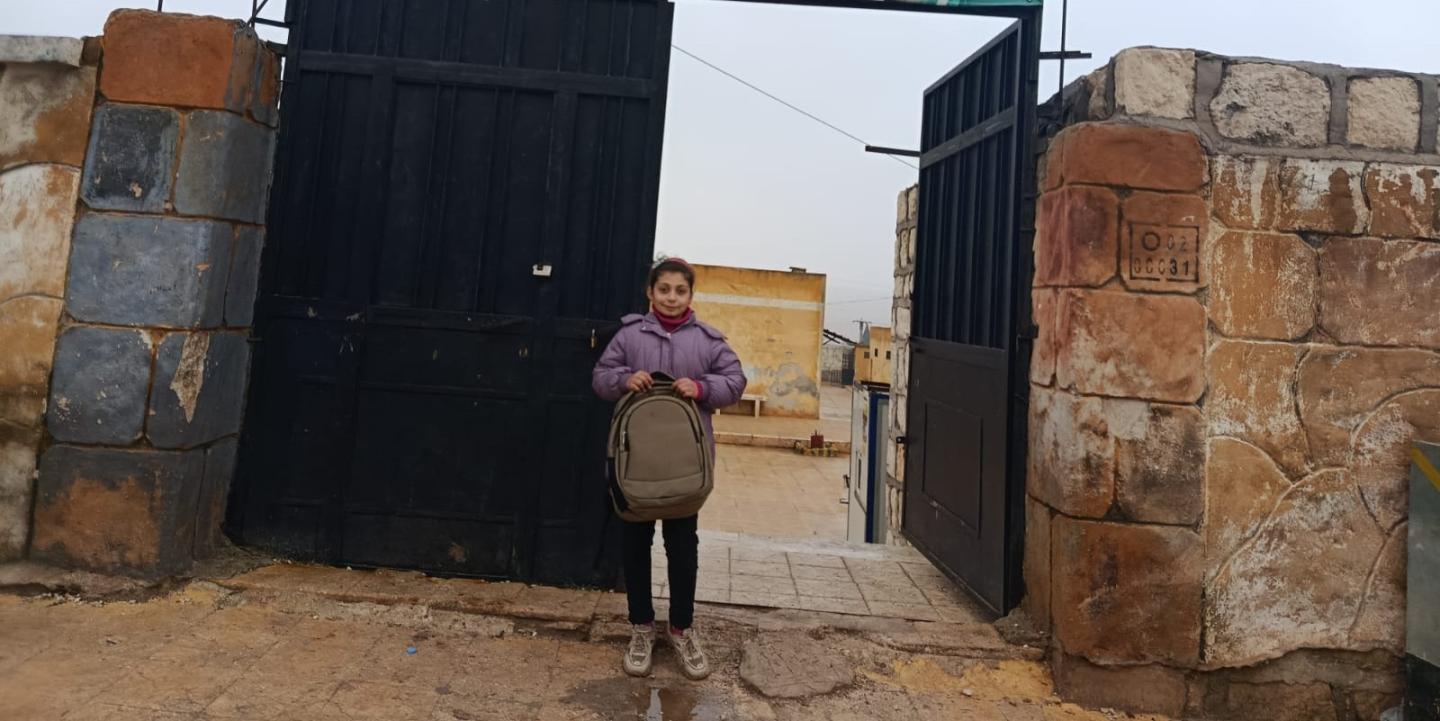
When her turn came, Hala stepped forward, gave her name, and received a brand-new school bag filled with notebooks, pencils, colouring sets, erasers, and more; enough to last an entire school year. She held the bag tightly, hardly believing it was hers.
That afternoon, she rushed home and began carefully arranging her books and supplies inside her new backpack. For the first time in a long while, she felt ready, ready to study, to focus, to dream again. The next day, she walked into class with her head held high, feeling confident and proud.
The impact extended far beyond her. Her family felt an immediate sense of relief. With five family members and two children in school, buying supplies had always been a heavy burden; one her parents often worried over. Her father, she recalls, was especially grateful, knowing that even a $10 school bag was sometimes beyond their reach.
Her classmates, too, experienced a transformation. Children who used to skip school because they lacked supplies suddenly returned with enthusiasm. Participation increased. The atmosphere in the classrooms became more vibrant, more equal, and more hopeful. Students treated their new supplies with care and helped each other stay organised. Parents became more engaged, visiting the school more frequently and speaking with teachers about their children’s progress.
One of the most inspiring changes witnessed was in her close friend, Rana*, who had always been too shy to participate in class because she didn’t have her own notebook.
After receiving her bag, she started raising her hand, contributing ideas, and smiling more. Her confidence blossomed almost overnight. Hala herself felt empowered with new skills. She learned how to organise her time and her belongings, take responsibility for her homework, and manage her studies with greater discipline. Her handwriting improved, her notebooks became tidier, and her voice grew stronger in class discussions.
In Syria today, the education crisis is far larger than any single school or community. More than 2.45 million children are out of school across the country, leaving a generation at risk of losing their future. The destruction of the education system has been enormous. At least 1,054 schools in northwest Syria alone are damaged, and one in three schools nationwide can no longer be used because they were destroyed, damaged, or repurposed for military use.
While challenges remain: overcrowded classrooms and students still needing academic support, the sense of possibility in the school has grown. For the first time in a long time, every child feels they have what they need to succeed.
Today, Hala believes this positive change will last. "When a student feels ready for school," she says, "they become more determined to keep going."
Through the support of the Syria Cross-border Humanitarian Fund (SCHF) under the project young generation building Syria back better, Hala and many other students can learn and thrive.
Her message to the donors and organisations behind the project is simple but heartfelt:
“Thank you for caring about us. You made a real difference in our lives. I hope you continue supporting children so every student can learn without fear or shame.”
*Names changed to protect identity.