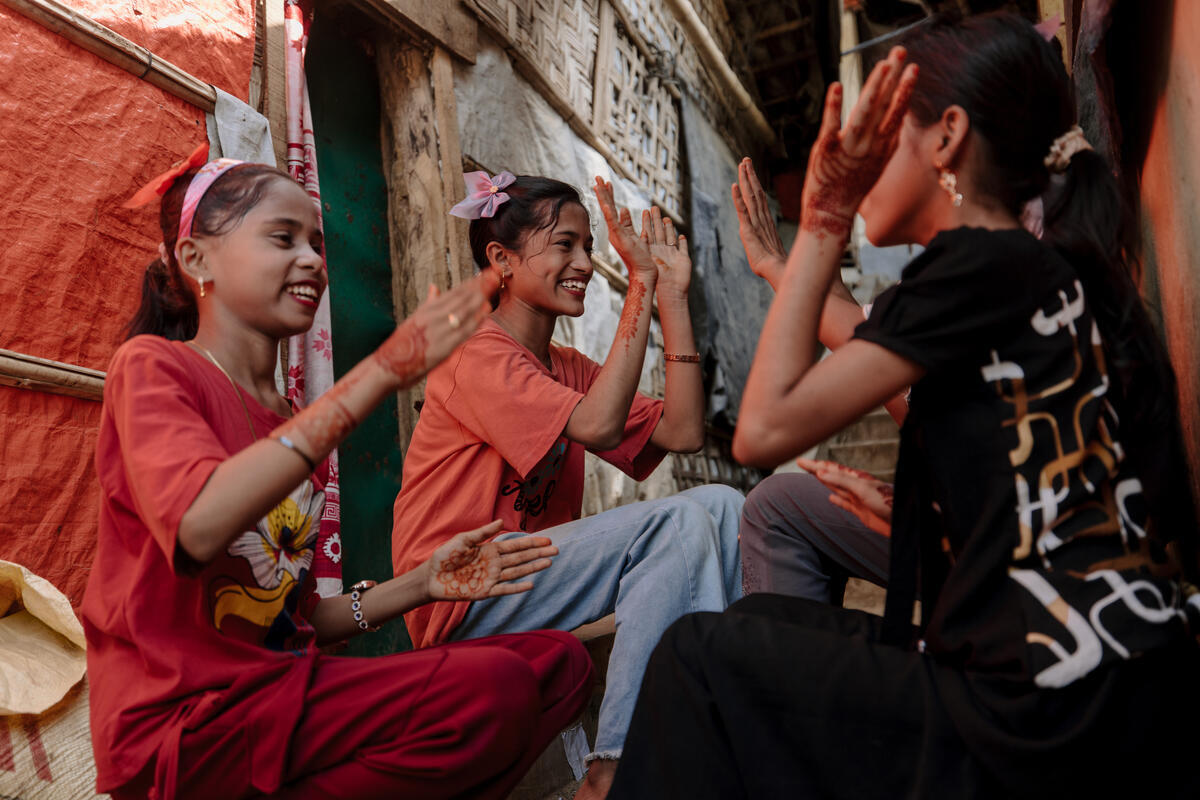
A girl’s fight for education in Cox’s Bazar

12-year-old Win lives with her family in Cox’s Bazar, Bangladesh, home to the world’s largest refugee settlement. Eight years into displacement, life in the camp has become a long-term reality for families like Win’s. Growing up in the camp means navigating not only displacement, but also the risks that threaten her ability to stay in school.
According to the UN Refugee Agency, over 1.1 million Rohingya refugees live in Bangladesh, and 77% are women and children. Education remains fragile and easily disrupted by insecurity, poverty, and growing pressure on overstretched services as humanitarian funding declines.
“I think about what will happen to my future if I don’t study,” says Win. “If I am not educated, how will I educate my children?”
A childhood shaped by uncertainty
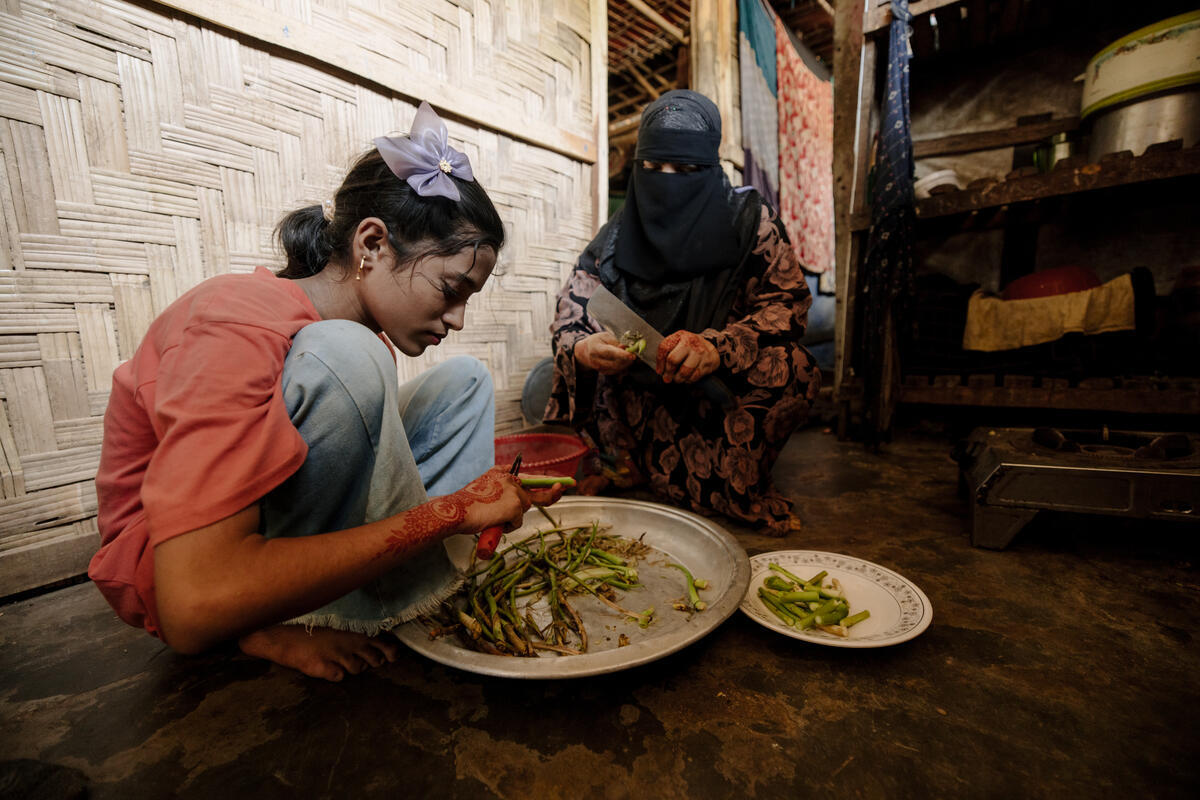
Each morning, Win moves between the madrasa and the school, then back to the madrasa. Later, she attends sessions under World Vision’s PEACE project at a child-friendly space in the camp.
But for girls like Win, safety concerns are constant, and movement within the camp is limited.
“There can be kidnapping, and sometimes girls are taken and sold here,” she explains. “That’s why they don’t allow us to go far alone.”
Across the camps, fear is widespread. According to World Vision’s most recent study, 31% of respondents in Bangladesh cited community or country-level conflict as a significant worry, while 19% report fear of kidnapping. For many families, these risks directly affect decisions about education, with fear and insecurity often forcing girls out of school altogether.
“In our camp, when girls grow older, families fear harassment and rumours, so they stop sending them to school,” Win says.
“Adolescent girls do not go to school; they stay at home,” says Win’s mother, Sunzida. “I try to bring them in and educate them, so they do not get involved in harmful activities. This way, they can live properly and lead a good life.”
Barriers to education
Education in displacement is not only about access – it is shaped by the broader realities of camp life, where restrictions, declining humanitarian funding, and about influence on whether children can safely stay in school. In the Rohingya camps, nearly one in four households report being unable to afford education for their children. At the same time, reductions in humanitarian assistance are pushing families to make difficult choices.
Children in households facing cuts in assistance are 64% more likely to leave school to work, and more than twice as likely to be forced into child marriage, according to the World Vision study.
For girls like Win, this creates an uncertain path: one where education can be interrupted at any moment.
 “Last year, several schools were completely closed because of the funding cuts,” says Md. Mofizur Rahman, Deputy Response Director, World Vision Cox's Bazar “At the same time, the children who were supposed to be in school are engaged in child labour, in armed conflict or armed engagement – this sort of unethical activity.”
“The dropout rate is not much – around 20% – but the important thing is that out of this 20%, it is mostly girls,” Rahman explains.
World Vision supports Rohingya families across Cox’s Bazar through education and protection programmes that aim to keep children learning and safe. At the Tulip Centre, the PEACE project runs sessions on sexual and reproductive health and rights.
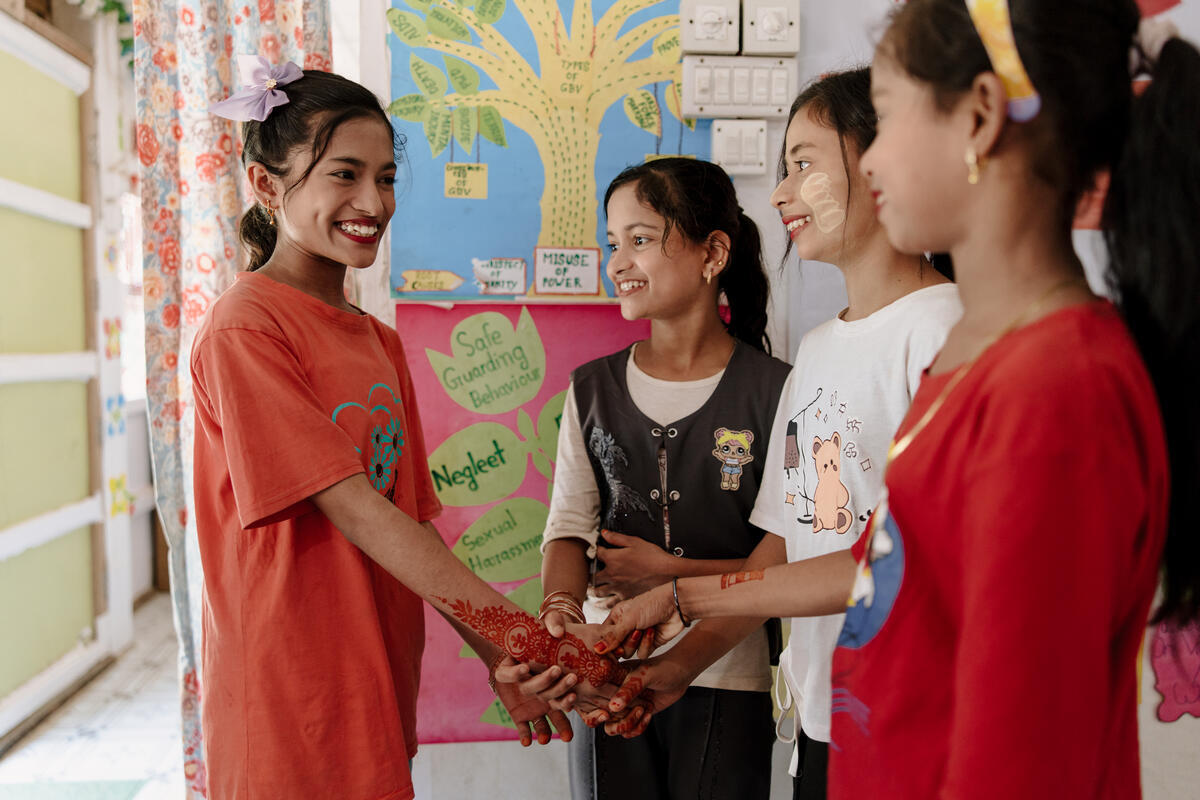 Win brings this knowledge back to her family. She reminds her siblings to wash their hands before eating, encourages healthy habits after play, and shares what she has learned about nutrition and caring for the body. In small but meaningful ways, she is not only receiving support through education but is also becoming a source of guidance and change within her household and community.
Women and Girls Safe Spaces serve as a safe haven where girls can learn about their rights, build confidence, and better understand how to protect themselves. These spaces also help address some of the fears that prevent families from allowing girls to continue their education.
Across Bangladesh, World Vision is supporting more than 241,700 Rohingya refugees, half of them children, through integrated programming that combines education, protection, and access to essential services such as WASH, helping to strengthen wellbeing and resilience in both camps and host communities.
But without sustained support, more girls risk dropping out of school, face exposure to child labour, early marriage, and exploitation. This means predictable funding and long-term commitments from the international community to ensure education and protection services in displacement settings do not falter.
Holding on to hope
Win dreams of becoming a doctor one day, to care for women and girls in a community where female practitioners are scarce.
For girls like Win across Cox’s Bazar, education is more than learning: it is a pathway to safety and a different future. With continued support, girls like Win can stay in school, build their confidence, and keep their dreams alive.