
No papers, no school, no food: the triple lock trapping displaced children in Syria

“We barely eat once a day,” says 40-year-old Um Ahmad, a mother of four.
Displaced and uprooted multiple times by Syria’s war, Um Ahmad and her family’s journey eventually led them to a refugee-crowded camp, in rural Idlib near the Turkish border. With her husband left behind, in rural Aleppo, her family struggles to survive on insufficient earnings.
“The first time we left our home in rural Aleppo, we sought refuge in northern Aleppo. We thought we were safe in our own country,” says Um Ahmad. “But displacement is agony that many people ignore. Before the war, we moved from place to place for picnics, not to escape bullets.”
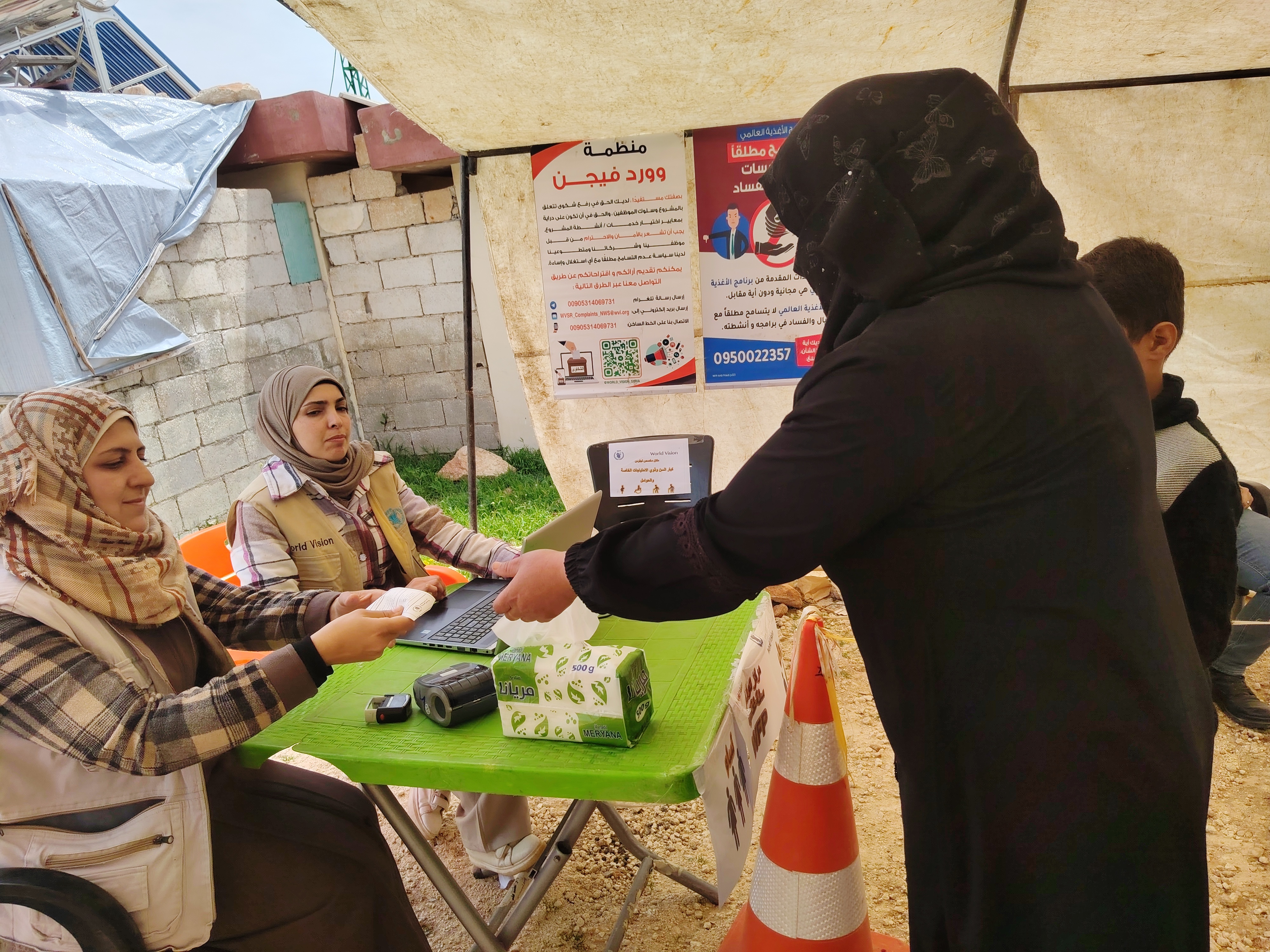
For Um Ahmad and her family, humanitarian assistance is their lifeline. The family received food assistance delivered by humanitarian organisations like World Vision and funded by the World Food Programme, but once the rations are over, the rest of the month becomes a careful balance between hunger and debt to survive. In the camp, hunger has become a defining feature of childhood. Years of conflict, economic collapse and shrinking humanitarian budgets have resulted in households surviving on one meal a day or less. Food assistance lasts around ten days a month, after which parents ration what little remains or simply go hungry.
 A national crisis reflected in one camp
The situation in the rural Idlib refugee camp mirrors a broader humanitarian emergency across Syria. 14.5 million people are food insecure, including 9.1 million who are severely food insecure. In rainfed regions such as Aleppo and Idlib, wheat and barley yields have collapsed by more than 95%, driving up food prices and deepening dependence on assistance.
"Bread has become our most urgent wish,” says Um Ahmad. “Vegetables, fruits, and proper nutrition are luxuries we cannot afford. To meet my children’s needs, I try to work whenever I can, taking on any job just to provide the basics."
For children in the refugee camp, empty stomachs rarely exist in isolation. Over 600,000 children under five are acutely malnourished. Children lack essential nutrients, leaving them increasingly vulnerable to illness.
The consequences of cuts in assistance are devastating. Access to healthcare has declined after nearby services closed due to a lack of funding, forcing families to travel more than seven kilometres for care they often cannot afford. Funding shortages have already left 40,000 children and 18,000 pregnant and breastfeeding women without life-saving care. Schooling remains out of reach. What began as an emergency response has hardened into a protracted crisis, with declining assistance reversing years of progress in child development.
"People think we have a normal life like others, but in reality, we are dead souls in weak bodies," says Ammar Al Hmoud, Camp Manager. "Families in the camp have been forced to cut meals, and some children have been seen scavenging from garbage. Poverty has consumed the camp, rates exceed 91%, unemployment is rampant, and the rising cost of food makes humanitarian assistance not just helpful, but essential."
Aid cuts translate into lost futures
As assistance shrinks, households, mostly dependent on life-saving humanitarian assistance, must make impossible choices: eating less so children can eat, pulling children into labour or abandoning education entirely.
"Across Syria, millions of people remain uncertain about where their next meal will come from, and the crisis shows no signs of easing," says Ibrahim Al-Bakkour, World Vision International, Syria Response project Teal Lead.
Beyond the upheaval of war, Um Ahmad’s family faces a quieter but no less devastating loss. Driven from Al Eis village in rural Aleppo to Al Hour, and uprooted once more as fighting closed in, she lost her identity papers while fleeing for safety.
"Each move stripped our family of what little stability remained, along with our identity documents, our security, and our access to basic services," says Um Ahmad. My children don’t have the documents needed to re-enrol them in school.
Um Ahmad’s son, 10-year-old Omar, is unsure how old he is. Like many children in northern Syria, his education has been suspended indefinitely.
“I haven’t been to school in nearly two years," says Omar in a soft voice. "I want new books and school supplies."
For millions of people like Um Ahmad and her children, humanitarian assistance is not supplemental. It is the difference between coping and collapse. Without sustained funding, children like Omar will continue to grow up hungry, out of school and searching for their most basic needs, while their hopes for the future wait to be prioritised.
Since the Syrian crisis began in 2011, World Vision International, Syria Response has led humanitarian and recovery initiatives across Syria, Jordan, and Türkiye. In Fiscal Year 2025 (FY25), our programmes reached more than 4,221,500 people, including 2,528,752 children, through an integrated, multi-sector approach covering health and nutrition, protection, water, sanitation and hygiene (WASH), education, and livelihoods.
“World Vision works side by side with the World Food Programme (WFP). For more than a year and a half, we have been present in the camps and communities of Aldana, northern Idlib. Every day, we distribute food baskets, manage the e‑voucher system, verify registrations, and listen carefully to the concerns people bring to us. We continue to walk side by side with children and their families because they deserve dignity, respect, and the assurance that they are not forgotten," says Ibrahim.