
Sudan’s conflict has created a generation in survival mode

Three years into Sudan’s brutal war, the cost of international inaction is being borne by children. As diplomatic attention drifts and humanitarian funding falls short, a generation is growing up defined not by school days or play, but by hunger, displacement and fear.
In camps like Feina, childhood has been reduced to survival
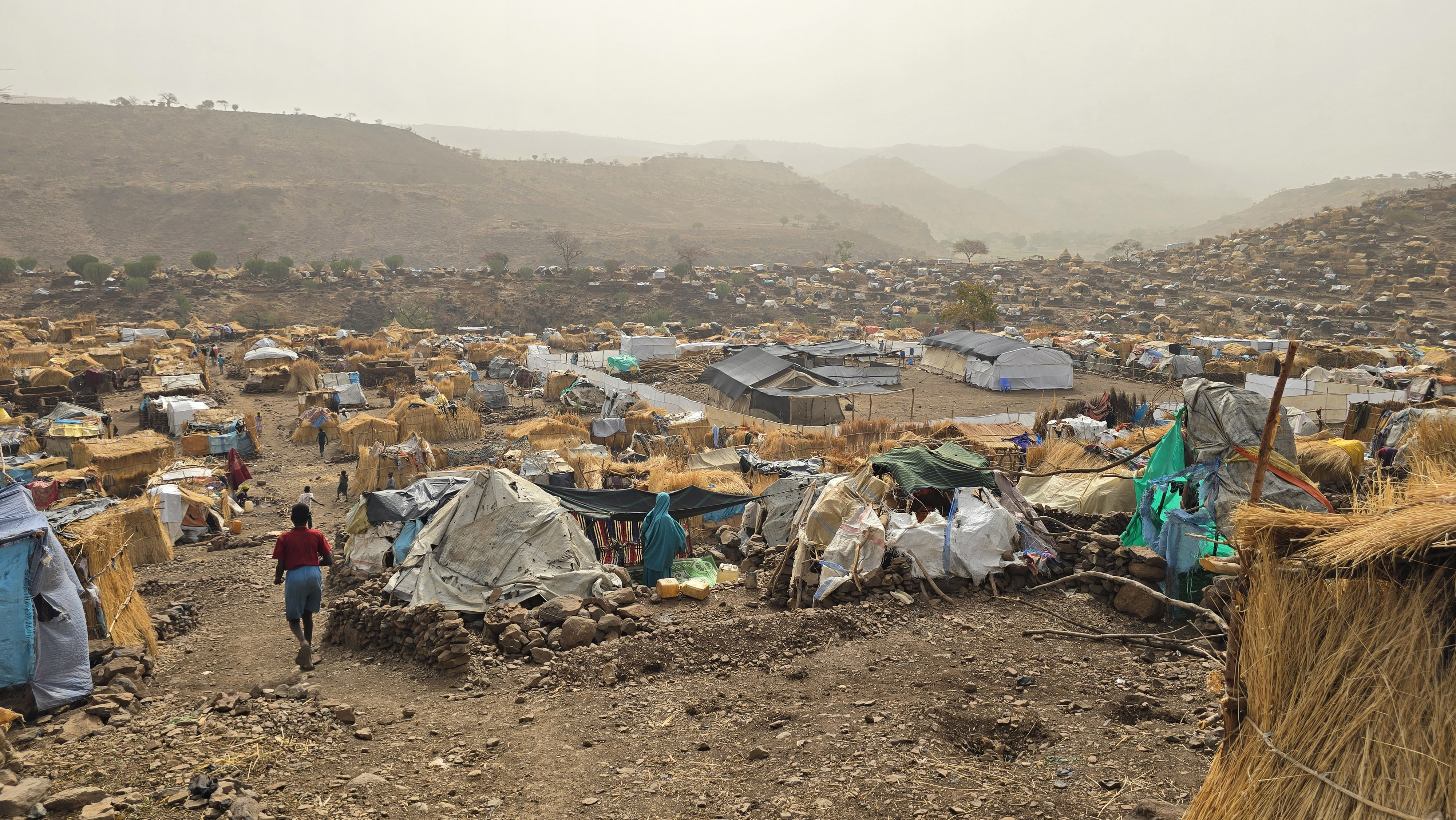
Nowhere is this clearer than in Feina camp in South Darfur’s Jabal Marra area. Reaching the camp requires a five-hour‑ journey from Nyala along a narrow, mountainous road that becomes impassable with the first heavy rain. That isolation mirrors the reality facing the families who live there out of sight, and too often out of mind.
Feina was first established in the early 2000s to shelter people fleeing violence in Darfur. Today, history is repeating itself. According to local authorities, the camp now hosts more than 40,000 internally displaced people, nearly two-thirds‑ of them children, who have fled fighting in Al Fasher, Tawila and Zamzam. Sudan has become the world’s largest internal displacement crisis, and children make up the majority of those uprooted.
The camp stretches across a rocky hillside, its shelters clinging to the earth. Homes are pieced together from dried grass, sticks, tarpaulins and stones. They offer little protection from heat, rain or wind. Living, cooking and sleeping take place in the same cramped space. This is a place designed for survival, not safety or dignity.
 As schools close and services collapse, children fall further behind
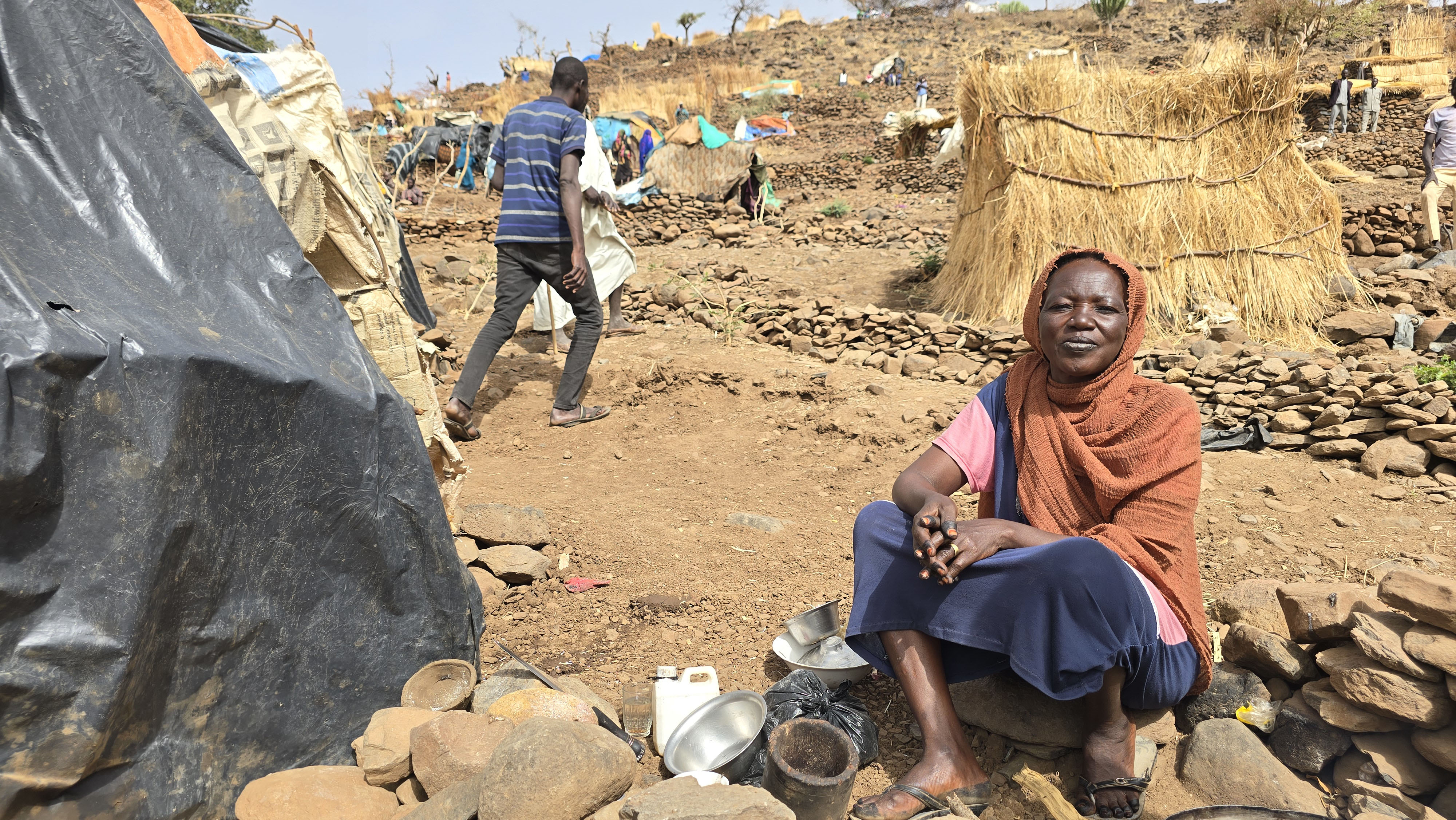
It was here that I met Awatif, a 42 year‑ o‑ld mother of six who arrived five months ago after fleeing violence. During the journey, her daughter was killed in a drone attack. Awatif now lives in a makeshift shelter barely four square metres in size, built from dry grass, sticks and plastic sheets.
“Life is very difficult here,” she told me. Before displacement, Awatif ran a small business in Nyala selling food and hot drinks. It allowed her to raise her children with dignity. She arrived in Feina with nothing.
“Now we don’t have food for the children,” she said. “One meal a day is the norm, mostly sorghum porridge. Blankets and mattresses feel like luxuries.”
Her children, like so many others in Feina, are bearing the full weight of this crisis. Awatif has watched them go hungry, fall ill without access to healthcare, and lose any chance of education. She has seen adolescent girls assaulted in front of their families. And she carries the trauma of losing a child to violence.
“What can I do?” she asked, exhausted.
Across Sudan, Awatif’s story is tragically common. An estimated 17.3 million children now need humanitarian assistance, out of more than 33 million people affected by the crisis. Sudan has more than 9 million internally displaced people, and 55 % of IDPs are children under 18 years old. These are not abstract statistics. They represent interrupted childhoods, deep trauma and futures at risk.
In places like Feina, childhood has been reduced to survival. Many children have been displaced multiple times. Schools have been destroyed, closed or turned into shelters. As a result, around 10.5 million children are currently out of school, with rates exceeding 70 per cent in parts of Darfur and Kordofan. Girls face increased risks of early marriage and abuse, while boys are pushed into labour or recruitment.
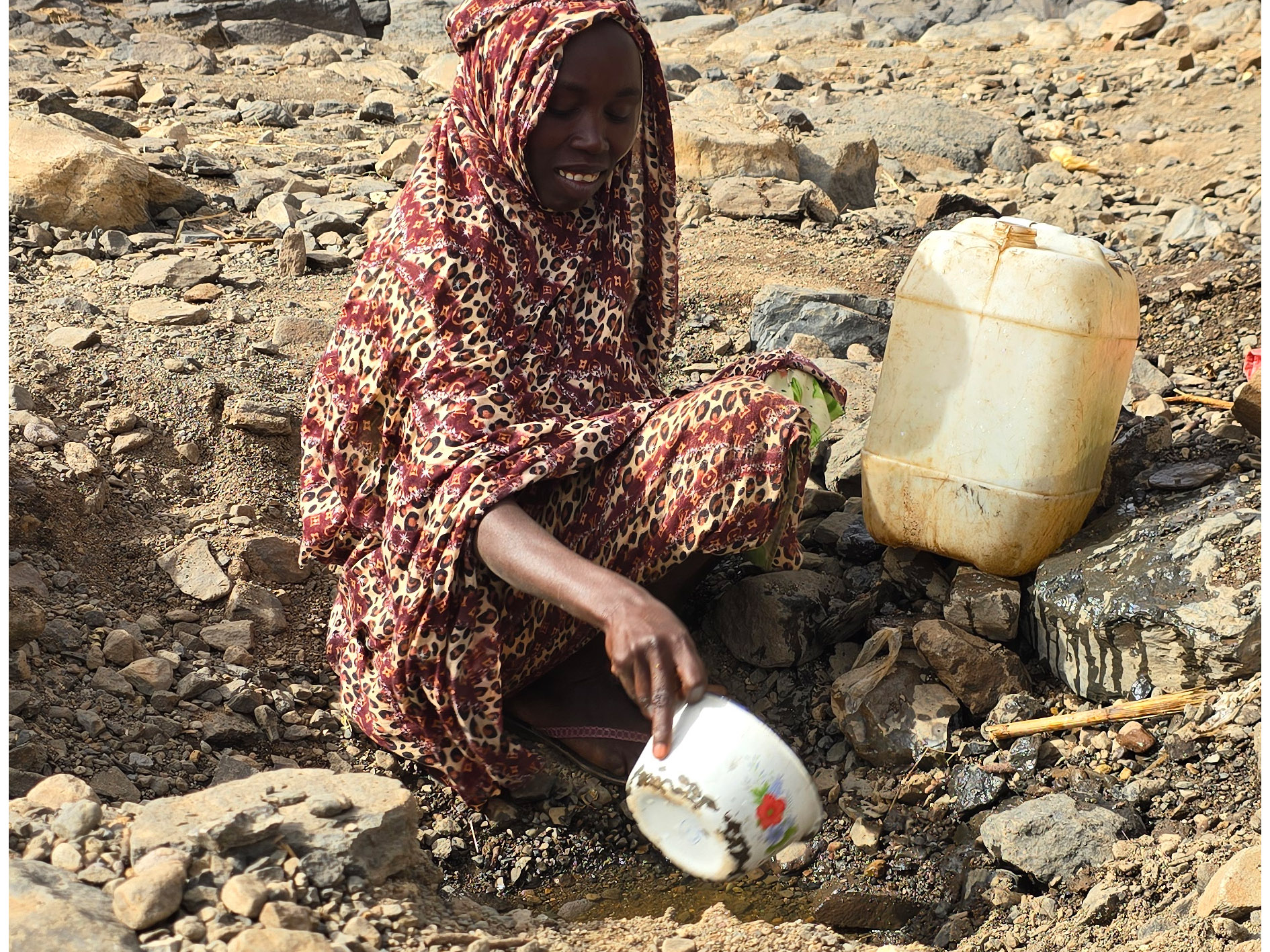
Health services are collapsing. More than one‑third of health facilities nationwide are no longer functional, cutting children off from vaccinations, maternal and newborn care and emergency treatment. Water points are scarce, protection services overstretched, and in parts of North Darfur, malnutrition has reached catastrophic levels.
As the world looks away, a generation of Sudanese children is being lost
And yet, amid all this, I saw children playing with improvised toys, laughing briefly before reality pulled them back. I saw resilience, but also deep exhaustion. Resilience should never be mistaken for recovery nor used as an excuse for global inaction.
After three years of war, five realities can no longer be ignored.
- First, children are bearing the brunt of the crisis from hunger and disease to violence and trauma.
- Second, displacement has become a way of life, with entire childhoods spent in camps.
- Third, education is collapsing, putting a generation at risk.
- Fourth, basic services health, water, sanitation and protection are failing at scale.
Finally, despite its magnitude, Sudan’s crisis remains critically underfunded at just 16 per cent.
This is not a failure of information. The warning signs of looming famine, mass displacement, collapsing services and attacks on civilians have been evident for years. The failure lies in the gap between what is known and what has been mobilised politically, operationally and financially.
Humanitarian needs have risen while funding has not kept pace, leaving families like Awatif’s to absorb the consequences.
Humanitarian assistance alone cannot resolve this crisis. Meaningful progress depends on a ceasefire, sustained humanitarian access, stronger protection of civilians and renewed political engagement. Sudan requires an integrated approach one that brings together funding, access, civilian protection, cessation of hostilities and accountability, rather than treating them as separate and disconnected priorities.
When I left Feina, I kept thinking about Awatif a mother who once built a dignified life through hard work, now struggling to feed her children.
Her question still echoes: “What can I do?”
After three years of war, perhaps the more urgent question is this:
What will the world do now before another generation of Sudanese children is lost?