
A Venezuelan refugee family’s path from survival to hope: rebuilding life beyond displacement in Colombia

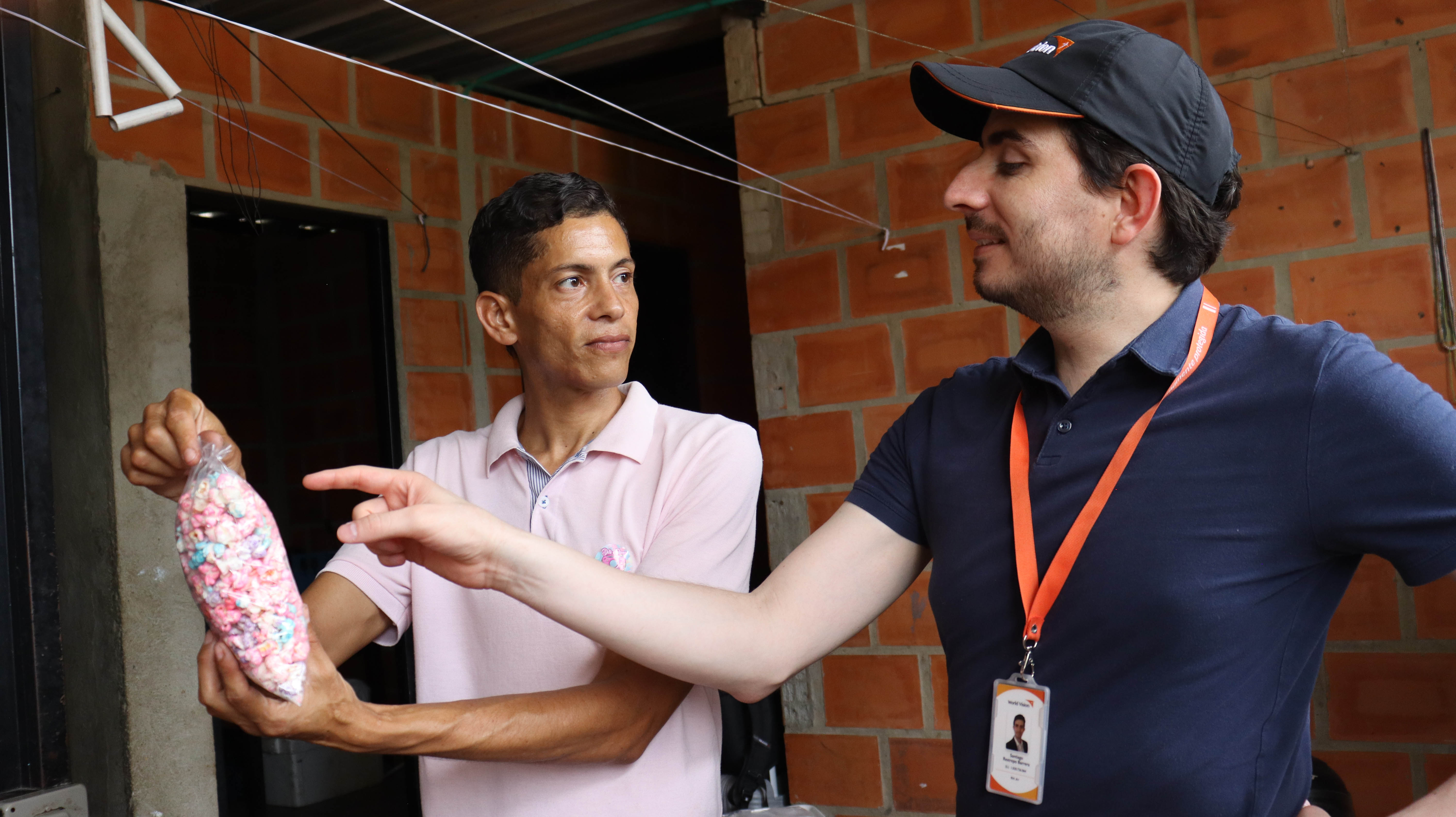
In the morning light of a small kitchen, Miguel seals a bag of popcorn and places four colourful cupcakes into a plastic container. It is a quiet, disciplined routine, the kind that helps a displaced family turn uncertainty into stability.
Yesleidy and Miguel fled the humanitarian crisis in Venezuela refugees two years ago, migrating to Colombia with their children. They rebuilt their lives from the ground up, turning a small family entrepreneurial idea into a pathway toward stability and a future they can plan for. Today, their days revolve around a modest food stall near a local school, where Miguel prepares and sells empanadas, popcorn, cotton candy, and cupcakes to students.
For families rebuilding after displacement, a small but steady source of income can mean the difference between getting by and moving forward with dignity. Across Colombia, food insecurity remains a pressing challenge, with 36% of households in Colombia being food insecure, according to a recent World Vision study.
A small food stall, built step by step
“We are a Venezuelan family. A humble, hardworking, resilient family that has launched businesses not only here, but also back in Venezuela,” Yesleidy reflects. “Because even though at one point I had a very good job, the economic situation wasn’t enough to support us. So, my partner here, who has always knocked on doors through commerce, decided once again to reinvent himself, because you always have to reinvent yourself.”
When they first arrived, Miguel began with a fast-food cart, selling empanadas outside the school. Over time, the business grew into a food stall. Today, their ambitions go further.
“I want to expand, not just to a fancy bakery, but a bakery that can sell everything else: confectionery, sweets, because from there you can also work with empanadas, and keep working with school cafeterias. That's very profitable," explains Miguel.
For refugee families, a stable livelihood helps keep their children in school and makes planning possible. In Colombia, almost 33% of households have temporary, seasonal or irregular employment, and only 4.6% have full-time employment with legal documentation.
Strengthening livelihoods
Through World Vision’s Beyond Borders project and its seed capital, families like Yesleidy and Miguel’s receive support to strengthen their business. This includes participation in the Canvas model, which is composed of nine steps and provides key tools for the creation and consolidation of businesses. Those who complete the process and present their initiatives to the seed capital committee can access resources to purchase supplies, enabling them to take their businesses to the next level. After consistent participation, Yesleidy and Miguel’s business plan was approved – a milestone that marked both recognition and a new opportunity.
“When he told me the business had been approved, I was happy, very happy. I wasn't surprised, but I was very happy,” says Yesleidy. “It’s been a long process: we’ve been very consistent and very disciplined with the meetings, the trainings. It’s been a long process, but very rewarding. And when they told us our family business was approved, it was pure joy.”
 At risk of losing progress
Despite this momentum, funding cuts put programmes like Beyond Borders at risk. Without continued support, families like Yesleidy and Miguel’s lose access to the training, resources, and guidance that make it possible to sustain and grow their business. Opportunities to move into stable, formal employment became increasingly out of reach. For families already experiencing displacement, this can mean the difference between building a future or slipping back into uncertainty.
With sustained investment, families like Yesleidy and Miguel’s can move beyond survival, building stable livelihoods and creating better futures for their children.