
Fishing hopes: From fear of floods to a thriving fishing livelihood in rural South Sudan

For years, seasonal flooding in Akuem boma, Aweil East County, in Northern Bahr el Ghazal State brought uncertainty to Rebecca Abuk and her family. As a mother of three in a household of eight, Rebecca worried about how they would find enough food and pay for essential needs.
Things began to change in August 2025 when Rebecca was selected to join a fishing group under the Watershed Approaches for Climate Resilience in the Agro-pastoral Landscapes (WACRESS) Project, a Government of South Sudan project supported by the Global Environment Facility and the UNDP, and implemented by World Vision.
Before joining the project, Rebecca had limited options to support her family. Her husband relied on occasional casual labor, which brought in little income. During flooding, food became scarce, and Rebecca often worried about her children’s education and the health needs of her grandchildren.
“Before this project, I was always worried about how we would feed our family when the floods came.”
Fishing was difficult and inefficient. Without proper equipment, she could catch only about two malua of fish per day by wading into the water.
Through WACRESS, Rebecca received fishing kits, including hooks and monofilament lines, as well as training on sustainable fishing and fish preservation.
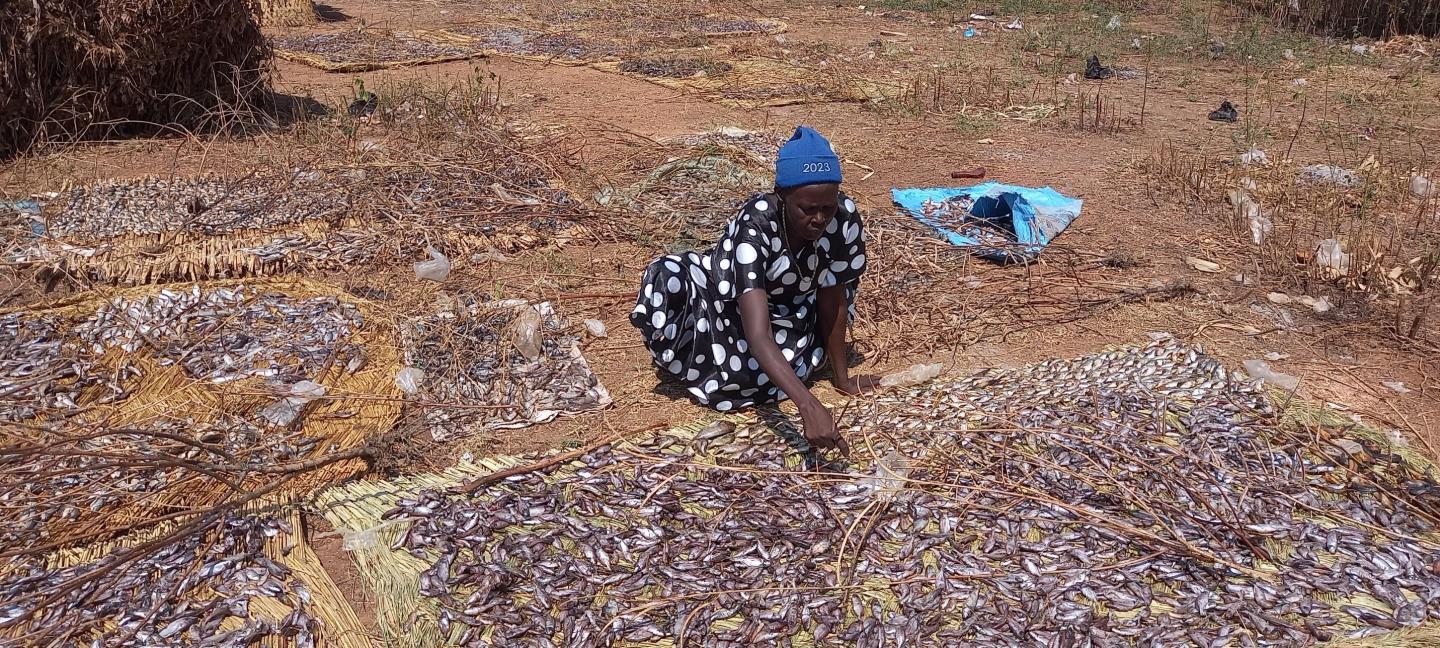
She invested 100,000 South Sudanese Pounds (SSP) (approx. US$ 17) to have her fishing gear netted and began working from a fishing camp along the roadside. Using a wooden canoe, Rebecca doubled her catch to about four malua of fish per day.
Her eldest son helps cast the nets while Rebecca focuses on drying fish on locally woven grass mats and processing fish oil, which she also sells.
In October 2025, Rebecca made her first major sale, earning 1,000,000 SSP (approx. US$167) from preserved daga fish, dried fish, and fish oil.
“Now I can catch more fish, earn income, and pay school fees for my children.”
With the income she earned from selling preserved fish and fish oil, Rebecca was able to pay school fees for all three of her children, provide food for her household, cover medical expenses for her two grandchildren, and purchase sorghum. She also bartered some of her fish for other food items, helping to diversify her family’s diet and improve their nutrition.
Rebecca also shares fish with relatives and visitors, extending the benefits of her new livelihood to others in her community.
“I hope more women in our community can receive the same support.”
Looking ahead. Rebecca plans to grow vegetables near local haffirs during the dry season, allowing her to maintain an income when water levels drop.
She hopes future project support will include protective gear such as gumboots and overalls, and that more families in her community will be given the opportunity to participate.
About WACRESS
The WACRESS Project is an initiative of the Government of South Sudan, led by the Ministry of Environment and Forestry in partnership with the United Nations Development Programme (UNDP), the United Nations Industrial Development Organisation (UNIDO) and World Vision, and funded by the Global Environment Facility (GEF). Implemented in Aweil Centre and Aweil East counties of Northern Bahr el Ghazal State, the project aims to strengthen the climate resilience of agro-pastoral communities.
WACRESS supports communities to adapt to the impacts of climate change through ecosystem restoration, improved animal health services, climate-smart agriculture, and sustainable natural resource management. The project also promotes alternative livelihoods, including fishing, improved crop production, and other income-generating opportunities that help households build food security and increase their resilience to climate-related shocks.
Story and photos by Maker Alembany/World Vision - WACRESS