
In Haiti, Hope Is Built One Bench, One Birth Certificate, One Child at a Time

by Stephen Ralph Henri, Advocacy Manager, World Vision Haiti
The first time 12-year-old Petia sat at a proper school desk, it was a moment of dignity more than a moment of comfort.
Until January 2026, she had never sat on a classroom bench. Like many children in under-resourced schools in Haiti, she had learned from the ground, bending her knees to write, eating without a table, carrying the quiet shame of being treated as though her education mattered less. “Before, I was ashamed to sit on the ground,” she said. “But now I feel like a real student. I will never have to eat on the ground at school again or bend my knees to take notes thanks to these benches.”
For many, a school bench may seem ordinary. But for Petia, it changed the way she saw herself. It told her that she belonged in the classroom. That her learning mattered. That her dignity was worth protecting.
This is what humanitarian work often looks like in Haiti. It is not always dramatic. It is not always visible from the outside. Sometimes it is a school bench facilitated by community leaders that can restore dignity. But behind each of these moments is the belief that children should not have to surrender their rights simply because they were born into crisis.
Across Haiti, the gap between children and the full realisation of their rights remains painfully wide. Around 2.8 million children, one quarter of all children in the country, face hunger, fear caused by abuse and armed violence, and severe barriers to quality education and decent living conditions. Haiti’s Humanitarian Response Plan requires US$880.3 million, yet remains critically underfunded, leaving many vulnerable families with limited support.
These figures matter. This World Humanitarian Day, we need to remind ourselves that people matter more than numbers. Every statistic represents a child, a family, a teacher, a community leader or a local humanitarian worker, like me, trying to keep hope alive in circumstances that would test anyone’s endurance.
In Haiti, many of those who serve are not outsiders arriving from somewhere safer. They are neighbours, parents, church leaders, teachers, youth mentors and local staff. They face the same insecurity, the same fragile roads, the same rising costs, the same uncertainty as the communities they support. Yet they continue to show up.,
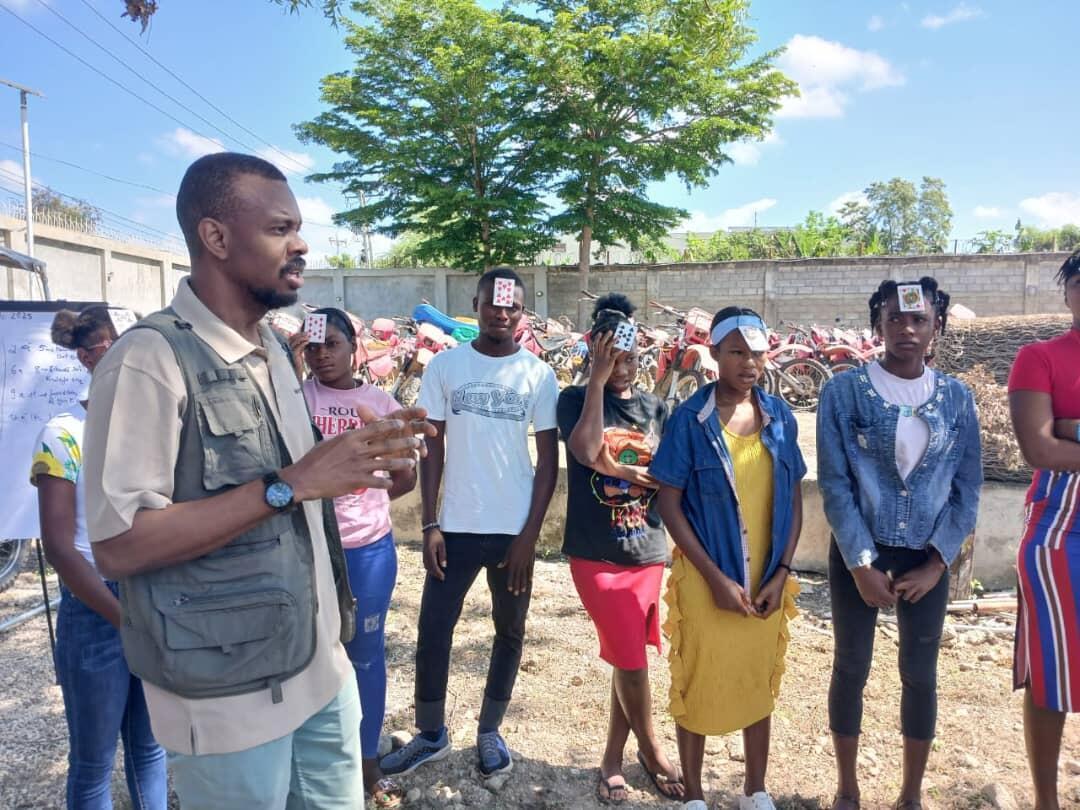
Petia’s bench was made possible by four community leaders who were part of World Vision’s Citizen Voice and Action initiative. After the training, they recognised that improving children’s lives was not only the responsibility of distant institutions. It was also theirs. They mobilised local resources, contributed their own skills and raised funds to build classroom benches for children who had learned for too long from the floor.
When I met them, they spoke with urgency and pride of how CVA training transformed their perspective and inspired them to mobilise local resources, contribute with their own skills, and raise funds to build classroom benches for the school. Their experience reminded me why my colleagues and I continue to persevere through long workdays and difficult journeys along rocky, uneven roads. Humanitarian work is often described through the language of crisis, and rightly so. But it is also the story of people refusing to let crisis have the final word.
Despite immense adversity, across Haiti, stories of hope, dignity and collective action continue to shine through.
By engaging religious and community leaders, efforts in 2026 have helped 458 children obtain birth certificates and supported 57 adults in replacing documents lost because of armed violence. For families living with instability, a document can mean access to school, services, protection, and identity. With papers in hand, barriers begin to fall.
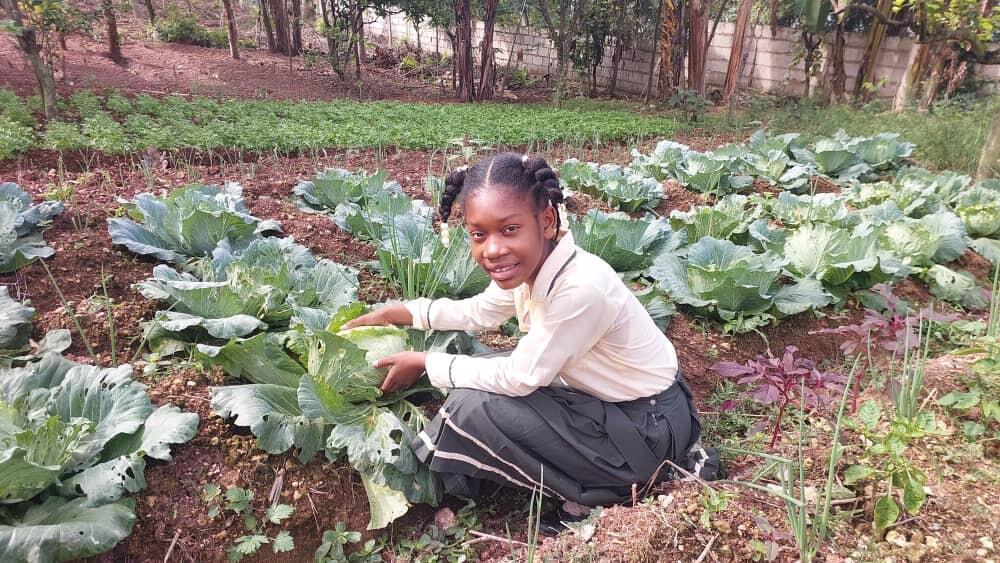
At one school, a garden has become more than a place to grow food. For 13-year-old Luna, it is a source of learning, nutrition and opportunity. She explained, "We harvest the produce to prepare healthy meals at school. Sometimes, we also sell some of our produce to buy school supplies and support classmates with fewer resources." This year, they sold cabbage and peas for 75,000 gourdes, about US$550, to help improve learning conditions and contribute to healthier eating at school.
Another student, Louidjina, found possibilities through vocational skills training. “Today, I know how to sew clothes for myself,” she said. “Thanks to this skill I acquired through World Vision, I will also be able to earn an income.”
These stories are reminders of what is at stake when humanitarian support is weakened, obstructed or underfunded. When humanitarian workers are unable to safely reach communities, children risk losing not only essential protection and support, but also the sense of stability and hope that helps them imagine a brighter future.
In Haiti, I see those consequences every day. I also see courage.
I see it in community leaders who decide that waiting is not enough. I see it in children who keep learning despite hunger and fear. I see it in young people who turn a garden into school supplies, or a sewing lesson into the possibility of income. I see it in colleagues who brave difficult travel and long hours because they believe that children deserve more than survival. They deserve dignity, safety and the chance to flourish.
I know these achievements are only a drop in the ocean of challenges Haiti faces. The country continues to grapple with armed violence, a multidimensional crisis and the weakening of public institutions.
But for every child reached, that drop matters. For Petia, a bench restored dignity. For Luna, a garden brought nourishment and opportunity. For Louidjina, a vocational skill offered something every child deserves: the confidence to imagine a future beyond today's challenges. For hundreds of children receiving birth certificates, it was proof of identity and a pathway to rights. For communities, it was evidence that even amid crisis, agency has not disappeared.
Hope is often misunderstood as something soft. In Haiti, hope is practical. It is carried by local leaders, children and humanitarian workers who continue to serve when the road is hard, and resources are shrinking.
It is the assurance that children’s rights are not an impossible dream but a reality that can be realised.
This World Humanitarian Day, to #ActForHumanity is to protect those who serve, support locally led responses, invest in children’s futures and refuse to let the world look away. It is to remember that behind every number is a life, and behind every act of compassion is the possibility of transformation.
For me, personally, this work is a mission. It is a commitment to contribute to an abundant life for every child in Haiti.
In Haiti, we continue to serve the most vulnerable because we have seen how a single act of compassion can change a life.
In the midst of crisis, that belief is how a nation can be transformed, one child at a time.
About the author:
With over 15 years of experience across the media, humanitarian, and development sectors, Stephen Ralph Henri, serves as Advocacy Manager at World Vision Haiti. Passionate about community-led transformation, he has worked closely with local leaders and communities to promote sustainable change. His current role focuses on
empowering children and young people, supporting initiatives that strengthen civic engagement and environmental stewardship across Haiti.