
The Hope We Do Not Promise

‘Please stop using the word hope!’ I said recently in one of our comms meetings at World Vision Afghanistan.
Learning to recognise hope before declaring it
If hope means ‘things will get better’, there are more than enough reasons for us to distrust any claims to bring hope. Afghanistan remains one of the hardest places in the world to be a child. Climate shocks, economic hardship and governance challenges have deepened vulnerability, while the aid cuts of 2025 arrested progress in areas such as the treatment of child malnutrition.
Afghanistan has taught me that 'hope' can become yet another promise international actors make, and one that we break when harvests fail, when restrictions impede our operations, or when funding is withdrawn.
But this moratorium upon hope is not a response to an absence of hope, but to an encounter with richer, deeper hope in the communities we serve. This encounter has made me blush at the casual use of the word as a communication hook.
I have become convinced that hope is something we must first learn to recognise and attend to before we presume to declare it.
The long road through drought
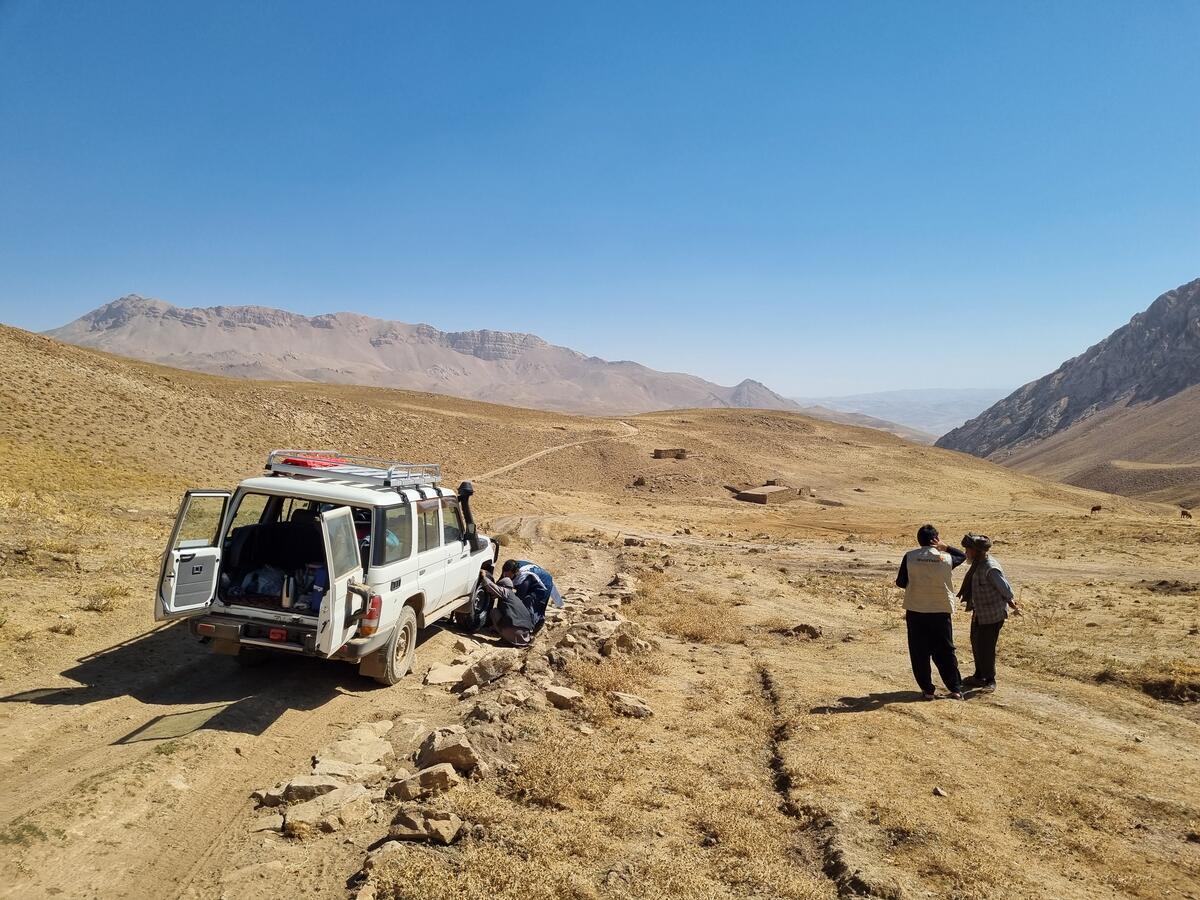
We’re five hours into a drive south of the provincial capital of Faryab and the rough track, which has thrown us about for most of the journey, has finally delivered the puncture it had long been threatening. We have seen a gradual stripping away of the modest fruitfulness of the distant valleys, dwindling trees, dry streams and a low reservoir, and now parched grass or dirt as far as the eye can see. As we fix the puncture, a local goatherd makes small talk with us, and tells us in passing how drought has reduced his flock by two-thirds in a year.
A few miles on, World Vision runs a UK-funded health and nutrition centre alongside the provision of clean water. When we arrive, dozens of patients are already waiting. Among them is Najibullah, a severely malnourished one-year-old whose family has travelled eight hours on foot and by donkey from neighbouring Ghor in search of lifesaving treatment.
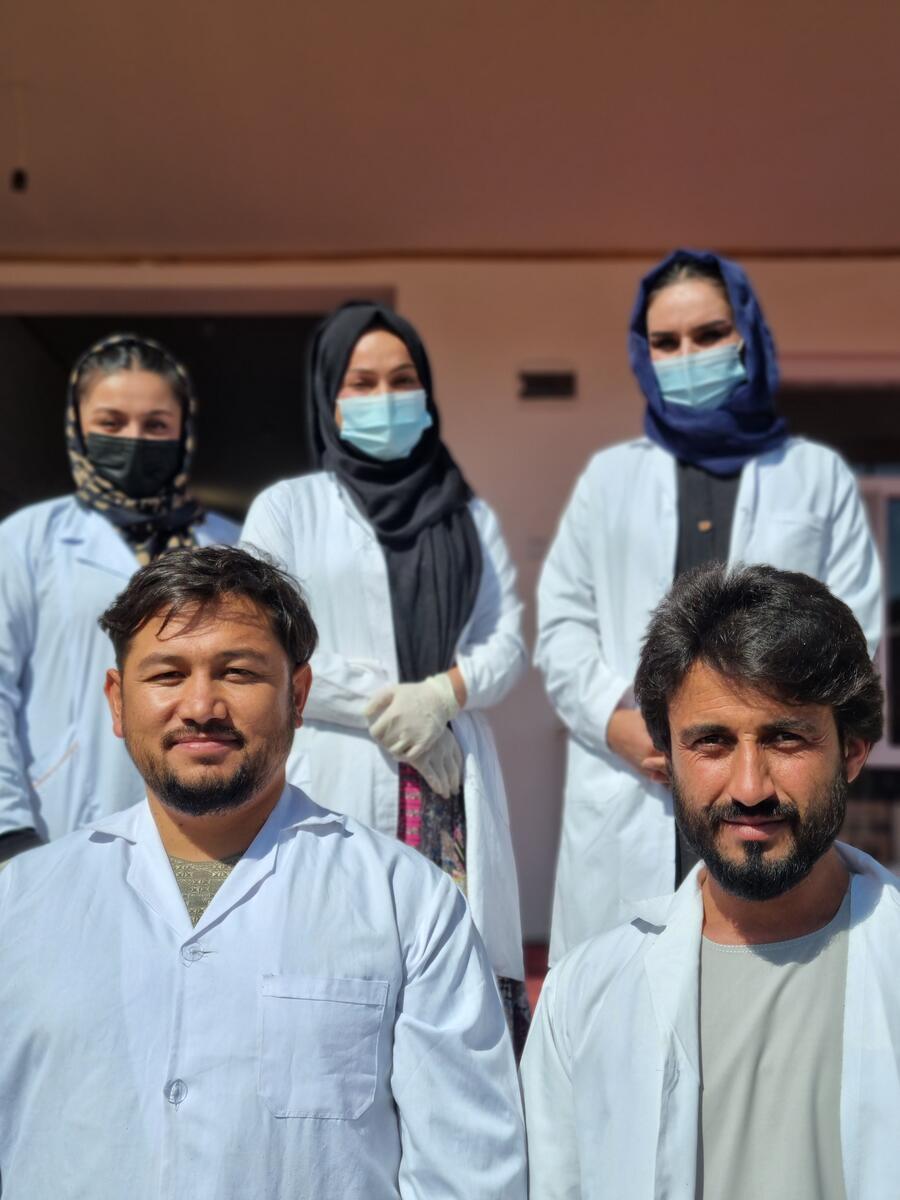
Dr Hussein tells me that within a few weeks the roads are likely to be blocked due to snowfall. “The challenges and problems in Kohistan are truly immense… My colleagues and I may not be able to return home for about four months.”
Hope was already there
What of hope, in the light of this vignette? Did World Vision give hope to Najibullah’s family? I don’t think so. What we brought was a clinic. Hope was already present in parents who believed the journey was worth making, and in colleagues who stir themselves each morning to go again.
Najibullah's parents had heard there was a clinic where trained and compassionate professionals unlocked its doors. That was enough. They embarked upon a treacherous journey because they believed there would be someone waiting at the other end. Dr Hussein and his colleagues show up, day after day, remote from the families, from recognition, from any sense of a generalisable improvement in circumstances. But they show up, and Najibullah’s family show up.
These two acts of showing up bear witness to a deeper hope.
When Certainty Disappears
When I wrote up this story for our website, I described two droughts: one environmental, one financial, coming as it did in the wake of 2025’s devastating mid-programme cuts. But there is also a drought of certainty, predictability. Nobody knows whether funding will be sustained, whether roads will remain open, whether governance will improve, whether next winter will be harsher than this, or whether there is a devastating disaster around the corner.
But in Dr Hussein and Najibullah’s family we see a kind of hope that is not contingent upon confidence in outcomes, that has nothing to do with optimism, but which is expressed as a kind of faithfulness when certainty has evaporated.
Hope as faithfulness, not optimism
More recently, we have begun asking children and caregivers what hope means to them. Again and again, their answers are not rooted in confidence that circumstances will improve, but in a conviction that God is good and merciful, whether or not they do.
World Humanitarian Day reminds us that humanitarian workers are worthy of support and protection because they make encounters like that between Najibullah's family and Dr Hussein possible, long after certainty has disappeared.
The Sacred Gift of Showing Up
As a Christian working alongside Muslim Afghan colleagues and communities, I have found my own understanding of hope enlarged. I now handle the word with greater reverence.
And so I too keep showing up, whether in remote communities where these encounters unfold or in the offices of decision-makers where I seek to move policy a little closer to the realities I have witnessed. Here too, certainty is absent. But I carry with me Najibullah's family's perseverance, Dr Hussein's quiet faithfulness, and the conviction that hope is a way of living today rather than a promise for tomorrow.
On this World Humanitarian Day, let us honour those who keep showing up, and may they continue to receive, alongside those who call upon their service, the sacred gift of hope.
About the author:
Mark Calder is a British advocacy specialist who has worked on Afghanistan with World Vision since December 2021 and joined World Vision Afghanistan in January 2024. With a background in social anthropology and research on the Middle East, his work focuses on ensuring humanitarian and development policy is informed by local context, and communicating Afghanistan in ways that reflect the diversity and complexity of its communities. Before joining World Vision Afghanistan, he worked as a conflict specialist at World Vision UK and taught Social Science Research Methods at Durham University, where he also conducted postdoctoral research on civil society peacebuilding in Syria.