
Learning Roots Sparks New Momentum for Early Childhood Education in Chad

"The future of education begins long before children enter primary school."
This message resonated strongly throughout the recent Learning Roots Training of Trainers (ToT) workshop in Chad, which took place during 01-05 June, 2026. It brought together representatives from government ministries, UNICEF, faith-based education institutions, and World Vision (20 + staff members from the education and across the sectors) to explore practical approaches to strengthening early childhood development and education (ECDE).
More than a training event, the workshop became a platform for dialogue on how quality early childhood development (ECD) can be expanded across the country through stronger partnerships and practical, child-centred approaches.
Why Early Childhood Development Matters for Chad's Future
The renewed attention to early childhood development (ECD) comes at a critical time for Chad.
Despite growing recognition of the importance of the early years, many young children continue to face significant challenges that limit their opportunities to learn and thrive. More than 40% of children under five are stunted, affecting not only their physical growth but also their cognitive development, learning capacity, and future productivity. Access to quality early childhood education (ECE) remains extremely limited, reaching only a small proportion of children nationally (1.75%) and almost none in many rural communities.
At the same time, many caregivers face immense economic and social pressures, which can contribute to negative discipline practices, limited opportunities for play and stimulation, and reduced support for children's learning and development.
These challenges make ECD more than an education issue - it is a human capital investment. Research consistently shows that investments in children's health, nutrition, responsive caregiving, protection, and early learning during the first years of life generate some of the highest returns for individuals, communities, and national economies.
By strengthening the foundations for learning, wellbeing, and resilience in the early years, WV Chad, together with the key partners, have an opportunity to support a healthier, more skilled, and more productive future generation.
A short interview took place after the ToT event with UNICEF, MoE and Catholic pre-primary and primary school headmaster, to get their opinions about the LR model methodology and explore entry points and collaboration opportunities for partnering around ECDE and education in Chad.
What Partners Say
For all partners, one of the most valuable aspects of Learning Roots was its ability to translate curriculum goals into practical classroom experiences.
The Headmaster of Catholic pre-primary and primary school, from Logone Occidental Province, Silvie noted that the methodology is fully aligned with Chad's early childhood education (ECE) curriculum while offering teachers concrete tools to make learning more engaging and meaningful.
"Learning Roots provides practical activities that help teachers bring the curriculum to life through play," she explained. "It promotes positive discipline and shows teachers how to create learning materials using low-cost or no-cost local resources. This is especially important in contexts where resources are limited."
Rather than focusing primarily on theory, the methodology emphasizes learning through play, active participation, and hands-on experiences that support children's holistic development.
According to UNICEF representative, Maude Dile, the country is entering an important period for accelerating ECD efforts, particularly as the global community works toward achieving Sustainable Development Goal 4.2 on children's development and school readiness.
"With only a short time remaining to achieve the SDG targets, we must strengthen partnerships and identify effective approaches that can support young children's development," she noted.
UNICEF sees strong potential in Learning Roots as a practical methodology that complements and strengthens existing government curricula. The structured daily routine and play-based activities can help teachers implement curriculum objectives more effectively while creating positive learning environments for young children.
The parenting component of the model was also highlighted as an important strength, recognizing that children's development begins at home and requires active engagement from caregivers.
Representative from the Ministry of Education, Wang-Gah Pirkolossou, welcomed the opportunity to strengthen collaboration with World Vision and other partners working in the ECD sector.
While responsibility for early childhood development largely sits with the Ministry of Women Affairs, the Ministry of Education plays a critical role in curriculum development, teacher training, and monitoring systems. The Ministry representative emphasized the importance of continued collaboration among government institutions, UNICEF, UNESCO, and World Vision to strengthen early childhood education nationwide.
The workshop also opened discussions about broader areas of partnership, including support for out-of-school children and foundational literacy initiatives such as Reading Clubs, Catch-Up Programmes, and Unlock Literacy, where World Vision already has significant experience.
Looking Ahead
As Chad continues to expand its investment in young children, the Learning Roots workshop demonstrated that effective solutions already exist. By combining government leadership, partner collaboration, practical teacher support, and caregiver engagement, there is a real opportunity to improve learning and development outcomes for the country's youngest learners.
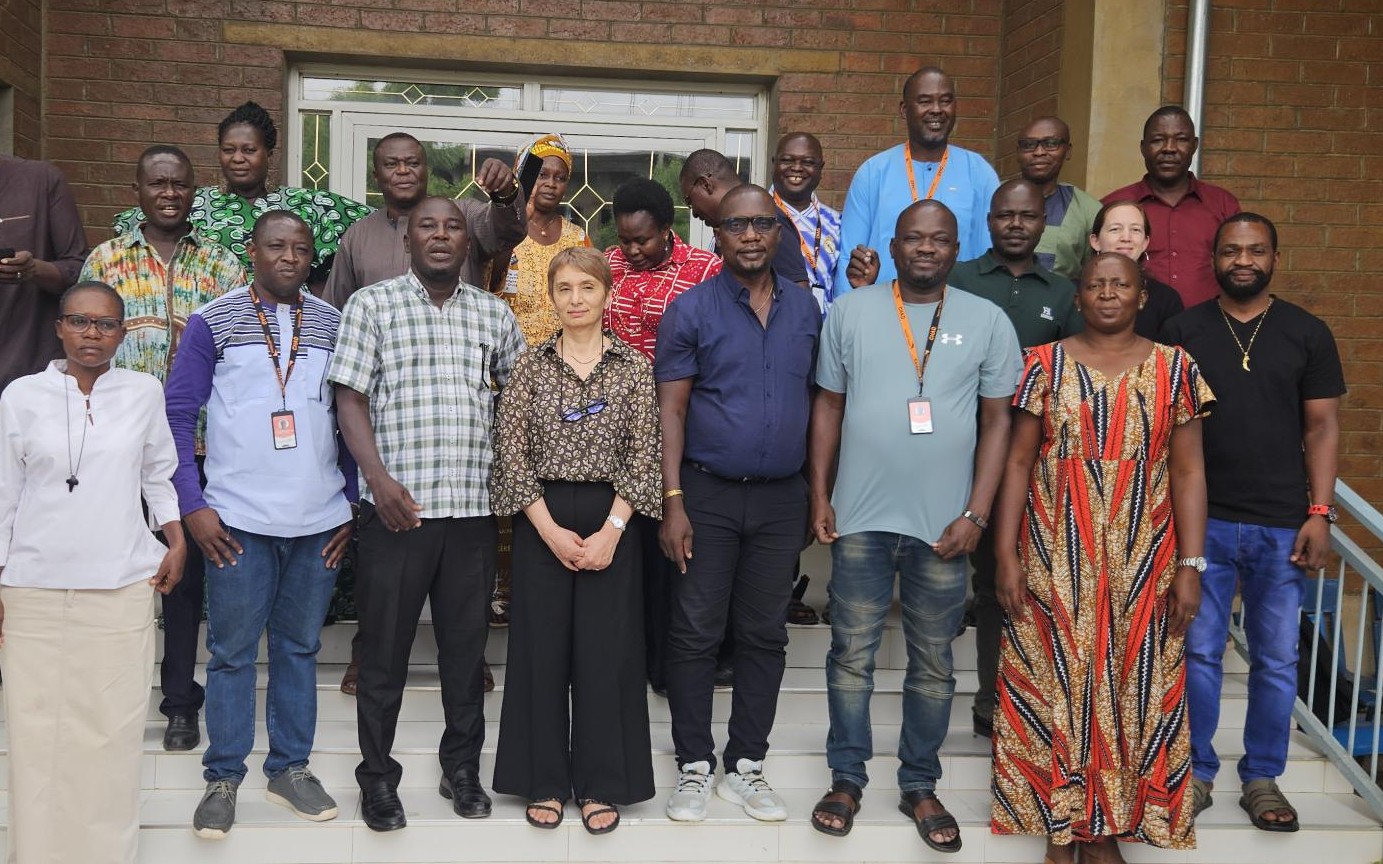
The enthusiasm and commitment expressed by participants suggest that this workshop may be only the beginning of a broader journey, one that places young children at the center of national development efforts and strengthens the foundations for lifelong learning and wellbeing.
Special thanks to Bame Menkamla, Technical Adviser for Education & Life Skills Program for WV Chad, for his strong leadership, and the education team, for all the support in making this strategic workshop a successful one.