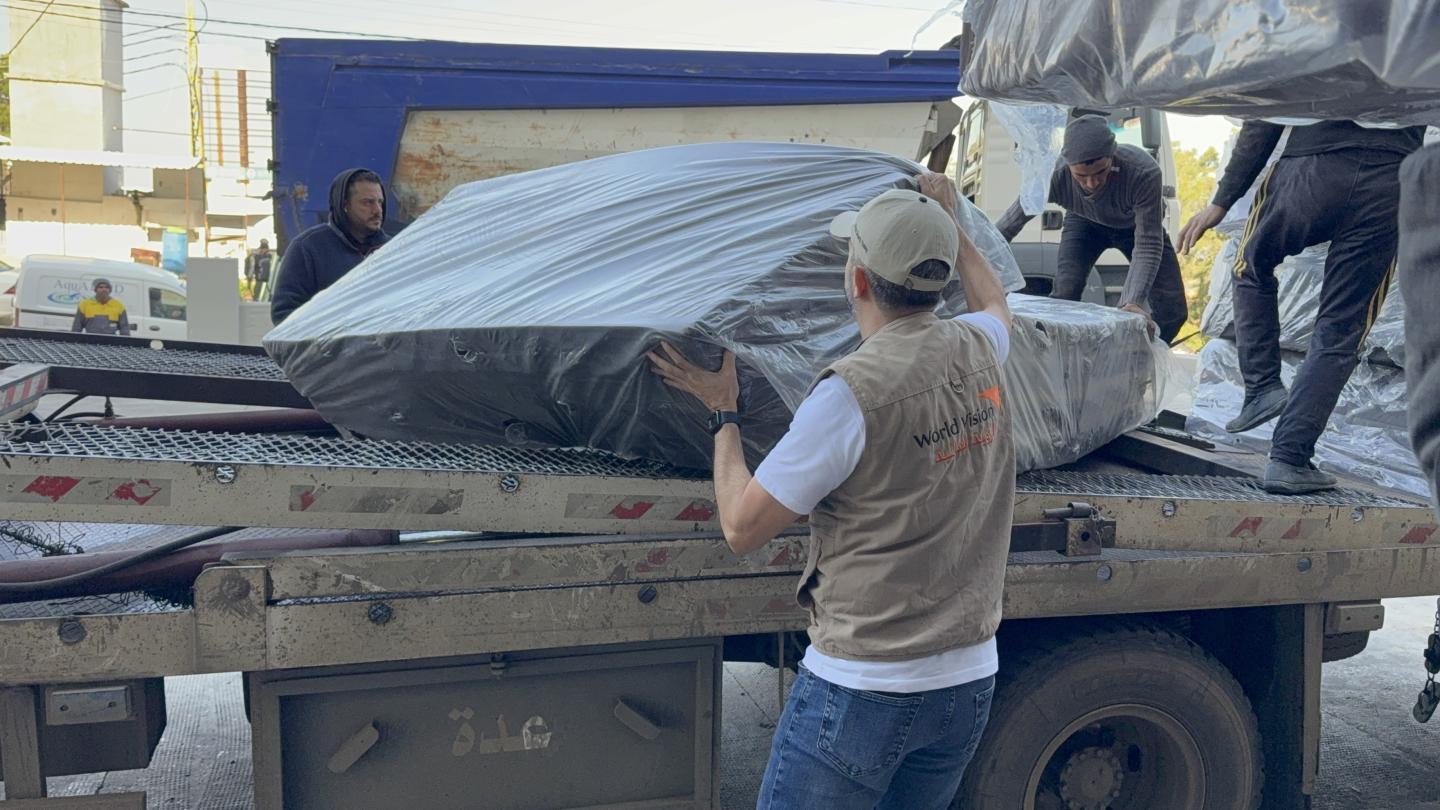
Because They Had Always Been There

Over the past six years, Lebanon has faced overlapping crises that have reshaped the country. The economic collapse in 2019 pushed many families into poverty. The Beirut Port Explosion in 2020 devastated entire communities, while COVID 19 placed further pressure on already fragile systems. Since then, continued instability and repeated displacement have deepened people’s needs, most recently following the escalation in March 2026.
But when this latest escalation began, the response did not start from zero.
Years of partnership and investment in local capacity had already built the systems, teams and trust needed within communities. Through initiatives such as the Visser Response Fund (VRF), World Vision Lebanon (WVL) had worked alongside local partners for five years to strengthen this foundation over time. When the escalation began, those partners were able to act immediately. Kitchens were already running, volunteers were trained and communities trusted the people responding. What could have taken weeks to establish during a crisis was already in place.
This is the story of how those long-standing partnerships made a rapid response possible.
The Sound of Bombing Was Everywhere
Yara, Kitchen Coordinator at Mutual Faith, one of World Vision Lebanon’s partners, remembers standing with her team on the first day of the March 2026 escalation, listening to the sound of bombing around them. Yara and her team called Rev. Said, the founder of Mutual Faith, and told him, “This time, we are ready. The kitchen and the team are prepared to respond.”
“May God protect you,” he replied. “Let’s see what will happen.” They did not wait for a donor call. They did not wait for a needs assessment. They opened the kitchen.
When conflict escalated across South Lebanon and Beirut on 2 March 2026, many humanitarian actors needed to establish new infrastructure, understand unfamiliar communities and build trust. World Vision Lebanon’s partners already had that foundation. Mutual Faith had food in its kitchen, equipment in place and a trained team on the ground before any external support was requested. When donors arrived and saw the operation already functioning, raw materials and dry food followed immediately.
What might have seemed impossible to establish during a crisis had, in fact, been built years earlier. Yara says, “Without the support of World Vision Lebanon and the VRF project, we would not have been able to respond in this way or reach such a large number of people.”
World Vision Lebanon moved at the same speed as its partners. The decision to shift from development programming to emergency response was made at the field level and cleared by World Vision US within hours. Existing sub grant agreements and memoranda of understanding were already in place.
Two of World Vision Lebanon’s local partners played a central role in the response. WILL Association mobilised its efforts in Beirut and Mount Lebanon, while SHEILD Association was ready to support the response in the South. WILL Association alone distributed 33,717 hot meals during a single reporting period, delivering more than 2,000 meals per day at the peak of the response and reaching approximately 1,200 people. Targeting was coordinated with the Ministry of Social Affairs.
The speed of the response had another dimension.
Before the March escalation, World Vision Lebanon had already secured anticipatory action funding through the Start Network. This funding was designed to be released before a crisis reached its peak. When the situation deteriorated, WVL was among the first organisations operational on the ground. The network of partners built through VISSER gave that emergency funding somewhere to land immediately. Resources positioned in advance require capacity that is already in place.
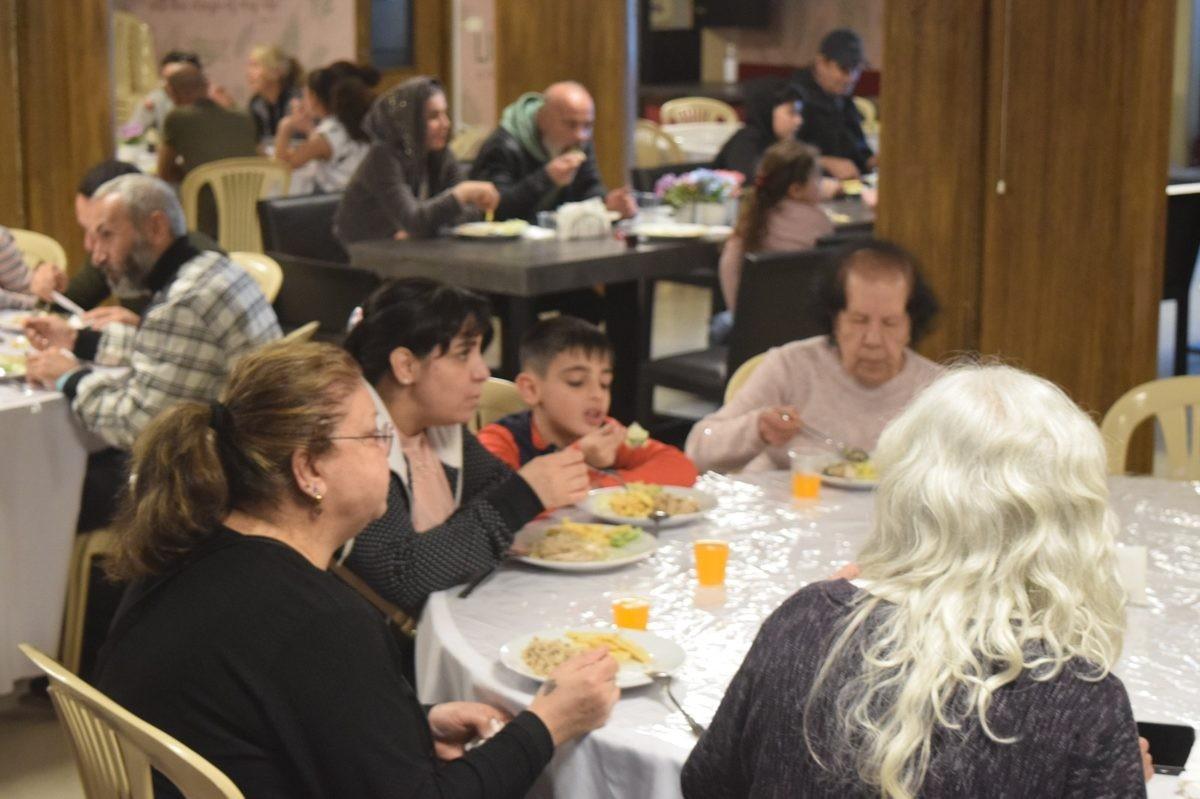
Faith Networks as Access Infrastructure
Food and logistics were one part of what made the response possible. The other part was much harder to procure: access built through trust.
In two shelters, displaced families were initially hesitant to engage with organisations they did not know. Having recently fled their homes, many understandably needed reassurance before accepting support. In one case, Rev. Dib spoke directly with the families and accompanied them to a nearby school where assistance had been organised. His presence helped build trust and enabled families to access the support they needed.
When a confrontation arose outside another shelter, Father Fady Al Alam stepped in. His words cut through the tension.
Father Fady Al Alam, founder of Genius Association, one of World Vision Lebanon’s local partners, told the people gathered there, “We are human, and God sacrificed Himself to serve people. So, we must serve everyone. Do not be afraid. Be as Jesus taught us. We will get through this, as we always do. God will be with you.”
People listened.
According to those present, communities in Dekwaneh trusted Father Fady because he had always been there for them, during ordinary times and difficult ones. That relationship did not emerge from the crisis. It had been built over years. Services continued without interruption, and assistance reached everyone, regardless of religious background. This was an instruction the faith leaders themselves gave to their volunteers.
What Children Needed
Scout Al Fayhaa mobilised trained volunteers from the North to provide psychosocial support in shelters and schools. More than 500 children participated in structured activities, beginning with recreational sessions and Psychological First Aid before moving towards community based psychosocial support for children who needed more sustained assistance.
All the facilitators had been trained through the VRF project. When the crisis began, a rapid refresher was enough to prepare them for deployment. For families living in the shelters, the hot meals and psychosocial support sessions were part of the same response to the same need: helping them feel safe again.
A displaced mother from South Lebanon, whose family received food assistance at one of the collective shelters, described what those days had been like. She says, “When the hot meals started coming, it changed everything for us. It was not just food. It was comfort. For the first time since we left our home, I felt that my children were safe, even for a moment. Seeing them eat a warm meal and feel full again gave me relief.”
One Story That Stays
A nine-year-old girl had been part of World Vision Lebanon’s long term development programme in South Lebanon. When conflict forced her family to flee, they found themselves in a collective shelter in Mount Lebanon.
When the World Vision team walked into the shelter, she recognised them. She became emotional, not out of fear, but out of relief.
Her family had been living in extremely difficult conditions. By the time the team left that day, they had received food assistance and referral to psychosocial support sessions. She said she felt safe.
The Return on Investment
The VRF project was designed as a development programme. What March 2026 demonstrated was that this investment carried a second return, one that had never been written into the project’s narrative.
When emergency resources became available, and when other donors arrived to find an operation already functioning, WVL and its partners were ready to receive and deploy them. The infrastructure built through VRF, including trained teams, functioning kitchens, established agreements and deep community trust, made this possible. While others had to build that foundation during the crisis, WVL and its partners were able to activate what years of partnership had already established.
Faith based partners also attracted support from donors beyond WVL’s direct network, using their community standing and operational credibility to extend the response further than the project’s resources could have reached alone. When a nine-year-old girl recognised the World Vision team in a shelter a hundred kilometres from her home, that recognition was not a coincidence. It was the return on years of showing up, because they had always been there.