
Finding Confidence Beyond the Classroom in Akkar

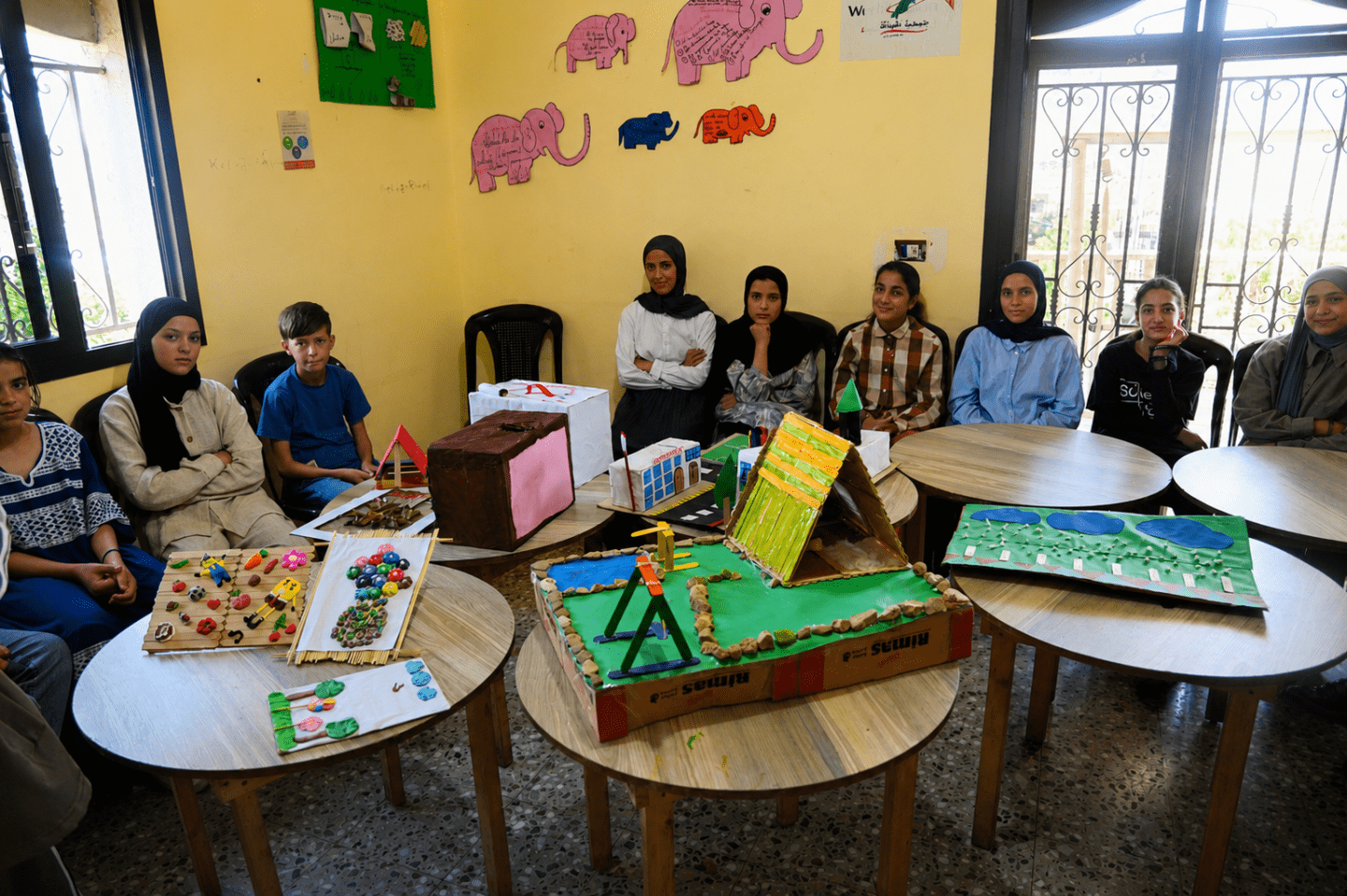
Cardboard houses stand beside painted roads. Small gardens, colourful flowers, and handmade playgrounds fill the tables inside the learning centre in Wadi Khaled.
Groups of children gather around their projects, proudly explaining every detail. One points to a school. Another shows a hospital. Together, they describe the village they spent days building, each child adding an idea until it finally came to life.
The room is filled with laughter and conversation. Some children carefully add the final touches with paint, while others step back to admire what they have created together.
Every child has a role, and every idea matters. Among them is 14 year old Tahani. She has been attending the learning centre for the past two years, and every activity has become another opportunity to learn something new.
Whether building miniature villages, decorating the classroom, or working on group projects, she enjoys creating alongside her friends. When asked about her favourite activity, she smiles.
"Decorating our classroom," she says. "Everyone had a role. We worked together, and we enjoyed every moment."
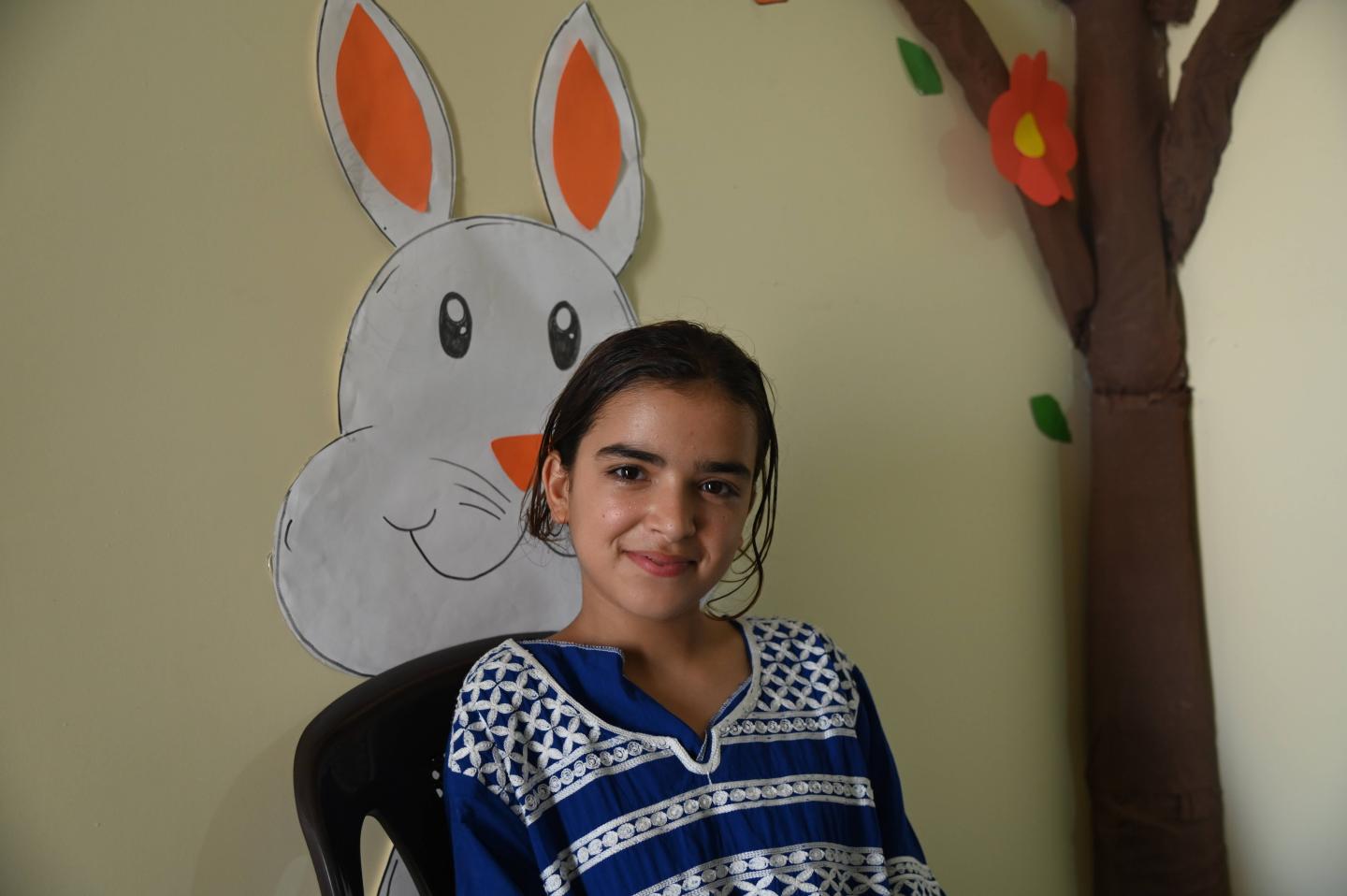
For Tahani, the biggest change was not what she created with paper and paint, but what she discovered about herself.
"I feel more confident now," she says. "I can stand in front of people and speak without being afraid."
Tahani is one of many children taking part in the WVHK project, implemented by Hadatha in partnership with World Vision Lebanon, across learning centres in Wadi Khaled and Berqayel.
Located in the north of Akkar, these communities are home to many vulnerable families who continue to face economic challenges, making safe learning spaces and opportunities for children especially important during the summer months.
While schools are closed in the summer, children participate in structured activities that combine psychosocial support, life skills, arts and crafts, and recreational sessions.
The programme provides children with a safe and supportive space where they continue learning, build friendships, express themselves, and prepare for the upcoming school year.
At home, Tahani's mother, Yasmin, has noticed the difference. "She used to be shy and rarely answered questions at school," Yasmin says. "Now she participates in class and isn't afraid to express herself."
The activities continue for Tahani after she leaves the learning centre. At home, she gathers her younger brothers and sisters and teaches them the games and activities she learned during the day.
"She teaches them everything she learns here," Yasmin says. "They enjoy learning from her, and we can all see how much she has changed."
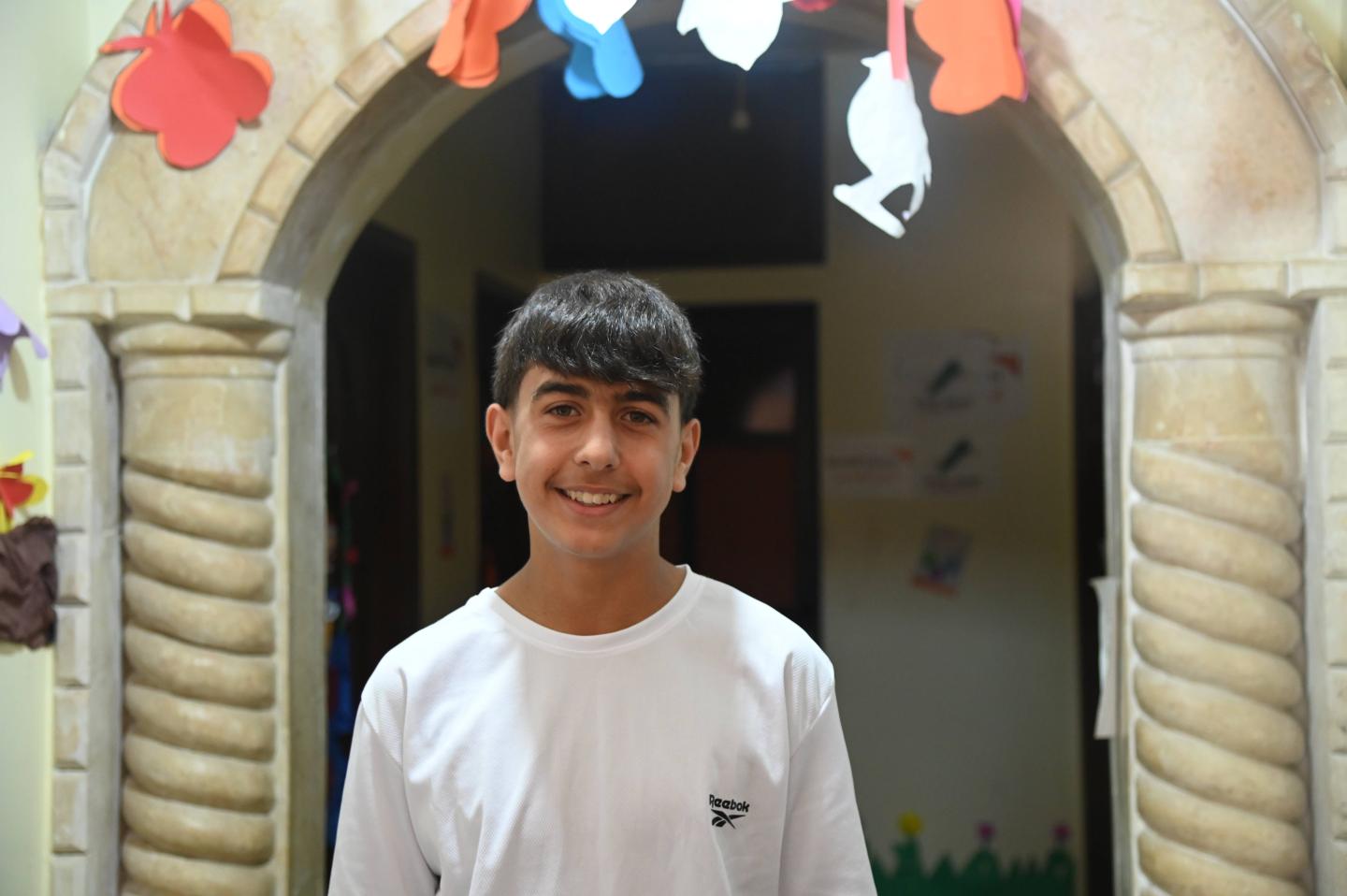
Tahani's story is one of many. For 15-year-old Alaa, the programme became a place where he built new friendships.
"I made new friends," he says. "I used to get upset easily, but now I feel happier spending time with them."
Whether drawing, playing football, or joining group activities, Alaa says every session helped him enjoy learning while having fun with others.
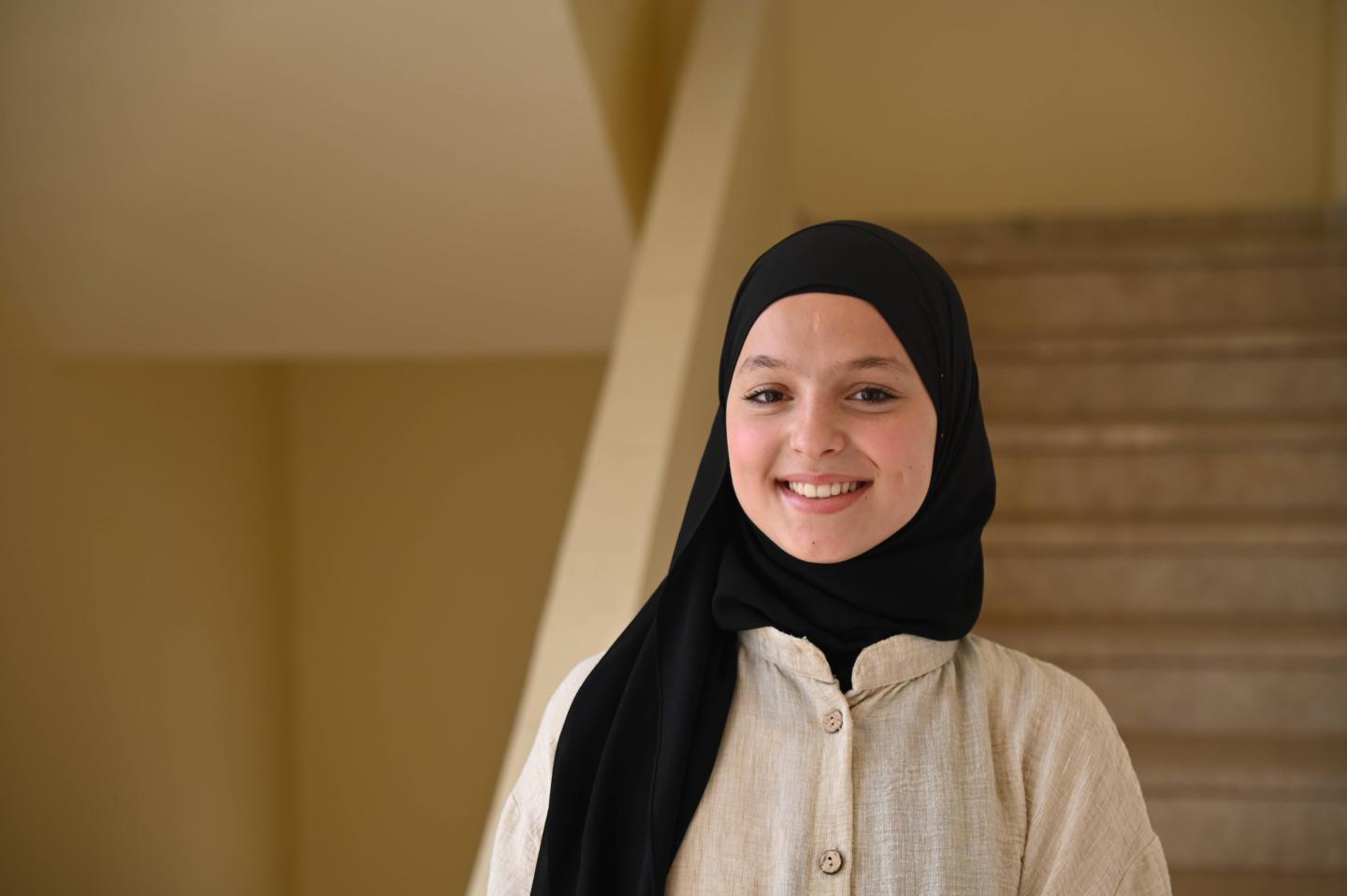
Across another table, 14 year old Hazar proudly looks at one of the projects she created with her classmates.
One day, she hopes to open her own beauty salon. "The activities helped me become more confident," she says. "We worked together, made new friends, and discovered new things we can do."
For facilitator Sarab, these changes happen little by little. She remembers one girl who struggled to hold a pencil when she first joined the programme.
"At the beginning, I had to help her write every letter," Sarab recalls. "Later, she asked if she could go to the board and write by herself."
She also remembers another child who was afraid of standing in front of the classroom. Instead of pushing her, Sarab encouraged her patiently until she felt comfortable enough to stand in front of her classmates.
"Little by little," she says. "She stopped being afraid." Experiences like these have also shaped Sarab herself.
"Before being a teacher," she says, "I learned that I needed to be a friend, a sister, and sometimes even a mother." That sense of care can be seen throughout the learning centre.
Children encourage one another, celebrate each other's ideas, and proudly present what they have created together.
While they are busy building villages, decorating classrooms, and working on creative projects, they are also learning to communicate, solve problems together, and support one another.
In a few weeks, the colourful villages will be packed away, and the classroom will welcome a new school year.
Tahani will return to school carrying much more than memories of the projects she created with her friends. She will return with greater confidence to raise her hand, share her ideas, and speak in front of others.
Like Alaa, Hazar, and many other children taking part in the programme, she leaves the learning centre with new friendships, valuable life skills, and the confidence to believe in herself.
Long after the cardboard houses and painted roads have disappeared, those lessons will continue helping her grow, both inside and outside the classroom.