
Rebuilding Hope Through the Land in Northwest Syria.

The conflict in Syria has forced millions of people from their homes, leaving families to cope with the loss of livelihoods, stability, and a sense of belonging. For many, displacement has meant years of uncertainty, a daily struggle to meet basic needs while holding on to hope for a better future. Yet amid these challenges, stories of resilience continue to emerge, demonstrating the strength of individuals determined to rebuild their lives and support their community.
One such story is that of Abdullah*, a 38-year-old farmer and father of five from northwest Syria. For Abdullah*, farming is more than a source of income; it is a family heritage passed down through generations.
"This is the profession of my fathers and grandfathers," he says.
Before the crisis disrupted his life, Abdullah*’s days revolved around cultivating the land in his village, where agriculture was both the backbone of the local economy and an important part of his family's identity. But in 2019, mass displacement reached his village in Idlib, forcing him and his family to flee to Rural Aleppo, over 100 Kilometers from home. Overnight, they left behind the land they depended on, their belongings, and the life they had worked for generations to build.
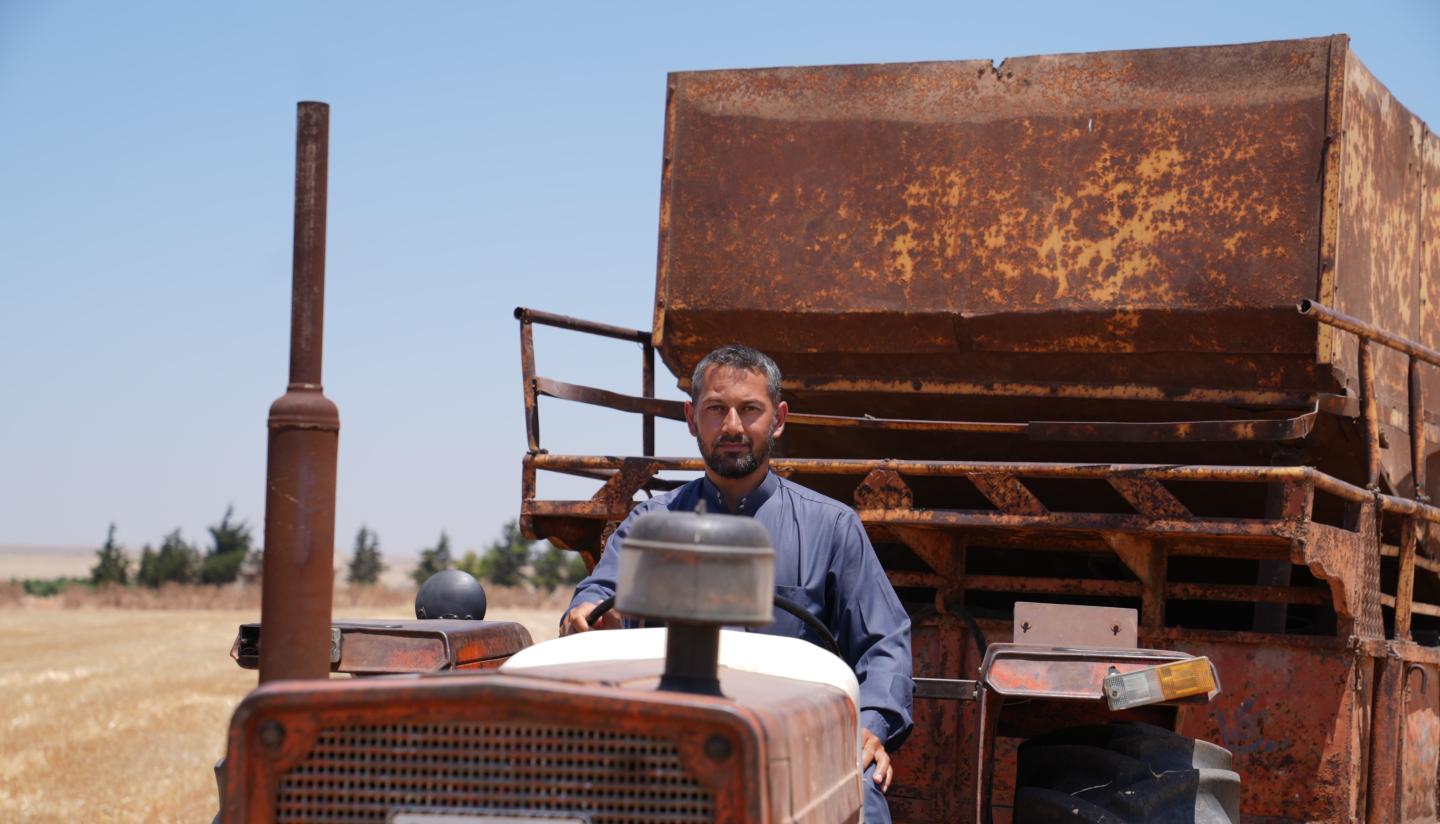
Like countless displaced families across Syria, Abdullah* faced immense challenges, he struggled to maintain a reliable source of income. Even after returning to his village approximately a year ago, recovery was far from easy. The raising cost of seeds, fertilizers, equipment, and labor made it increasingly difficult to cultivate his land and restore his livelihood.
“As farmers, everything depends on the season,” Abdullah* explains. “If the harvest is good, we survive. If not, it becomes very difficult.”
For the past year, rebuilding what had been lost felt overwhelming. Then Abdullah* learned about World Vision Syria Response through community committees and social media. Through the Walking Together Project, funded by the Community Chest of Korea, he joined a program supporting small holder farmers, an opportunity that would help him regain confidence in his future.
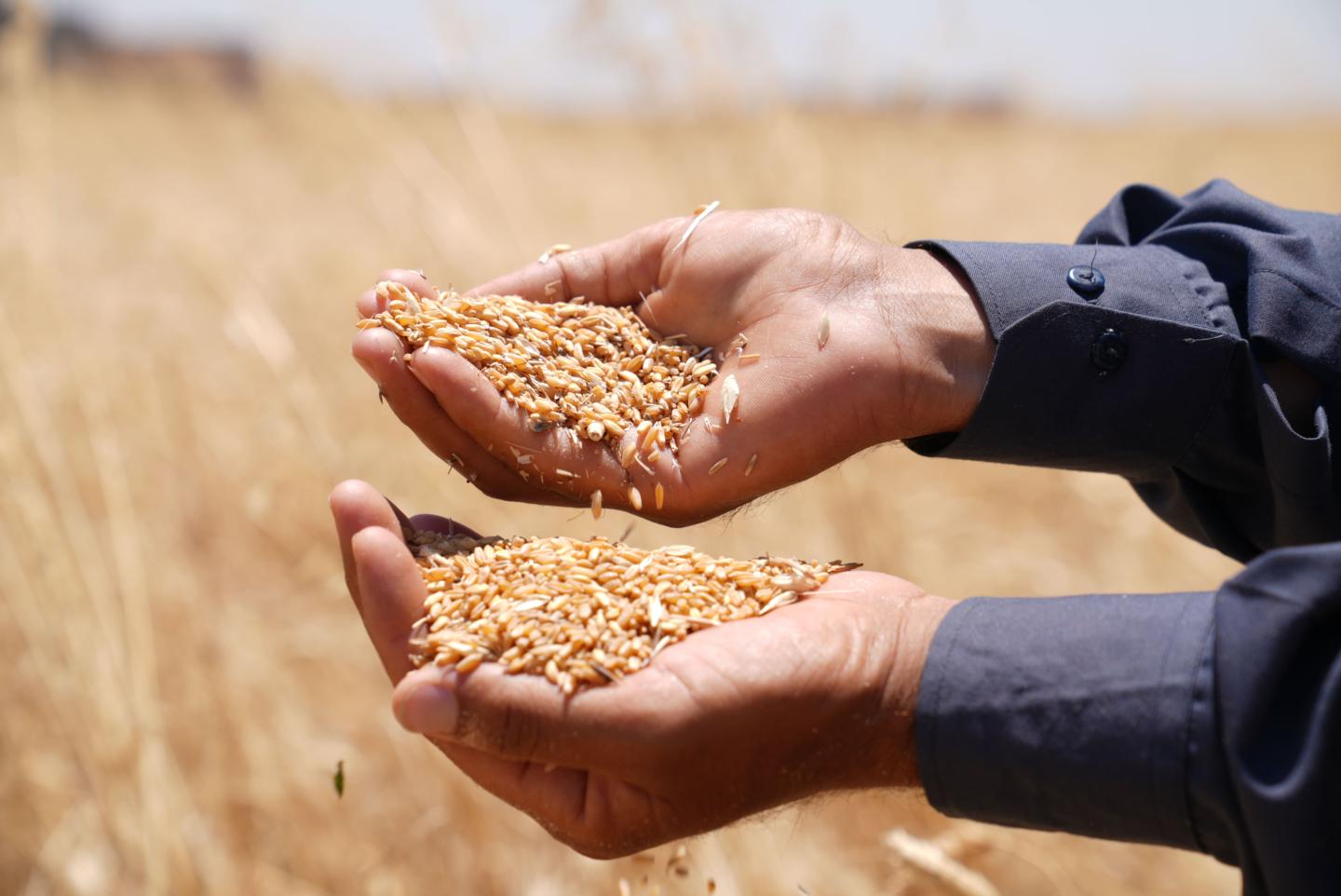
Through the project, he received cash assistance of 150 USD for three months alongside practical training on wheat cultivation. More Importantly, the support helped him reconnect with his land and strengthen his agricultural skills through improved farming practices.
"I learned better ways to prepare the land, choose the right seeds, and use fertilizers effectively, their types, quantities, and timing," Abdullah* says. “I also learned modern irrigation methods and how to deal with pests.”
For him, the value of the training lay in its practical application. The knowledge he gained could be immediately implemented in his fields, helping him improve crop quality and increase productivity. Learning climate- smart agricultural techniques and modern farming methods gave him renewed confidence and a stronger sense of control over his livelihood.
The impact is already visible. Improved production and healthier crops are helping Abdullah* move toward a more stable income and greater self-reliance for his family. Beyond the economic benefits, the support has restored something equally important: hope. "I will continue applying what I learned every season," he says. “And I will share this knowledge with other farmers in the village.”
Today, Abdullah*s journey is about more than recovering from displacement. It is a story of resilience, determination, and the power of investing in local communities. By strengthening his skills and livelihood, he is not only rebuilding his own future but also contributing to the recovery and wellbeing of those around him.
The project reached 1201 beneficiaries with livelihood support, helping them improve income stability and strengthen their resilience.
“Such programs are very important,” Abdullah* emphasizes. “The help farmers improve their work and increase production, which benefits families and the whole area.”
Name was changed to protect identity.*