
Beyond the Role of Caregiver This Mother’s Day

by Mona Stella Mariano, GEDSI Senior Adviser
On the sidelines of Women Deliver 2026 in Narrm (Melbourne), someone came up to me and said something that caught me off guard.
“It’s good to see World Vision shifting its messaging about women.”
I paused and asked what they meant.
They said, “Moving away from positioning women mainly as conduits to child well-being.”
It’s a simple comment, but it stayed with me all the way home.
Because it raises a deeper question—not just about how we communicate, but about how we actually design our work.
Are we changing norms, or quietly reinforcing them?
We often say we are working towards gender equality, towards transforming norms, towards expanding opportunities for women. But if we are honest, much of our programming still primarily engages women in their role as caregivers.
Women are the primary caregivers in many, if not all, of the contexts we work in. They are central to child well-being. Ignoring that reality would make our work less relevant.
But the tension is this: Are we supporting women—or are we relying on them?
The risk we don’t always see
Across our models—whether in nutrition, livelihoods, education, or health—we engage women deeply. We rely on their participation, their time, and their influence within the household.
But we don’t always ask: What is the cost to them? Are we adding to their unpaid care burden?
Without that lens, even well-intentioned programs can end up reinforcing the same expectations we are trying to shift. It’s a difficult balance. Because women are not separate from families or communities. They exist within systems, relationships, and cultural expectations.
We are not trying to remove women from those roles. That’s neither realistic nor desirable. But we do need to ask ourselves: are we expanding their choices within those systems, or simply working around them?
What shifts the balance
If our primary objective is improved child well-being, and women are the pathway to get there, then despite our intentions, we are still treating women as a means to an end.
But if our objective includes women’s own agency, voice, and well-being—if we are deliberately opening spaces for them to make decisions, influence systems, access opportunities—then child well-being becomes a result of that, not the sole purpose.
And that distinction matters.
It’s reflected in the indicators we choose:
- Women making informed decisions about their own health
- Women actively participating in household and community decisions
- Women accessing opportunities and services on their own terms
- Women influencing norms that limit or harm them
When we are deliberate about tracking these, we shift from participation to transformation.
And when that shift happens, the link to child well-being becomes stronger, not weaker.
A reminder from the field
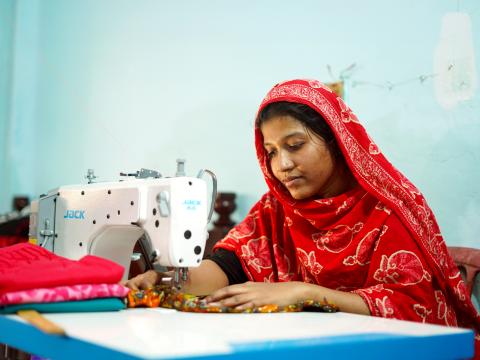
I keep thinking of Lovely, a 28-year-old mother from Khulna, Bangladesh, who joined one of our Technical and Vocational Education and Training (TVET) programmes.
She told us, “I began with nothing but hope and a wish to see a brighter future for my child. That hope became my strength, and that strength became my livelihood.”
Her starting point was her child, and that’s true for many women.
But what changed was not just her child’s outcome. It was her own sense of possibility, her confidence, her independence.
That is the shift we are aiming for: recognising that the well-being of children is not something we ask women to carry by themselves, but an outcome of communities where women are finally free to choose their own path.
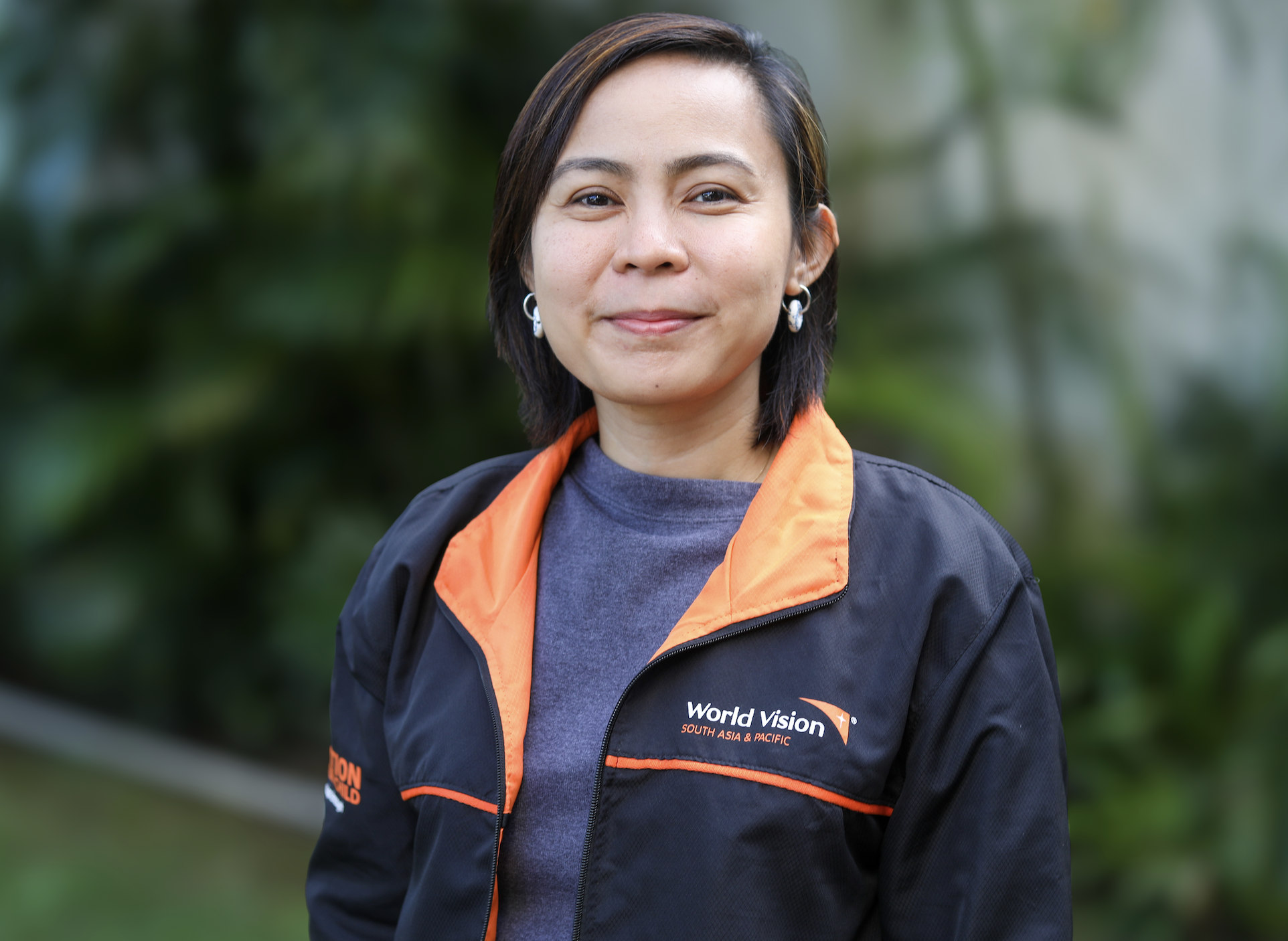
Mona Stella Mariano serves as the Senior Adviser for Gender Equality, Disability, and Social Inclusion (GEDSI) at World Vision, supporting the South Asia & Pacific and East Asia regional offices. She brings over 15 years of expertise in gender and development, program management, civil society strengthening, and youth engagement to her role.
As the GEDSI lead, she collaborates with country teams and regional networks to design and execute strategies that tackle the systemic inequalities and discrimination impacting the rights and well-being of girls and boys, and their communities.