
When aid cannot reach Sudan’s children, hope has to travel the hardest road

Along the roads of Sudan, I have seen children carrying guns when they should be carrying schoolbooks. At checkpoints on the northern and western routes, children stand guard in an armed conflict they did not choose, in a childhood that has been stolen from them. That is the reality families are living through in Sudan.
The road from Aweil in South Sudan to Al-Daein in East Darfur takes fourteen gruelling hours on dusty, winding tracks, with an uncertain road that does not promise arrival at the destination. In the rainy season, vehicles sink into thick clay and can remain stranded for hours, sometimes days, until a tractor pulls them free. I have made that journey three times. We often arrive at night, exhausted, knowing that the road itself and the fragility it visibly expresses are only the first barrier between children and the help they need.
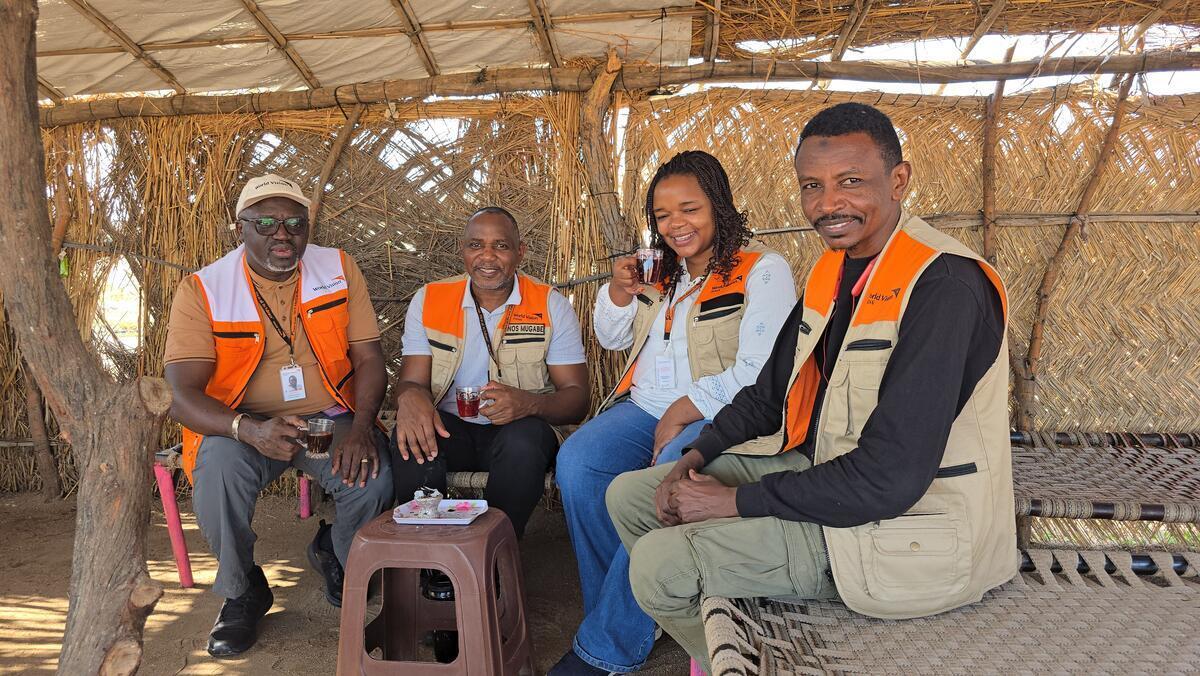
Before the conflict erupted on 15 April 2023, humanitarian workers could fly into Nyala in South Darfur. Now, with those air routes closed, reaching communities has become a daily struggle. This, in itself, constitutes an access constraint that will have to be overcome in response to the call to serve the most vulnerable wherever they may be located. Even when roads are passable, every movement depends on permission from whichever authority controls that stretch of land at that moment. Approval given on Monday may mean nothing by Thursday. For children waiting for food, water or medical care, those delays can be devastating.
Sudan is now trapped in one of the world’s largest humanitarian disasters, with 33.7 million people in desperate need of assistance. Along the road, I have met families fleeing again and again, carrying what little they can, searching for safety that always seems to move further away.
In the Jabel Marra mountains, we travelled as far as our vehicle could take us. The terrain became too difficult, mountainous and without proper roads. Before reaching the Feina settlement camp, we stopped at a local market where children still clung to hope, even after conflict had stripped them of almost everything.
“When the rainy season starts, we are going to move away from this place,” Salma told me, pounding the last bit of sorghum she had left. “The market will be destroyed by the rains. We do not know where we will go, but we will figure it out.” Her words have stayed with me. No child should have to grow up hearing adults plan where to flee next.
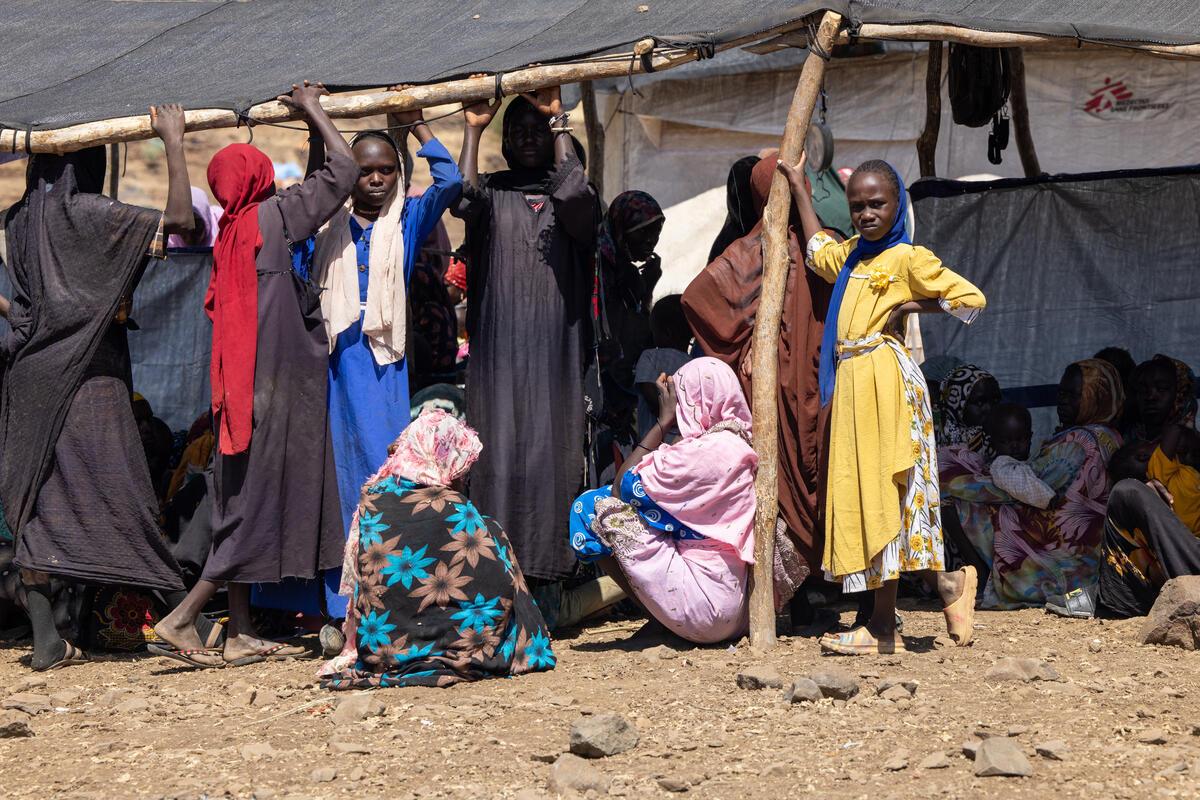
In Fina, more than 25,000 displaced people were living in a dry, rocky settlement in the uncertainty of seeing the sun rise the next day. Families who had fled the horrors of El Fasher and Zamzam were sheltering under makeshift coverings that offered little protection from the scorching heat, and now from the rains. For children, shelter is the difference between sleeping safely and waking frightened, soaked, hungry and exposed.
Many women I spoke with had survived brutal sexual violence along the road. One had recently given birth to a child conceived in that violence; at night, all she has to keep her newborn warm is a thin scrap of cloth meant to shield against dust and sun.
In Mershing locality in South Darfur, I sat with mothers at a mobile clinic. They told me their breast milk had dried up because they themselves had no food. Their babies were hungry because their mothers were hungry. “When will the situation change? The children are suffering,” Fatima pleaded, as other mothers nodded in silence.
At a primary health unit in Al-Daein, the cries of babies broke my heart and strengthened my resolve to keep fighting for health and nutrition funding. Facilities are closing as funding dries up, even as more children face hunger. I am a mother. Standing there, thinking of my own child sleeping safely in bed, I could not reconcile that blessing with the devastation in front of me.
In every camp, water, food and shelter were simple requests of those affected by the raging conflict. Yet humanitarian workers do not have enough resources to meet the scale of need. Farmlands, across the region, lie ruined by conflict, leaving farmers unable to plant. A lost planting season cannot be recovered, and each one deepens a food crisis already consuming lives.
At one displacement camp, Farah whispered to me: “We spent five days without food. Thanks to our neighbour, who gave us a cup of mealie meal to make porridge for the children. The children are malnourished.” That sentence should shock the world’s conscience as human beings are being denied even the most basic dignity. Children should not survive on borrowed spoonfuls of food. Families should not be left to hold each other up because the system meant to protect them has failed.
Still, frontline humanitarian workers refuse to abandon them. Serving in Sudan today is harder than it has ever been. Every day brings news of a drone strike on critical infrastructure, a displacement camp bombed, or a city under siege. Civilians are dying, including aid workers who are supposed to be protected under international law.
The past three years have been the deadliest on record for aid workers globally. Dozens of humanitarian workers have been killed in Sudan over the past year alone. Aid trucks have been ambushed and burned. Each person lost was a colleague, a name, someone’s whole world, not a line in a tally spreadsheet. Yet I do not allow fear, that I could be the next statistic to have the final word, because I carry bold hope for Sudan’s children and the negative thoughts will not erode my resolve to serve.
Protecting aid workers is not separate from protecting children. When humanitarian workers cannot move safely, food does not arrive, clinics close, water systems go unrepaired, and children are left without the people and services that help keep them alive. Peace should be the default, not a distant hope. Attacks on aid workers reflect a collapse of the rules of conflict.
I keep thinking back to Tayeb. He was eleven when he watched his father get shot dead and lost his mother in the market's chaos. Months later, I learned he had gone searching for her himself, walking back toward danger, far too young to carry that trauma alone. You do not walk away from a child like that. You cannot. Sometimes what you can give in that moment is a smile and prayer. I embraced him.
And we do not work alone. The people leading this response are local heroes. I watched a community leader de-escalate a tense checkpoint in minutes simply because people knew his name. I watched starving women pool their last scraps of food to feed a third household, simply because that is what you do for a neighbour.
But children like Tayeb should not have to survive on courage alone. They need food when they are hungry, protection when they are afraid, and the chance to return to school instead of navigating trauma, displacement and loss. Childhood should not be another casualty of this conflict.
Working in Sudan is not easy, but I ask myself what I can do to change the lives of the children I interact with. 24 million children are in need, and 850,000 are suffering from malnutrition. This work is a calling, an opportunity to share hope with Tayeb and others like him. With more funding, humanitarian workers, like me can continue this work in Sudan and reach children and families who are hungry, displaced and at times without hope.
What fuels me is watching people build life out of almost nothing, like Salma planning her next move before the rains arrive, women turning a single tent into a schoolhouse, and children playing games in the dirt of a crowded camp.
In Umrimta, drinking contaminated river water was once the norm. World Vision rehabilitated the boreholes, and today that community drinks safe water. This is what sustained humanitarian funding can do. It can turn danger into safety, thirst into dignity and despair into the possibility of tomorrow.
This conflict has not stolen the faith, culture or welcoming heart of the Sudanese people. They remain cheerful and welcoming, even after everything they have endured. Since 2023, World Vision has reached more than three million people in Sudan, proof of what is possible when funding is available. But the conflict continues, peace has not been restored, and needs are growing.
UN Security Council Resolution 2730 and the Declaration on the Protection of Humanitarian Personnel were critical milestones. But paper promises do not shield an aid worker from a drone strike. They do not feed a starving child. History will not remember statements of concern. It will remember whether action came in time.
This World Humanitarian Day, the demands are urgent and non-negotiable. Violence and obstruction of life-saving aid need to stop; every attack has to be investigated, and those responsible should be prosecuted. Sustainable funding needs to match the scale of the catastrophe. Safe passage must be protected so that aid workers can reach starving families on time.
Please do not look away from Sudan's children. Do not look away from children like Tayeb, who have lost parents, homes and the sense of safety every child deserves. Do not look away from mothers skipping meals so their children can eat, or from girls carrying burdens far beyond their years. And do not look away from the humanitarian workers risking their lives to reach them.
As long as they continue to endure the unimaginable, we will continue to stand beside them. But they cannot survive on courage and resilience alone. They need peace. They need protection. They need the world to care enough to act.