press release / September 3, 2026
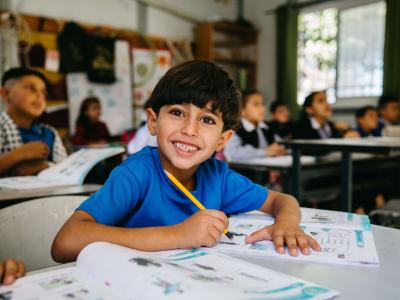
New EU-Funded Project to Restore Safe, Inclusive Education for Over 22,000 Conflict-Affected Children in the West Bank
World Vision, in partnership with the Teacher Creativity Center (TCC) and the Palestinian Ministry of Education, today announced the launch of a new EU-funded two-year project to safeguard access to safe, inclusive and dignified education for the most vulnerable conflict-affected children across the West Bank.
article / August 27, 2026
World Vision Ghana Calls for Enhanced Border Preparedness as Humanitarian Pressures Rise in West Africa
World Vision Ghana is urging stronger border surveillance and humanitarian preparedness as insecurity and climate shocks in Burkina Faso increase displacement pressures across West Africa, threatening vulnerable communities along Ghana's northern frontier.

article / August 27, 2026
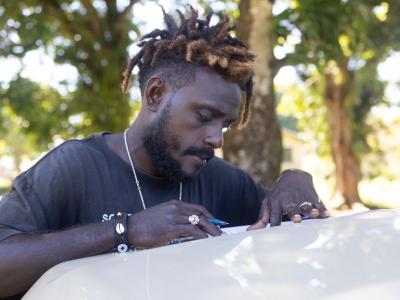
Chosen for a Second Chance, Inspired to Build a Better Future
The EU-funded Women’s Economic Empowerment Sapotim Strongpela Meri Project, implemented by World Vision PNG, is giving 25 school leavers in Central Bougainville a second chance through education and vocational training, empowering them with skills, hope and opportunities for a brighter future.
publication / September 3, 2026
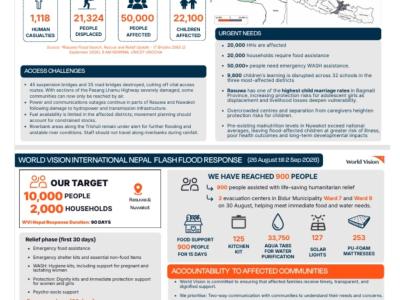
Situation Report 1: World Vision International Nepal | Nepal Flash Floods Response 2026
As of 2 September 2026, World Vision International Nepal's Flash Flood Response Situation Report 1 provides an overview of the humanitarian impact of the devastating floods affecting Rasuwa, Nuwakot, Dhading, and surrounding districts. With 50,000 people affected and more than 21,000 displaced, the report highlights urgent needs in food security, shelter, WASH, child protection, and education. It outlines World Vision's 90-day emergency response targeting 10,000 people across 2,000 households and reports that 900 people have been reached with life-saving assistance, including food support, kitchen kits, shelter kits and essential non-food items, water purification supplies, solar lights, hygiene kits, dignity kits for women and girls, and psychosocial support.
video / September 2, 2026
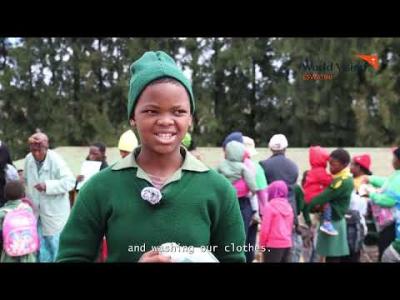
World Vision Donated Soap Brings Hygiene Support to Families in Ngwenyameni
World Vision’s Gifts-in-Kind Programme donated soap to learners in Ntondozi, helping families improve hygiene, practise handwashing and reduce the risk of preventable diseases.
article / August 31, 2026
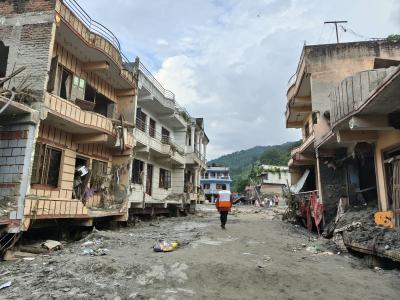
I Only Lost My Shoe. They Lost Their World.
Golden light kissed shattered homes where memories slept beneath the mud. A red teddy bear lay silent in the ruins, carrying the echoes of childhood dreams swept away by the flood. I lost a shoe to the sludge, but thousands lost their homes, their safety, and the ordinary tomorrows they once imagined. Yet resilience rose like a river reed through the silt, bending beneath the torrent but refusing to break, as Bimala, a mother of a sponsored child, walked forward with quiet courage.
And above the wreckage, hope stood like sunlight after rain, stubborn as a seedling pushing through stone, refusing to be washed away.
article / August 27, 2026
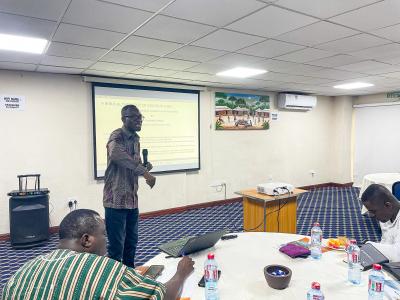
World Vision Ghana Advances Child-Centred Creation Care Through National Consultative Workshop
World Vision Ghana convened a three-day consultative workshop in Accra, bringing together faith leaders, theological institutions and development practitioners to strengthen child-centred Creation Care and advance environmental stewardship and climate action through churches.
video / August 21, 2026
Ebola Outbreak Reaches Critical Turning Point as World Vision Calls for Urgent Action
As Ebola cases continue to rise across eastern Democratic Republic of the Congo, the humanitarian response is at a critical turning point. In a recent media interview with Al Jazeera Media Network, World Vision DRC's East Zone Director, David Munkley, warned that the outbreak has exceeded all expectations, with daily cases increasing dramatically and the disease spreading into new health zones. He highlighted the urgent need for greater investment in prevention, community engagement and frontline health services, stressing that trusted local voices - including faith leaders, schools, community leaders and health workers - are essential to building confidence and helping communities adopt life-saving measures. Above all, he called for stronger support to protect children and families who remain at the heart of this crisis. Watch the full interview below and join us in raising awareness of the urgent need for collective action.

article / August 24, 2026
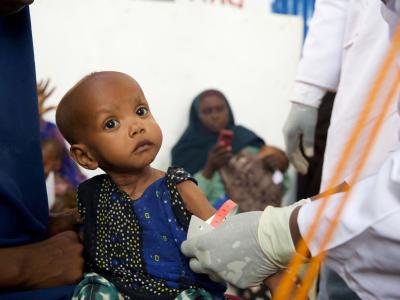
“I Dont Want My Children to Die of Hunger”: One Family's Fight Against a Famine Somalia Has Seen Before
As funding dwindles, needs are outpacing resources in Somalia. Some locations are already showing famine conditions as humanitarian organisations scale down or close operations.
article / August 27, 2026
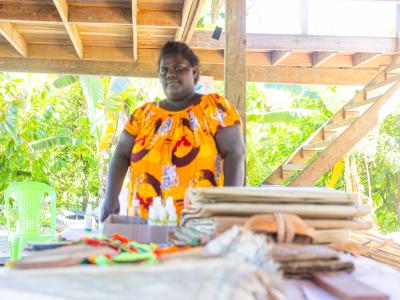
From Women's Empowerment to Community Resilience
Through the EU-supported Women’s Economic Empowerment Sapotim Strongpela Meri Project, implemented by World Vision PNG, Amalanie Mimisi has grown her small business, increased household income, and created economic opportunities for women and elderly community members in Central Bougainville