
God Works in Creative Ways: Bringing Children Closer to the Church.

Creativity can be defined many different ways: the ability to see things differently; the appetency towards the esthetics; visual arts or drawings; finding solutions in an unusual manner; humor, or provocative thinking. In each case, all definitions of creativity refer to the creative process but don’t necessarily take into account that the creative person and their final product are also defined by their socio-cultural background.
What happens when the Church becomes an agent of change by promoting creativity among children? Could its efforts lead towards a better world; a world with no poverty, famine, sickness, indifference, or despair? Only God can answer our question.
Because World Vision is motivated by Christian beliefs, we have established long-term relationships with local churches in our areas of intervention. In 2012, with the support of World Vision, Priest Cătălin Ministreanu, from the Church in Vultureşti started “Let the Children Come to Me”. Through this project, World Vision and the community members have supported the construction of a small one-room parochial centre, where children could meet and, under the supervision of volunteering teachers and specialized instructors, participate in creative workshops, catechetic lessons or watch movie. The project was designed for 150 children (75 boys and 75 girls) from vulnerable families, whose parents are working abroad, who live in poor homes, and who are at risk of dropping out of school.
The project, aimed at helping children coming from problematic families and strove to help them cultivate and increase the self-confidence, while also preventing school abandonment or juvenile delinquency rates through encouraging artistic creativity. Studies have shown that creative activities contribute to the discovery and development of skills, increasing children’s self-confidence in their potential.
"I think that the Church plays an important role in the moral development of pupils,” says Priest Ministreanu. “The activities we have at the Church are about punctuality, truth, discipline, respect and helping the one(s) in need. Not knowing the Holly Bible is what causes the most harm in the world. By learning the truth from the Bible, children strengthen their souls and their virtues. They grow their faith and can easily distinguish between good and bad,” he adds.
Priest Ministreanu gained the support of local leaders and handicrafts men who volunteered to help. Soon, however, he found that his project would not be easy to implement. His plan was to conduct catechetic lessons. But, he was disappointed to see that children were reluctant in express their problems, were ashamed to talk about their issues in front of other children, and, in time, they did not attended the lessons anymore. This is why Priest Ministreanu decided to have his catechetic lessons during the regular creative workshops. He would wait for the teachers to instruct children on the specific techniques and, afterwards, he would start teaching them about God, while the children were practicing their talents.
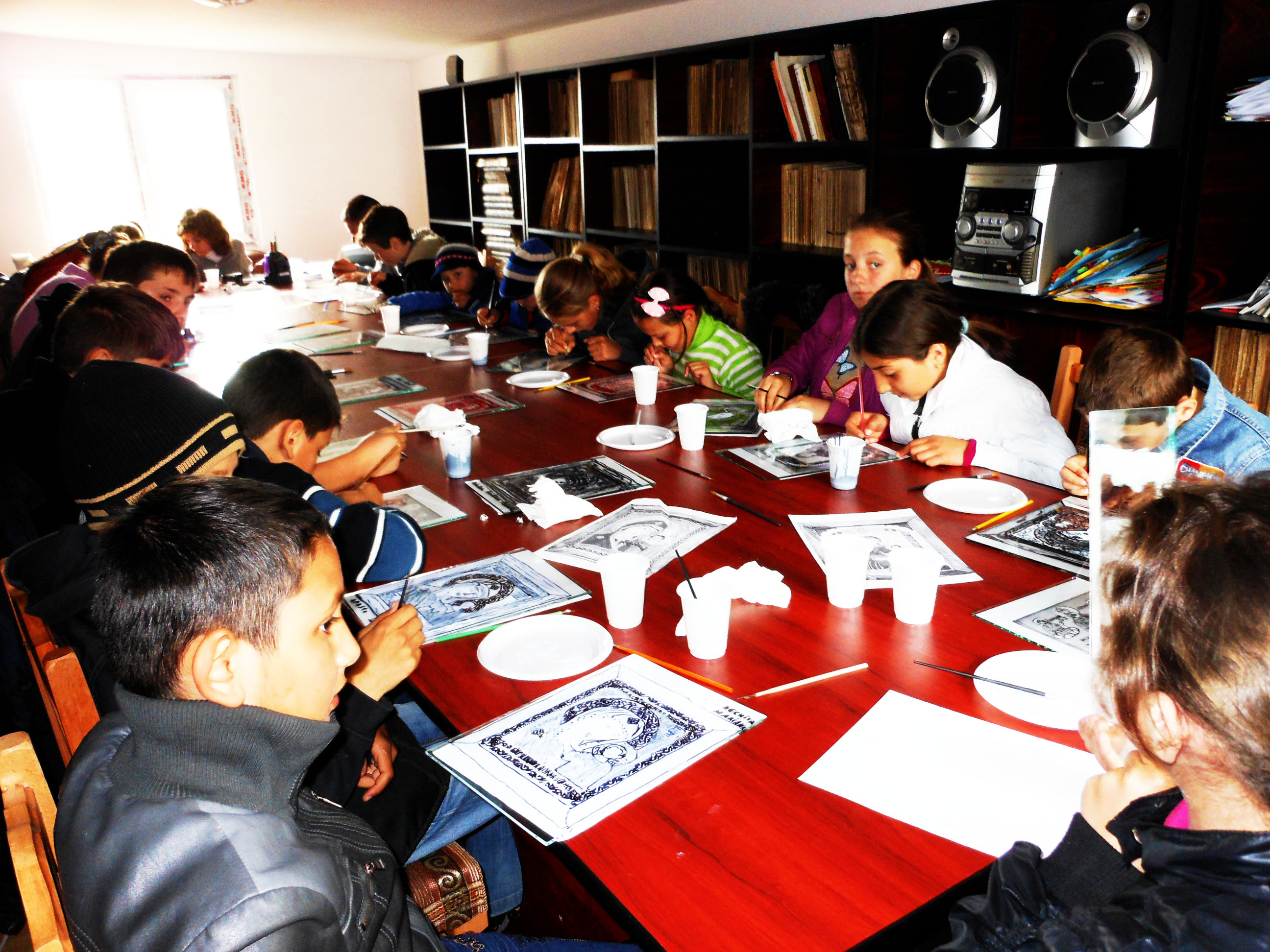
Divided into working groups, the children simultaneously participated in creative workshops of painting icons on glass, drawing, making bracelets, sewing, painting eggs for Easter, singing in chorus, quelling, handcrafting, and learning about God. All of these activities were aimed at encouraging each child to actively participate in the discovery of the truth of things and the phenomena that correspond to their specific knowledge. Priest Ministreanu believes that placed in an informal setting, the passion for art can and will instil in children the love for God. Time has shown that he was right. They would listen to the priest’s stories and put his advice into practice.
“While we work, the priest tells us a lot of things,” said Alexandru, a 12-year-old boy, in the 6th grade. “He says that we should stay in school and learn for our exams, [that] we should never judge our friends and always keep in mind that we must help the one who asks for our help. He has told me that I should follow my dreams. I want to become a computer scientist because I love computers, even though I do not have one at home.”
The seminars worked best in shifts. On Sunday, right after church, children would meet in the parochial centre and participate from 12:00 to 17:00 in the creative workshops. One Sunday, they would have drawing and quelling activities, the next they would participate at chorus, with the schedule being strictly arranged each month. Around the most important holidays, they would insist more on preparing a carol repertoire for Christmas, handcrafting “Mărțişoare” for the first week of March, or painting eggs around Easter time. To help the children’s stamina, Priest Ministreanu also convinced mothers to voluntarily prepare snacks and food for the children, so that they would not get tired.
Two of the most involved children inside the activities of the last school year, had to study hard for their final gymnasium examination. Some might be concerned that these classes would be a distraction. These children, however, had another perspective. “I started to come more to church on Sunday morning,” says Alexandru, 12, a 6th grade student. “My friends and I attended the creative workshops. I never thought that by coming to Church, we can have extra-curricular activities that would bring us closer to God.”
“I think it’s a good thing to come to church, to pray and to believe in God,” says Antonio,15 a 9th grade student at Nicolae Iorga high school. “It’s not like I can study all the time. If I did not come, I would have probably have remained at home and wasted my time, doing nothing in particular.”
“This year has been tough for me. I am not very good at Mathematics and I was afraid I would fail my final examination and would not get into High School,” continues Antonio. “But here, at the parochial centre, I made friends with a colleague who has been tutored by his older brother, a Mathematics teacher. My colleague took time to tutor me once a week, just to help me out. Thanks to him, I passed my final examination with a 10, while he scored 9.80. But, that did not tear us apart. On the contrary, we are best friends and I will always remember his gesture,” he says,, with a surprising smile on his face.
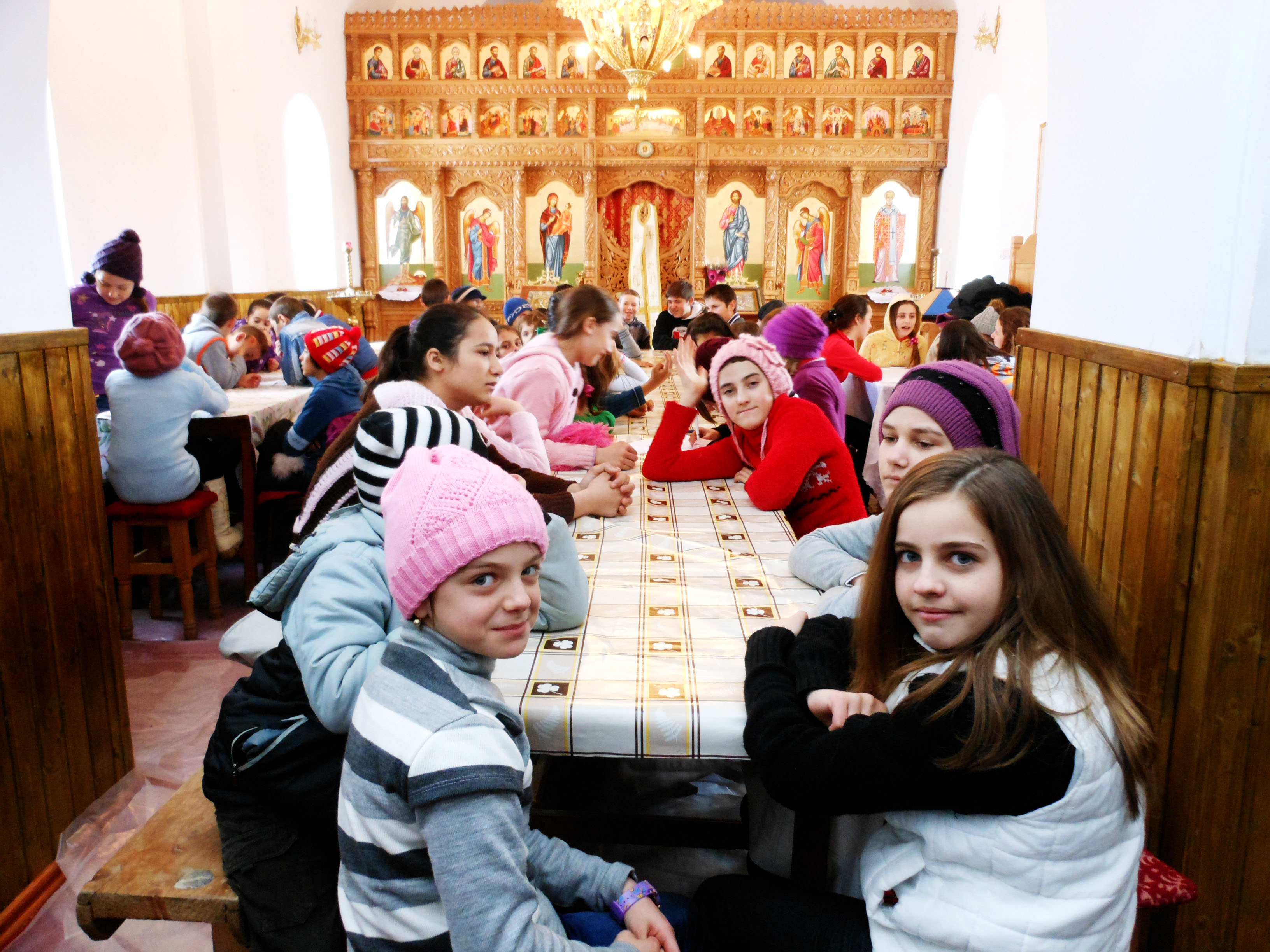
During the activities, the children, who were organized into groups of at least 10, felt more comfortable to discuss problems that would occur at school, in their families or inside the community. Priest Ministreanu would listen to their concerns and would give them advice.
Practically speaking, the moral education themes for the catechetic lessons came from the realities of the environment of each child. In this way, the activity managed to strengthen the group cohesion throughout face-to-face direct contact between the priest and the new group of friends, as well as creating new orientation models that would later impose a new way of thinking and behaving.
Crina is also a student in the 9th grade; a straight 10 pupil. She says that the meetings from the parochial centre helped her cope with the perfectionist demands of her parents. “I used to feel insecure because I was constantly arguing with my parents who disagreed with everything I did. They were pressuring me into obtaining only grades of 10. They did not approve of the Indie music I like listening to, and were constantly trying to control my every move. I managed to talk about my problems here at the parochial centre and I found comfort in praying. Every night, I would pray to God to give me wisdom and patience, to be a good daughter for my parents and a good student at school. Eventually, my parents became more tolerant towards my choices and now we get along.”
“The young children from Vultureşti are eager to become involved in a real community, based on practical faith and authentic relationships. This is why they pray and talk about their day-to-day problems together. Moral education prepares a child for a social life based upon knowledge, understanding, good practices, and religious education. By supporting our initiative, World Vision has helped us accomplish our purpose: to have a pleasant and simulative environment that encourages children to become more creative, to socially interact with their friends and to work together for the well-being of their community.” says Priest Mănăstireanu.
"Moral education prepares a child for a social life based upon knowledge, understanding, good practices, and religious education. By supporting our initiative, World Vision has helped us accomplish our purpose"
The “Let the Children Come to Me” project has gained a lot of visibility among the community, especially as children learned how to charge for their work. During the first week of March, 2013 children who regularly attended the centre, had the idea of improvising a “selling fair” with hand-made Mărțişoare which they exhibited on a table, in front of their school. Members of the community bought their products and the children earned $40, which they used to have a party in their community. In their village, there are few occasions in which they can have fun or get together for a party. Anniversaries are usually private family events. As a reward for their hard work, they were permitted to arrange their party in the festivity room of the cultural house. They used the money to buy snacks and juice and some of the parents also helped out by baking some cookies. For them, the event was a success because they learned that they can earn money by working and because it bonded them even more as friends.
There are many causes that contribute to the early school dropout and juvenile delinquency. Schools from poor areas are characterized by isolation, poverty, and lack of employment opportunities for graduates. Without motivation, many children from the gymnasium cycle dropout of school from the first years of study, working in their households or as daily labourers for the richer people of their community. Through this program, not did children learn a lot about God; they were also encouraged to continue their education and established a support group with their peers to be able to mutually support one another.