article / March 11, 2026
DR Congo: Community Mobilization And Supply Support Strengthen The Cholera Response In Kolwezi
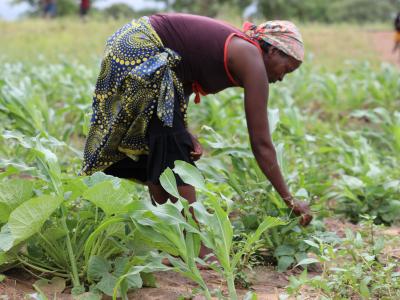
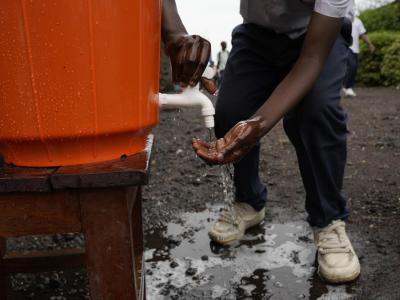
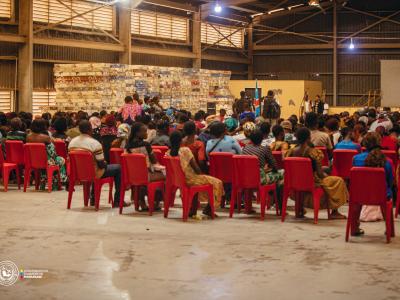
A cholera outbreak that began in December 2025 in the Manika Health Zone of Kolwezi, Democratic Republic of Congo, has prompted a coordinated response from health authorities, community health workers, and humanitarian partners. With support from World Vision, essential medical supplies, water treatment materials, and sanitation equipment were provided to strengthen prevention, treatment, and community awareness efforts. Community health workers have played a central role in educating families about hygiene practices, water chlorination, and early referral of suspected cases. Through these combined efforts, thousands of residents in high-risk neighbourhoods have received clean water and cholera prevention messages. While the response is helping reduce transmission risks, health authorities warn that continued vigilance and community mobilisation remain essential due to ongoing population movement and the risk of the outbreak spreading to neighbouring areas.
publication / March 9, 2026
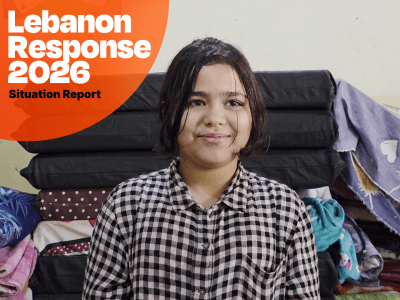
Lebanon Response Sitrep 2026 #2
According to Lebanon’s Ministry of Public Health (MoPH), attacks between 2 and 8 March have resulted in 394 people killed and 1,130 injured, with figures Increasing daily.
Displacement orders issued in the last days, including renewed orders affecting areas south of the Litani River and the entirety of Beirut’s southern suburbs, have triggered further population movements and repeated displacement for many households.
As of 8 March, the Disaster Risk Management (DRM) Unit reports 117,228 displaced individuals residing in 538 collective shelters. The Government of Lebanon has launched a national self-registration platform for internally displaced persons, with over 517,000 people, indicating the potential scale of displacement beyond those recorded in collective shelters.
Recent days have seen hostilities expand beyond traditional frontline areas, including blanket evacuation orders affecting Beirut’s southern suburbs, warnings and subsequent strikes targeting branches of the Al-Qard- Al-Hassan Association. Airstrikes have also impacted locations outside the declared warning zones, including a hotel in central Beirut and an earlier strike on a hotel in Hazmieh, both situated outside the primary red-zone areas. These incidents highlight the widening geographic scope of the conflict and the continued risks to civilians and humanitarian operations across areas.
press release / March 5, 2026
West Bank: World Vision Launches Impact-Proven Mental Health and Psychosocial Support Project
The project aims to strengthen the emotional wellbeing of vulnerable children, adolescents, caregivers, and adults across the West Bank.
publication / March 9, 2026
World Vision Mali 2025 Annual Report
World Vision Mali’s 2025 Annual Report highlights key achievements improving children’s lives through education, WASH, nutrition and humanitarian assistance.
article / March 3, 2026
World Vision Responds to Cholera Outbreak in Northern Mozambique
World Vision Mozambique is providing life-saving hygiene and disinfection supplies to combat the cholera outbreak in Monapo, supporting overstretched health teams.
article / February 25, 2026
Community health workers in Ouallam: silent guardians strengthening epidemic response
In Ouallam, 39 community health workers support families daily despite insecurity and scarce resources. According to Souleymane Idrissa, head of the Ouallam health center, trainings provided through the “Strengthening access to care and epidemic control” project funded by World Health Organization and implemented by World Vision Niger and ISCV marked a major turning point. Health workers gained critical skills in managing gender-based violence, encouraging referrals, and supporting survivors, including access to psychological care.
The project also strengthened disease surveillance through training on the minimum emergency activity package, enabling faster detection and reporting of measles, malaria, cholera, meningitis, and other serious illnesses, even in displaced persons sites. Long-serving relays like Seyni Seydou and Maimouna Birgui describe a deepened sense of purpose, improved knowledge, and stronger community trust.
Beyond technical skills, the trainings enhanced awareness-raising, early care-seeking, and social cohesion. Today, community health workers in Ouallam act as true health sentinels, better equipped to prevent disease, respond to epidemics, and protect their communities.
article / March 11, 2026
DR Congo: World Vision's Men Care Approach Is Transforming Male Roles For the Benefit of Families
In DRC, World Vision is helping transform traditional gender roles through its Men Care approach, supported by Aktion Deutschland Hilft (ADH). The programme trains community facilitators who lead discussions with fathers on positive parenting, shared household responsibilities, girls’ education, and non-violent family relationships. In its first phase, 660 men from Nyangezi and Nyantende participated. The initiative is already producing visible changes in families, with many men becoming more involved in domestic tasks, communication, and childcare. By encouraging fathers to play a more active and supportive role at home, World Vision aims to strengthen families, reduce domestic tensions, and create safer, more nurturing environments for children.
publication / March 4, 2026
Lebanon Response Sitrep 2026 #1
The current escalation follows prolonged instability and military activity despite the 27 November 2024 cessation of hostilities. Since the ceasefire came into effect, more than 10,000 air and ground violations have been recorded, resulting in at least 335 people killed and 973 injured as of 5 January 2026. Reported incidents have included airspace incursions, cross-border fire, and military activity in Baalbek, Hermel, and southern areas, alongside the continued presence of foreign military forces in five border villages. Prior to the renewed escalation in March 2026, an estimated 62,000 to 90,000 people remained internally displaced from earlier conflicts, underscoring the protracted nature of the crisis and the heightened humanitarian vulnerability across affected regions.
Over the weekend, regional tensions escalated following developments involving the United States and Iran, with hostilities expanding into the country to the south of Lebanon and Lebanon on 2nd of March. Airstrikes were reported across multiple areas, including the southern suburbs of Beirut, Bekaa, Baalbek-Hermel, and South Lebanon. According to Disaster Risk Management (DRM) Unit sources, an estimated more than 81,791 internally displaced persons (IDPs) including 9,000 children, have been recorded thus far, primarily in Beirut & Mount Lebanon (BML), Bekaa, Baalbek, and southern governorates. So far, over 60 people have been reported killed and at least 154 injured, with figures continuing to evolve. Warnings have been issued to evacuate over 200 towns across Lebanon, contributing to significant population movement from border areas and high-risk locations, while shelter data remains fluid due to continued secondary displacement and movement between collective sites.
publication / February 23, 2026
World Vision East Africa Impact Report 2025
Despite escalating conflict, climate shocks, economic instability and widespread displacement, we reached over 26 million people, including 16.4 million children
article / March 6, 2026
Bridging the Gap. Clean Water as a Foundation for Health and Education in Mwinilunga
On February 18, 2026, Sailung’a Health Facility in Mwinilunga District marked a major step toward improved health services. World Vision Zambia handed over a modern ablution block and water system to the facility. The new infrastructure strengthens access to safe water and sanitation for patients, mothers, children, and health workers.