

Widowed by War: Mother of Three Fights to Build a Livelihood in Ukraine
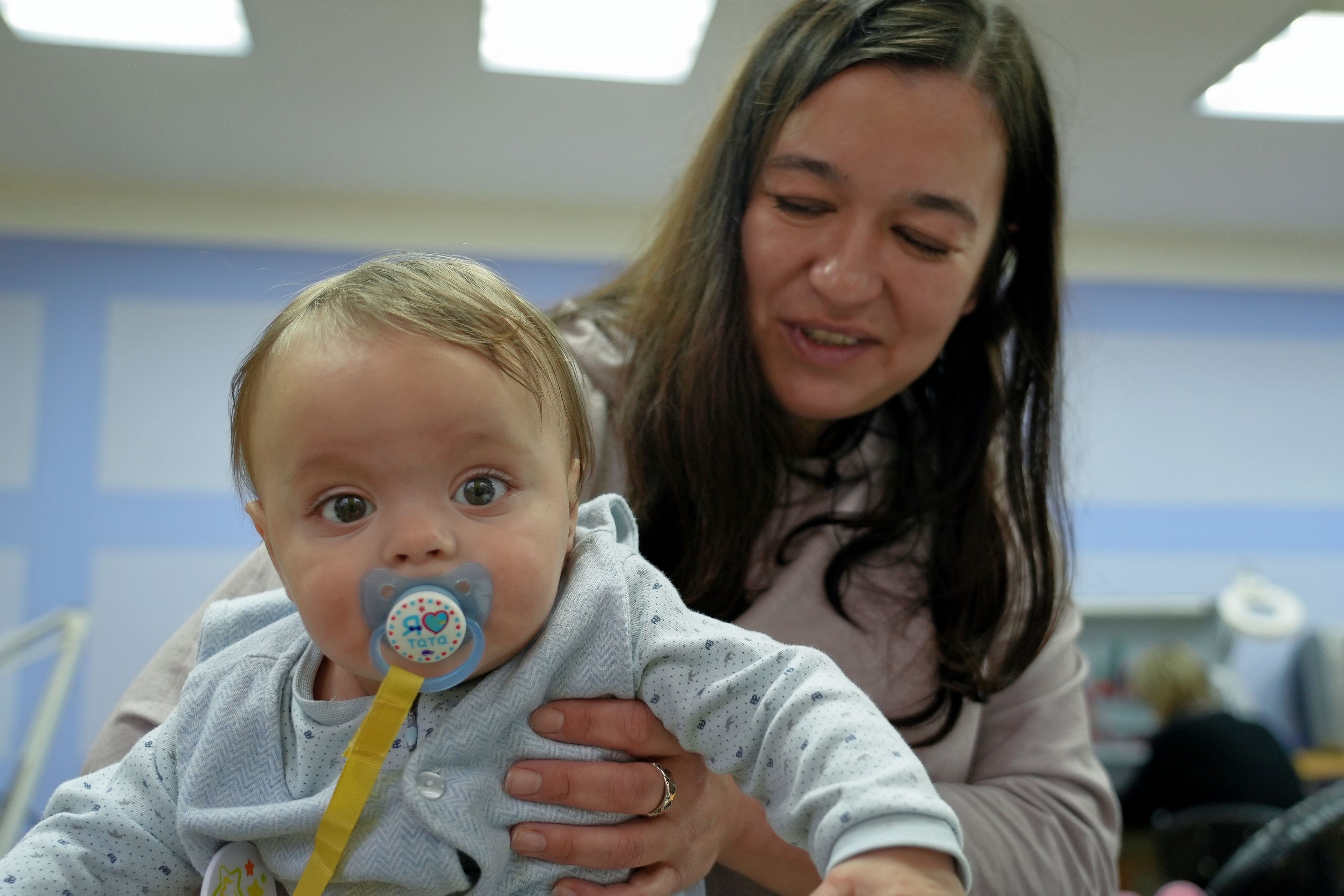


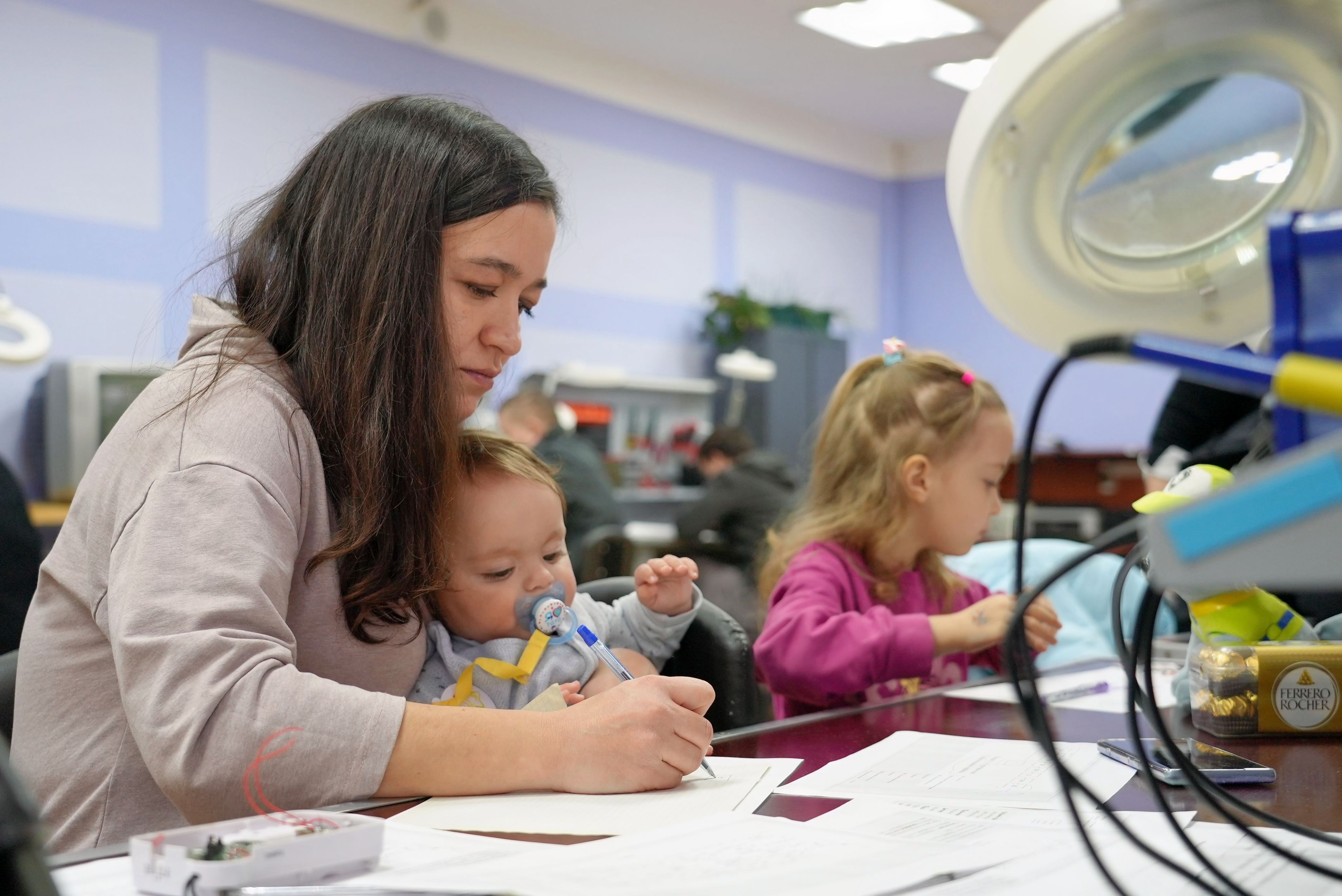
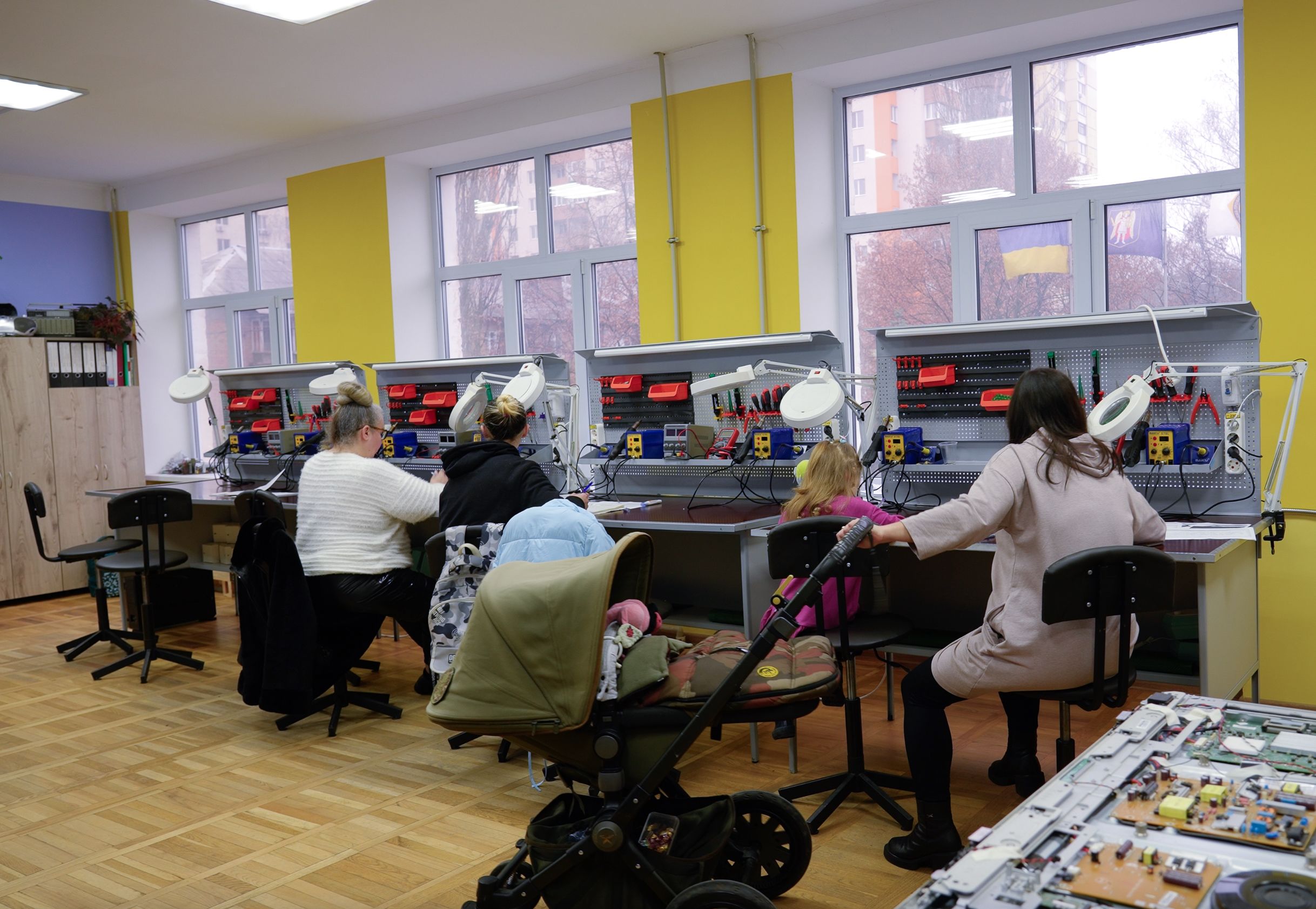
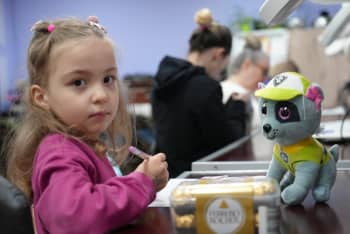
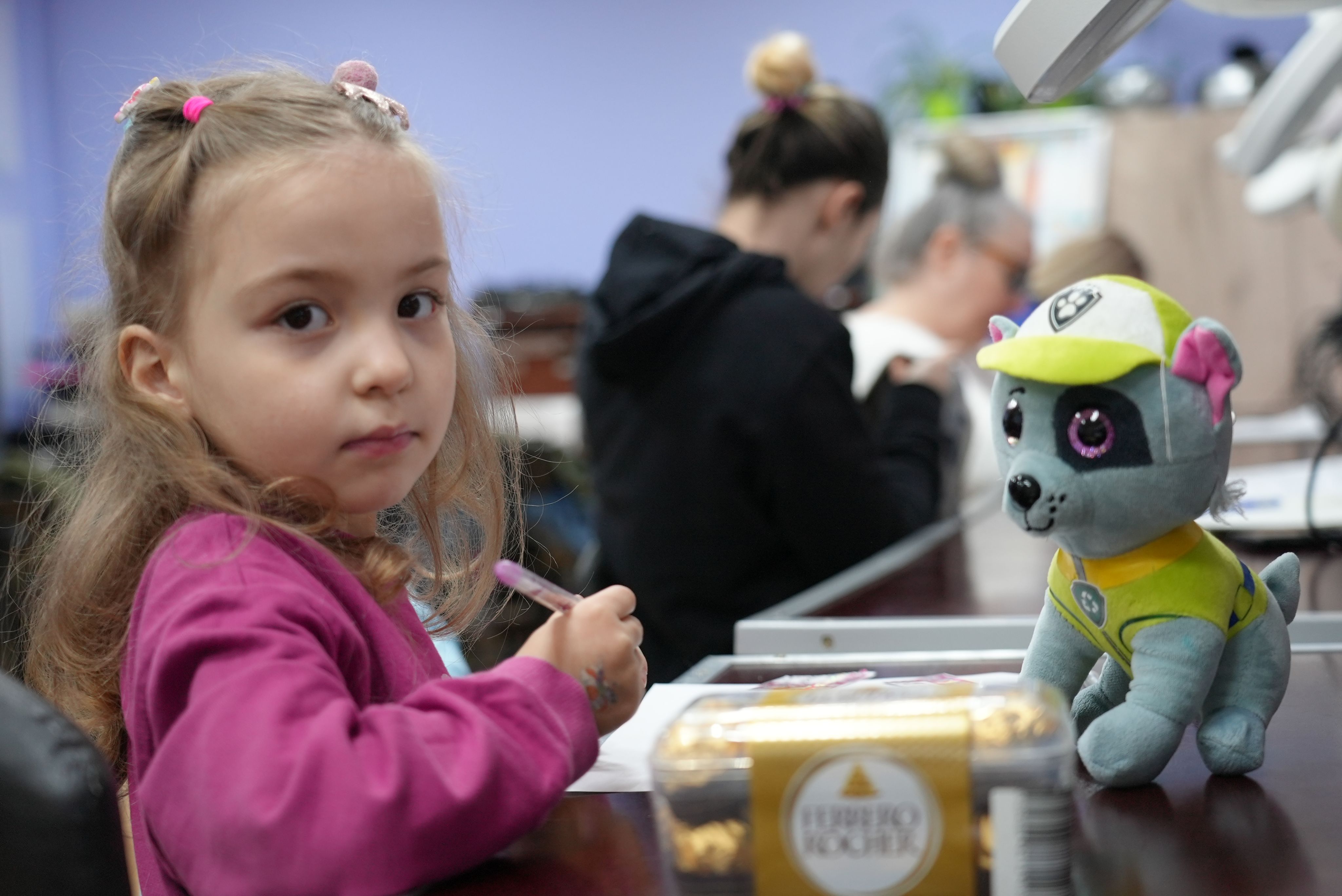
Hanna's children Tamerlan and Milena sit quietly while she focuses on her learning.
Hanna's children Tamerlan and Milena sit quietly while she focuses on her learning.
“My mental health is shattered. I lost my husband at war a year ago, while I was pregnant. I was left without any moral support”, shares Hanna, a single mother of three.
Hanna is one of thousands of displaced women in Ukraine whose lives have been upended by the conflict. Losing her husband while pregnant left her alone with overwhelming hardship as she struggled to care for her children.
“It’s incredibly tough, especially when I carry all the responsibilities on my own”, she adds. Her voice trembles with tears as she speaks, revealing the depth of her struggles and the strength it takes to keep going.
Originally from Donetsk region, she now lives in Kyiv Oblast as an internally displaced person (IDP).
In 2016, Hanna and her elder daughter Alina (12) fled their hometown due to the escalating violence that began in 2014.
The situation deteriorated rapidly, forcing them to seek safety in Kyiv Oblast, where they hoped to find stability. Even though Hanna's next two children (Milena, 5; and Tamerlan, 7 months old) were born there, they too have experienced the realities of war.blast.
Hanna's story echoes the experiences of many people across Ukraine – nearly 25% of households nationwide include at least one IDP, veteran, or person with a disability due to the war.
Despite these hardships, Hanna refuses to give up. Knowing all to well the importance of stability for her children, she enrolled in World Vision’s vocational training programme, supported by Aktion Deutschland Hilft.
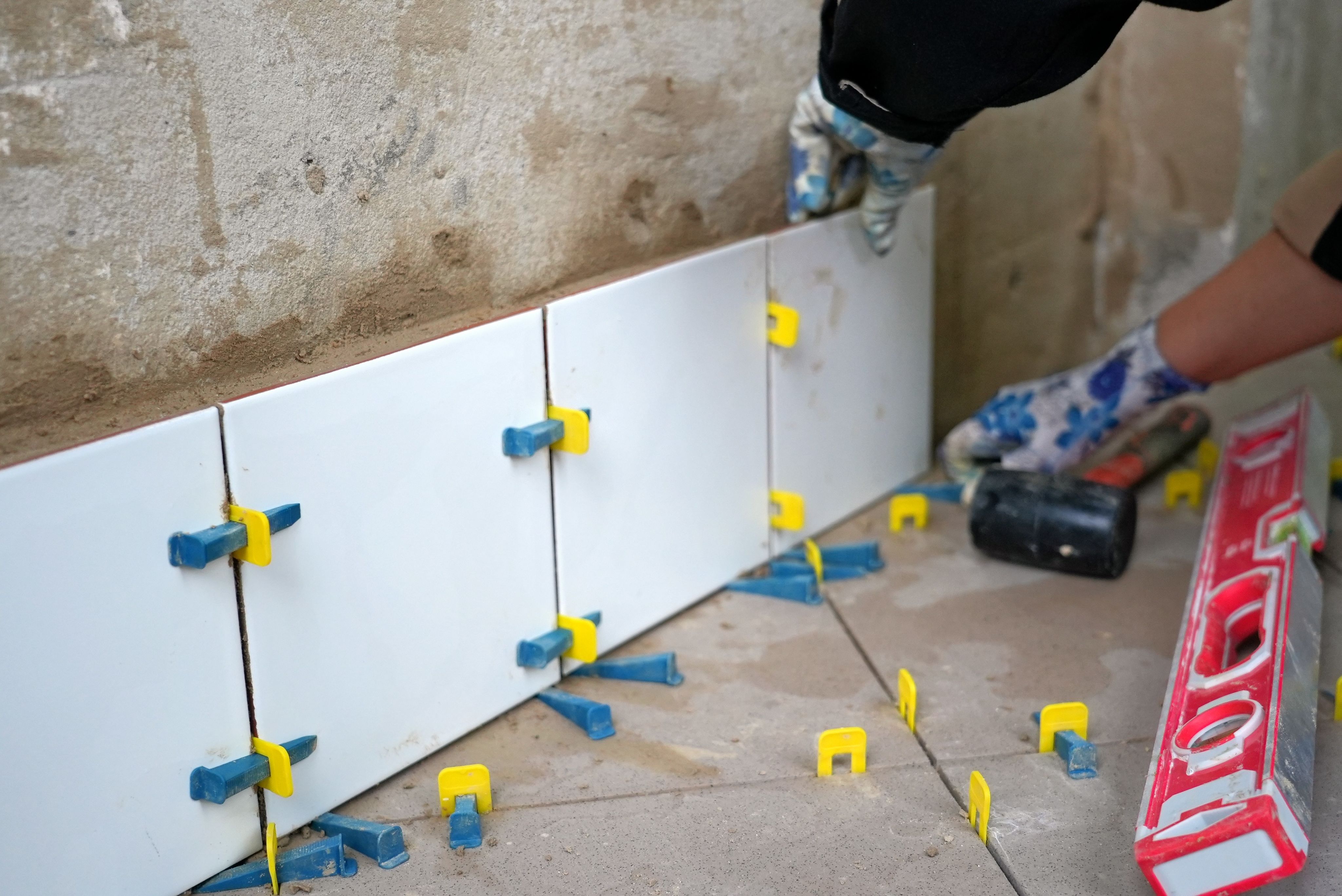
Hanna participated in a three-month programme aimed at addressing local job shortages. She and others gained practical skills in painting, plastering, tilework, and - notably for her - radio technology.
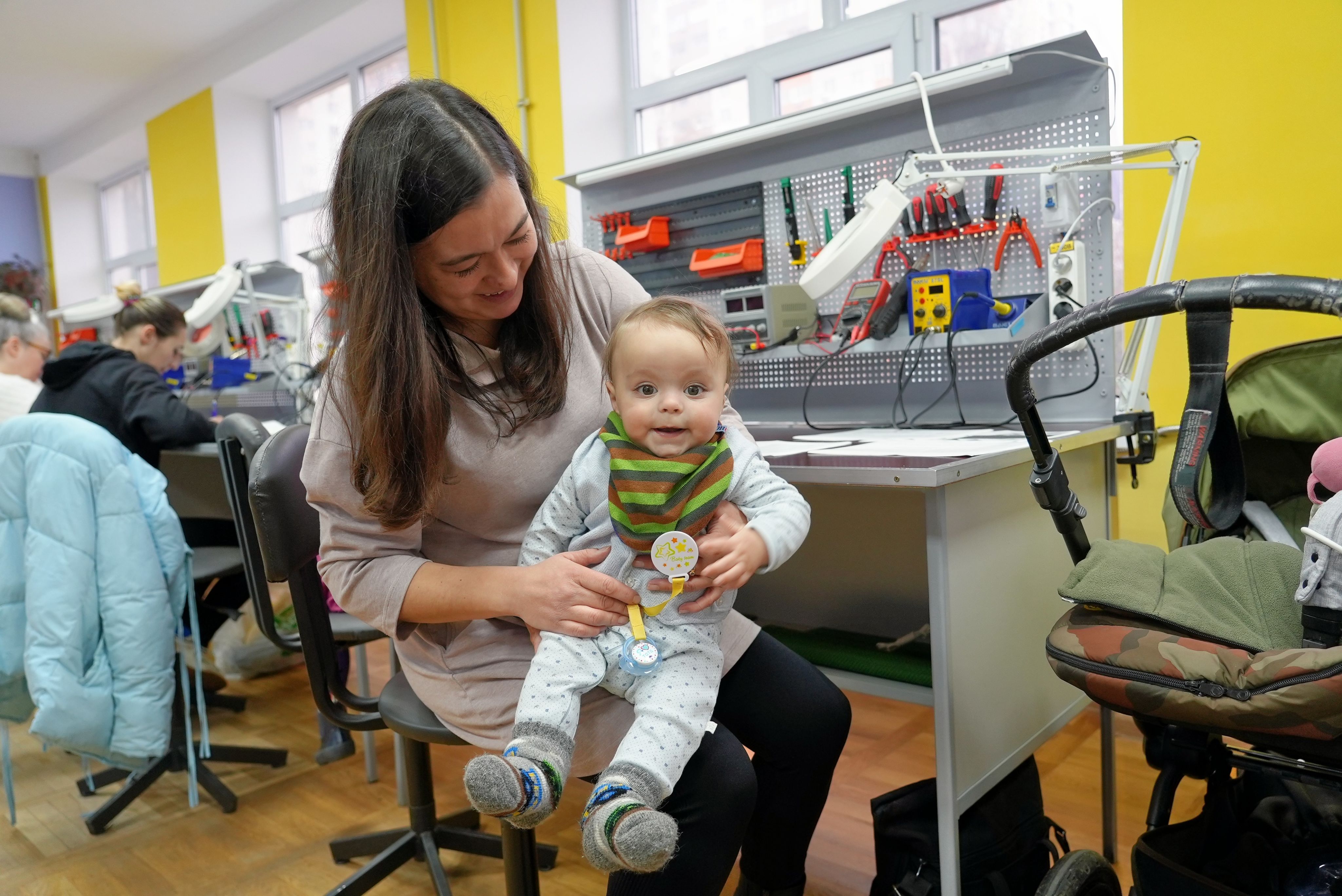
“I’ve always been interested in how digital devices work — my dad taught me everything when I was a child,” Hanna explains.
Throughout the training, she learned how to fix radio parts, microchips, and troubleshoot common issues.
The vocational education training (VET) programme was conducted in partnership with Kyiv Vocational College of Construction and Architecture.
The programme also offers valuable job placement support. Vadym Strotskyi, World Vision’s project manager, notes, “27 participants completed the intensive three-month training, earning certifications and opening new employment paths. They now have the skills and confidence to pursue better jobs, supporting both their futures and the community’s recovery.”
This decision marked a turning point, fuelling Hanna's determination to acquire skills that can improve Hanna's employment prospects and secure her family’s future.
“I know I need to keep up with the digital world. Most importantly, I want a job I can do from home, so I can care for my children,” she adds.

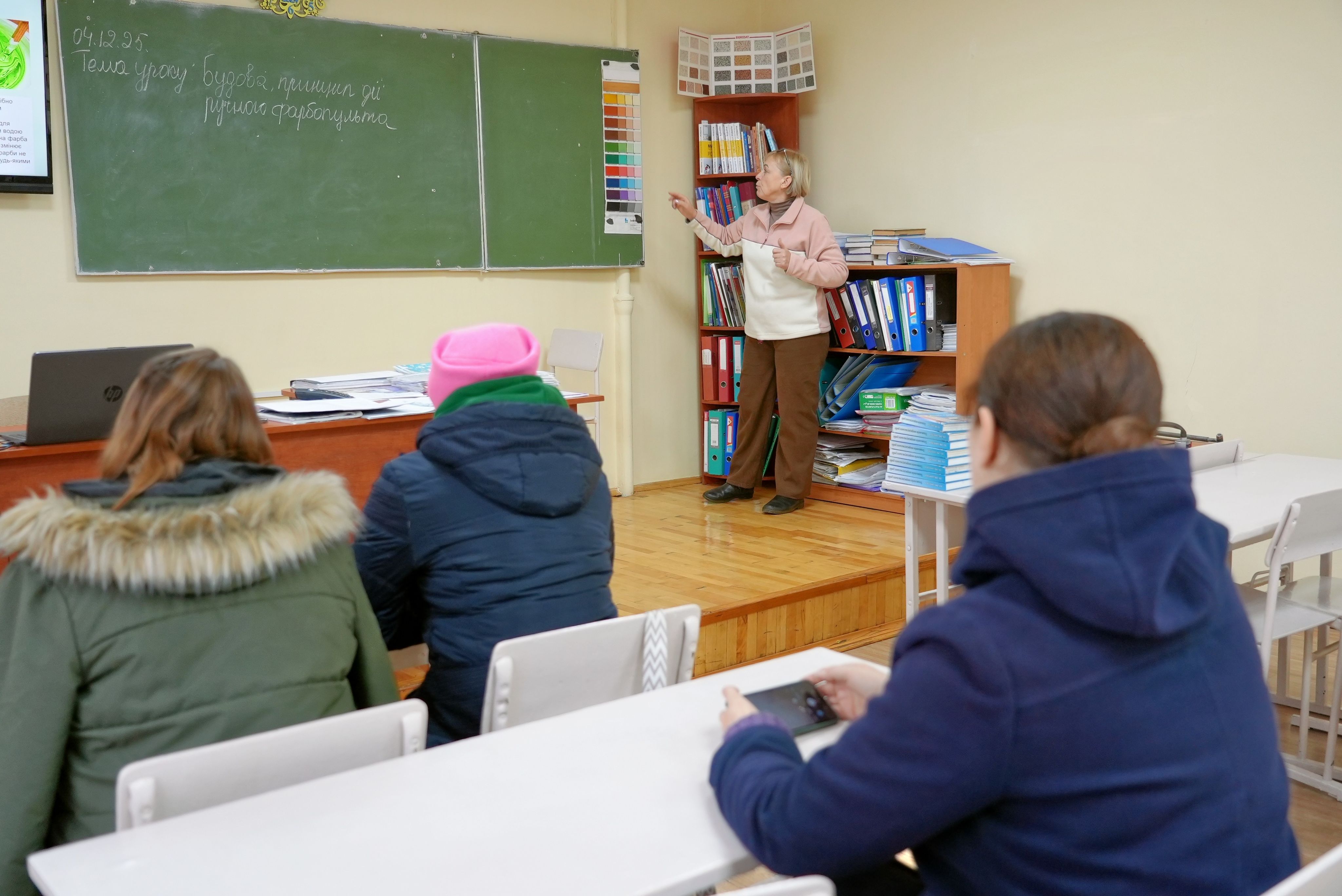
Participants engage in a training session on wall-painting techniques and the proper use of paints.
Participants engage in a training session on wall-painting techniques and the proper use of paints.

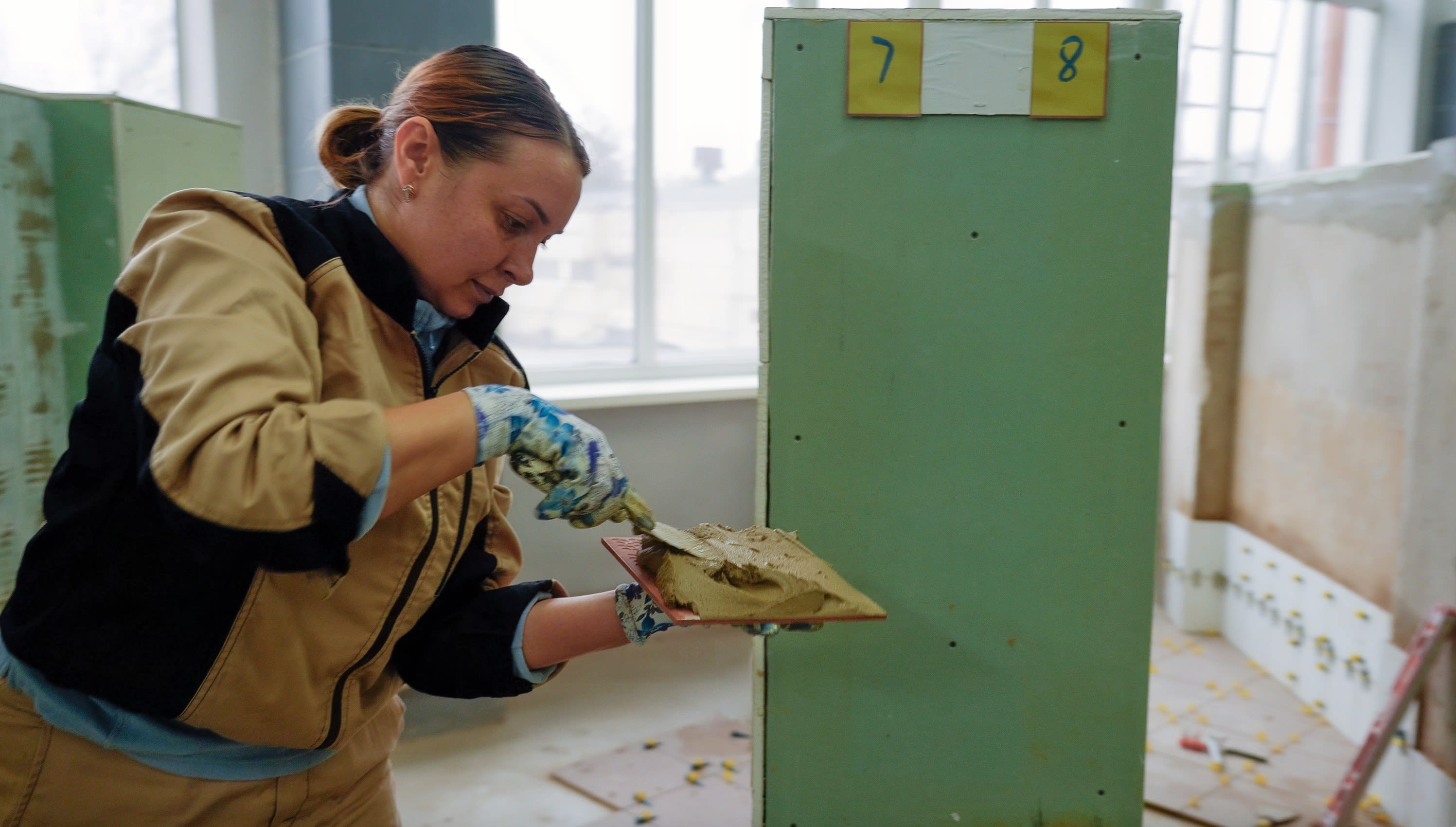
Maryna is learning tile work in World Vision's vocational training progamme.
Maryna is learning tile work in World Vision's vocational training progamme.
Tetiana's favourite part of the course is using the tile-cutting equipment.
Tetiana's favourite part of the course is using the tile-cutting equipment.
For Hanna, the vocational training has become a vital source of communication, connection, and renewed hope. It has provided her with a platform to express herself, build relationships, and feel part of a supportive environment.
“It means a lot to me,” she says, “because it’s not just about learning new skills; it’s about feeling understood and hopeful for the future.”
Hanna talks about how much she will miss her group-mates, who she’s grown close to during the course.
"When we first met and I shared my story, I received so much support from everyone," she says.
Hanna also expresses appreciation for the sense of stability the structured schedule provides, helping to ease her stress.
Looking ahead, she plans to continue her studies once the course concludes, eager to build on the progress she's made.
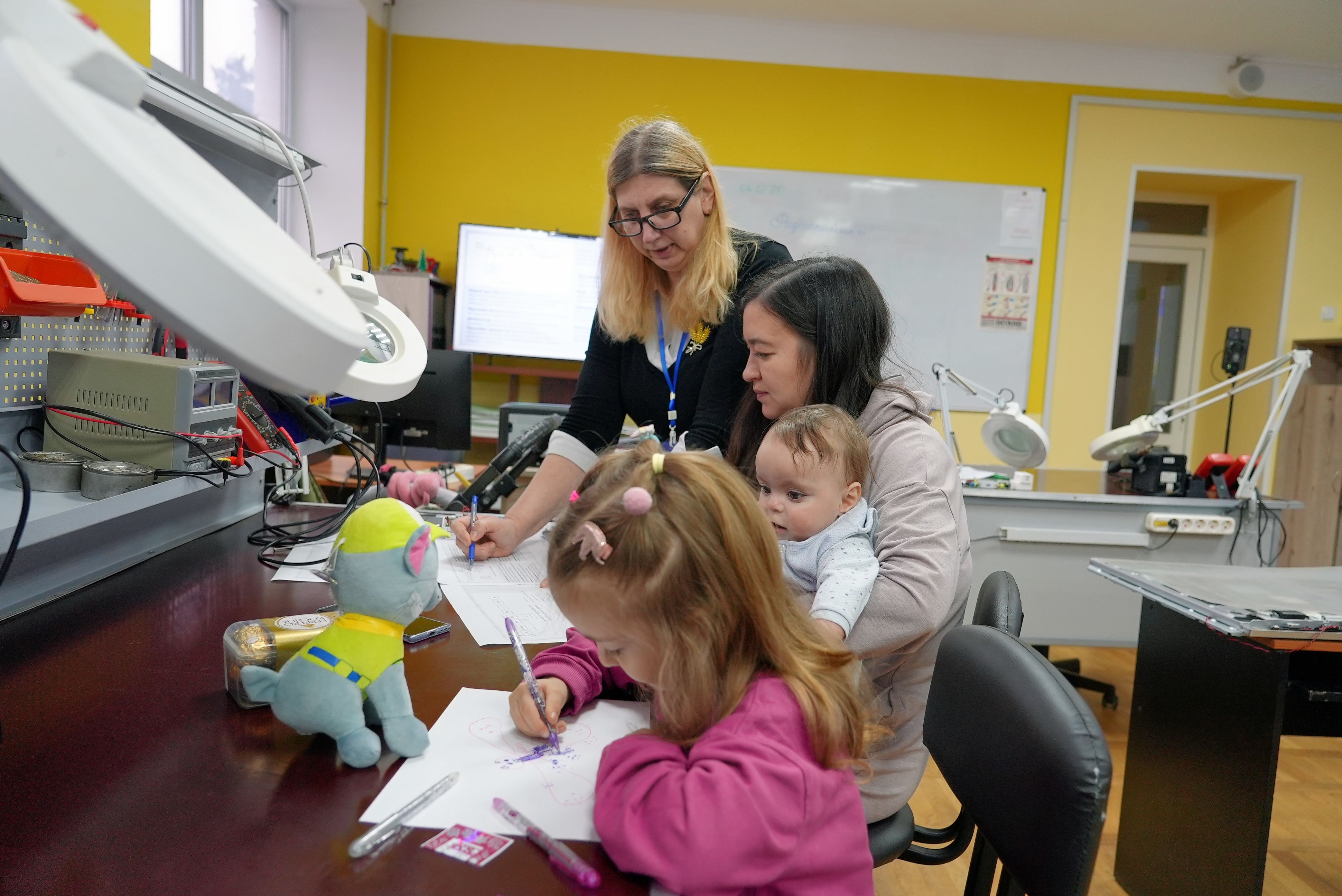
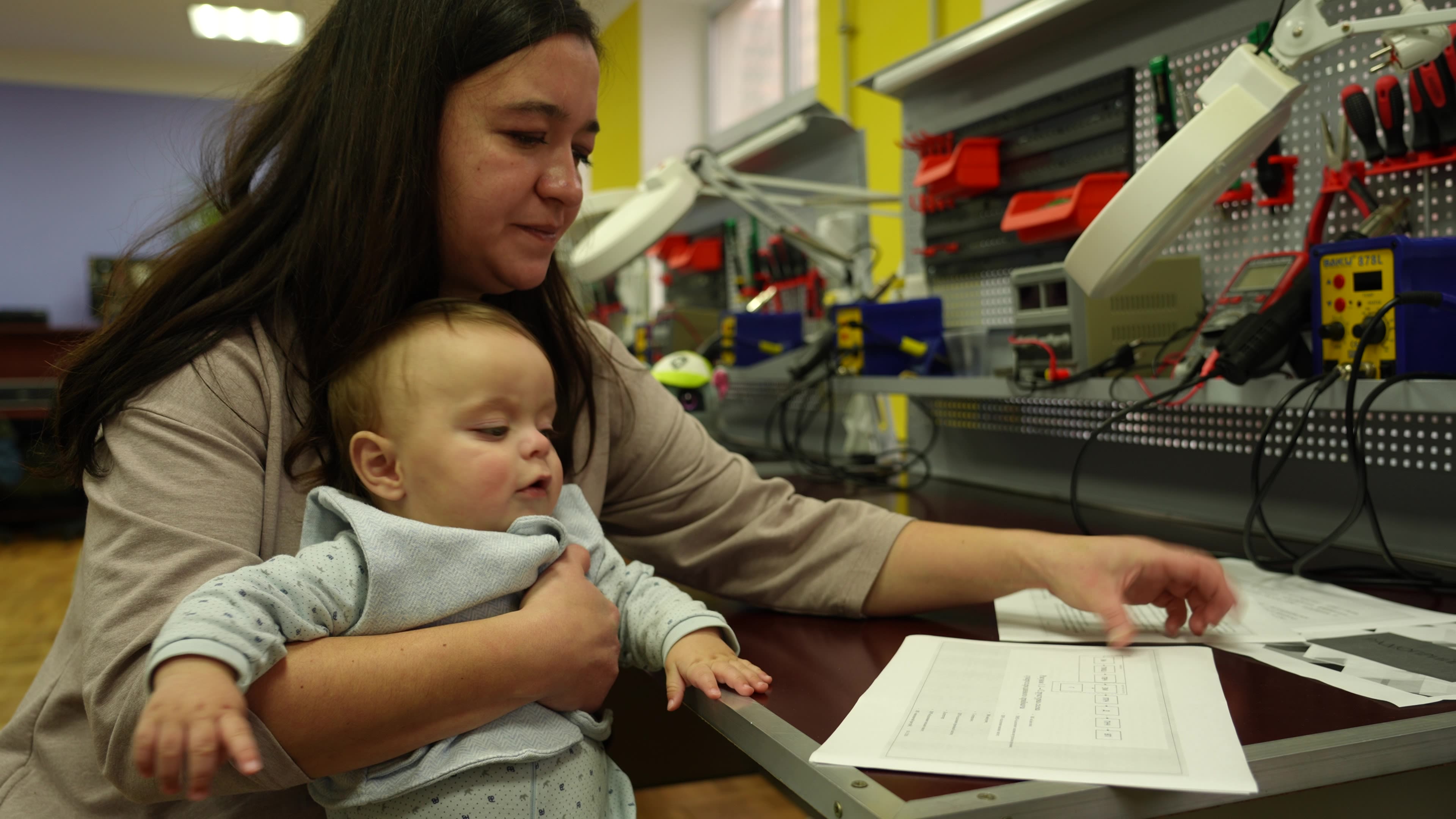
Hanna asks the lecturer to explain the task they are working on.
Hanna asks the lecturer to explain the task they are working on.

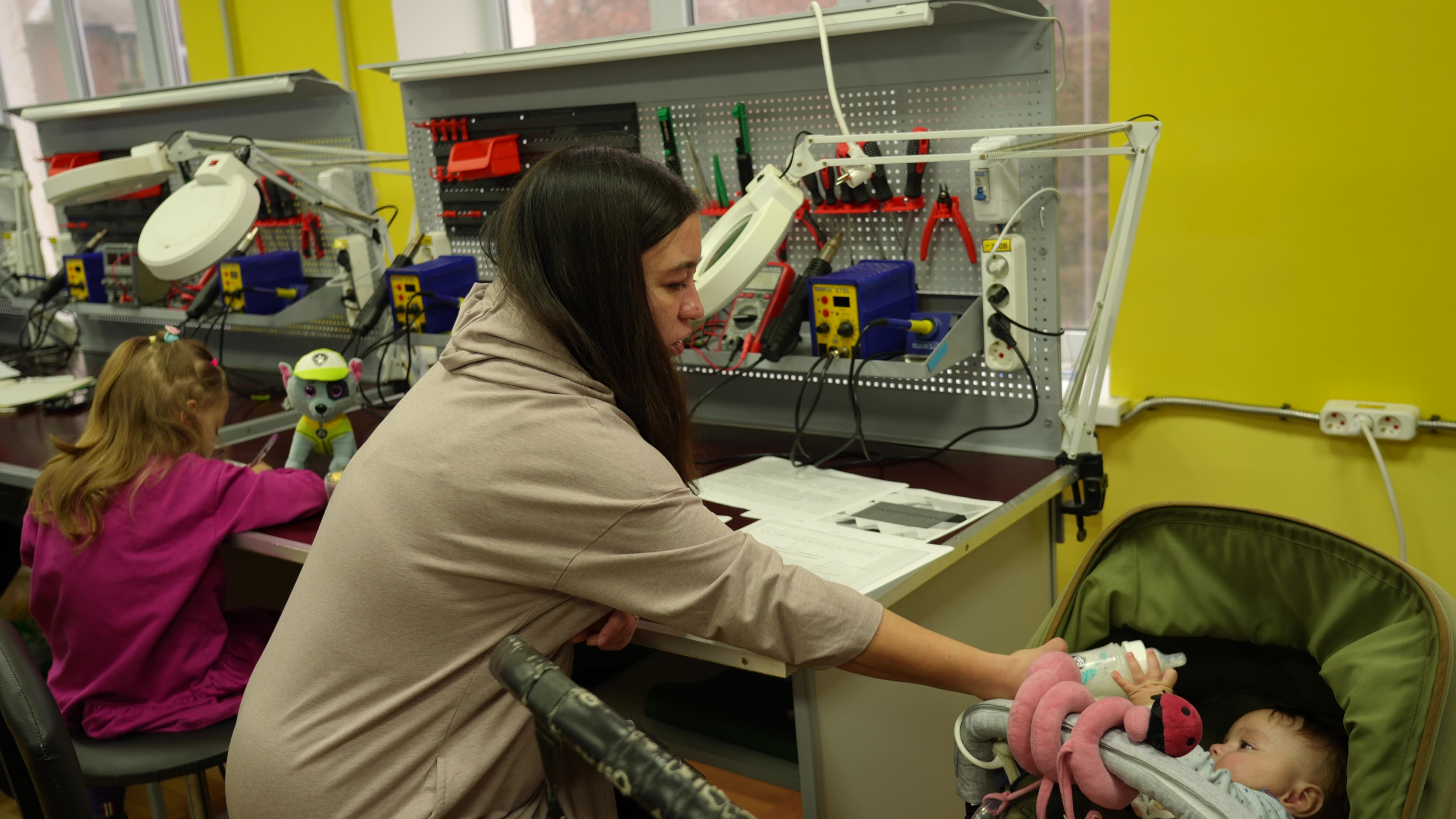
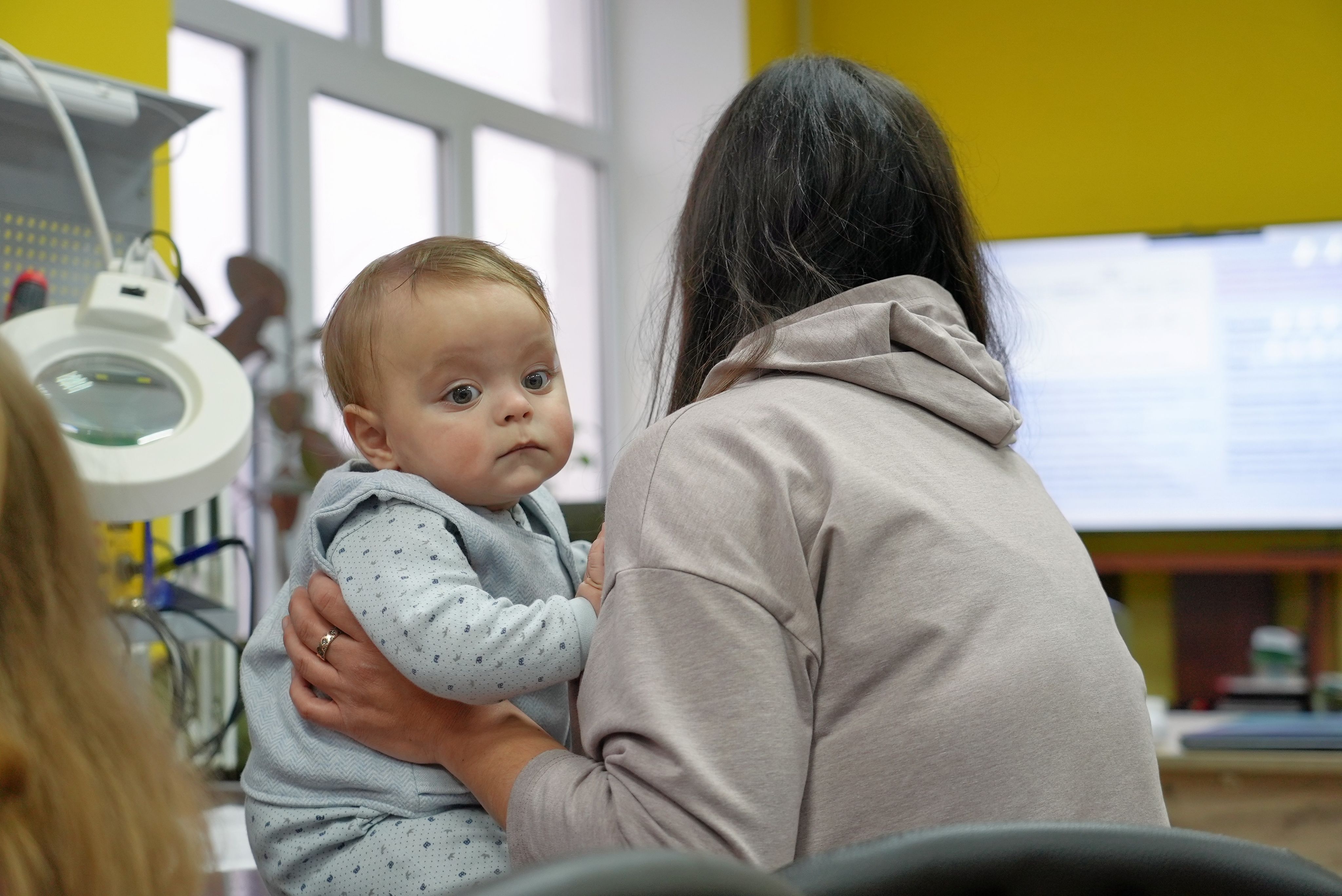
It is time for little Tamerlan to take a midday nap. Meanwhile, Hanna is focused on learning a new task and skillfully rocking a baby carriage.
It is time for little Tamerlan to take a midday nap. Meanwhile, Hanna is focused on learning a new task and skillfully rocking a baby carriage.
The war in Ukraine has disproportionately affected women’s livelihoods, especially single parents or caregivers.
Hanna’s story highlights the layered challenges many women in Ukraine face amid ongoing conflict and displacement.
As a single mother, she balances supporting her family with the difficulties of being displaced, all within a fragile economy.
In 2023, women accounted for 72.5% of the unemployed, and in 2024, only 48% of displaced women were employed.
“Balancing education and parenting isn’t easy. But I keep going because I have a goal. It’s what motivates me to get up at 5 a.m. and focus on my studies,” Hanna shares.

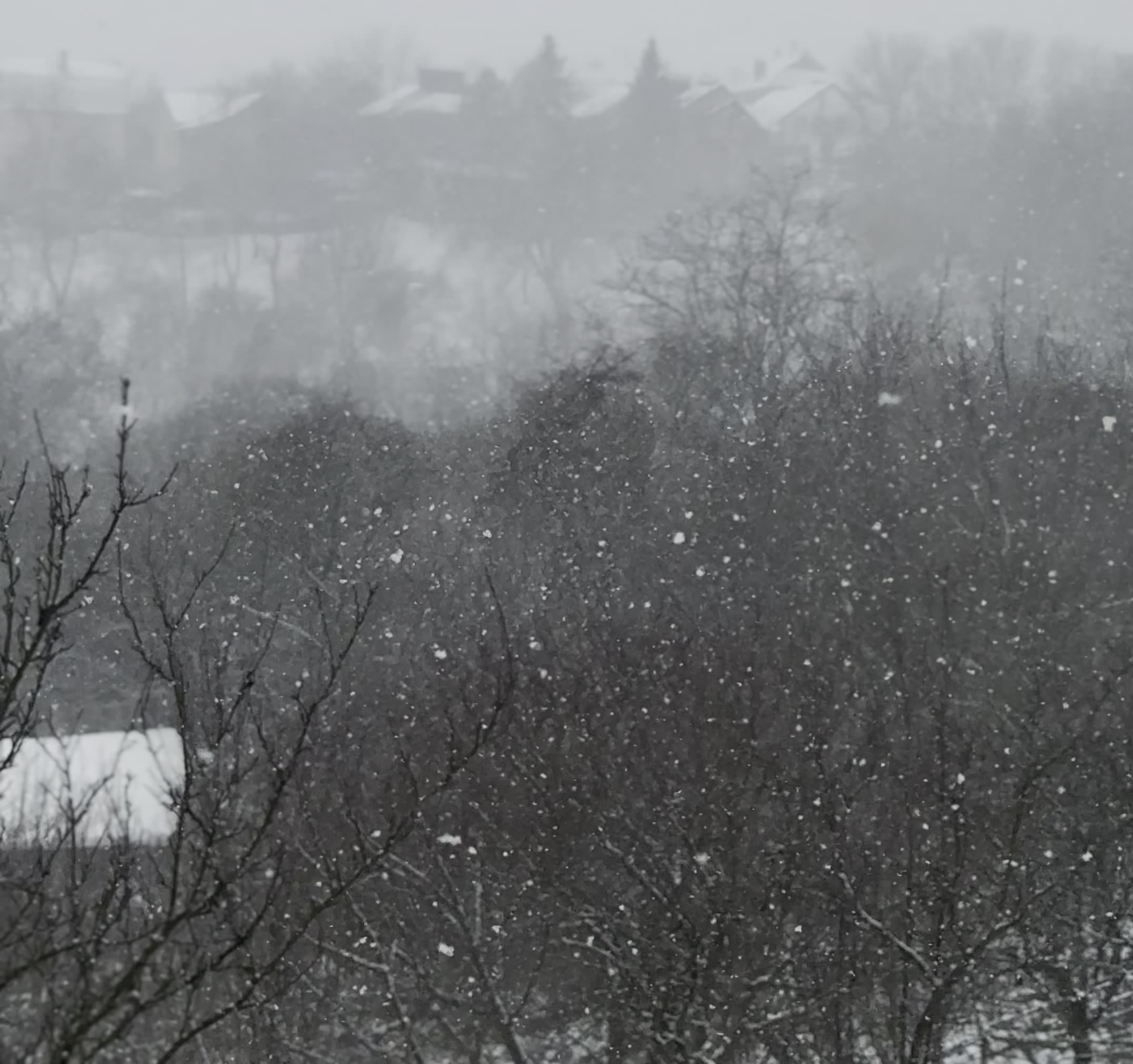

Hanna’s daily reality is further complicated by frequent power outages, which can last up to 16 hours, disrupting routines, access to services, and efforts to find stable work.
“When there is a blackout, there's nothing we can do. No heating, no water. I can't even cook”, Hanna shares. Everything in her small, cramped apartment depends on electricity.
These conditions take an emotional toll on everyone. “The little one becomes more capricious. I recently had a nervous breakdown, and with the cold, we all catch colds. This is our second winter living like this,” she explains.
Hanna’s experience underscores the resilience of women striving to rebuild amid adversity. It highlights the urgent need for targeted humanitarian support that promotes gender equality and economic inclusion.

Through vocational training and empowerment programmes, thousands of people like Hanna are taking meaningful steps toward rebuilding their lives and creating a brighter future for their families.
“I love working with people and helping them. My goal is to open my own rehabilitation centre to support veterans and children. I need to develop myself first. I have big hopes for the future – I’m just waiting for my children to grow up a bit so I’ll have more time,” says Hanna.
World Vision continues to support recovery and economic empowerment across Ukraine.
By late 2025, the organisation had provided vocational training to over 15,000 people, with more than 1,500 completing entrepreneurial and business courses.
Additionally, over 300 families received grants to start or expand small businesses – efforts designed to strengthen families’ resilience and build a more stable future for Ukraine’s children.
 Built with Shorthand