article / August 27, 2026
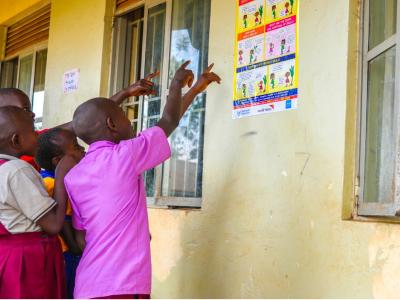
World Vision Ghana Trains over 270 Health Workers to Strengthen Community-Based Surveillance and Care for Neglected Tropical Diseases
World Vision Ghana, in partnership with the National NTD Programme, is strengthening community-based surveillance and care for neglected tropical diseases through the training of frontline health workers, improving early detection, referrals, NHIS enrolment and access to essential healthcare services.
publication / September 4, 2026
Global Accountability Report 2025
Explore World Vision's 2025 Accountability Report, highlighting transparency, safeguarding, financial stewardship, resilience, and community impact.
article / August 6, 2026
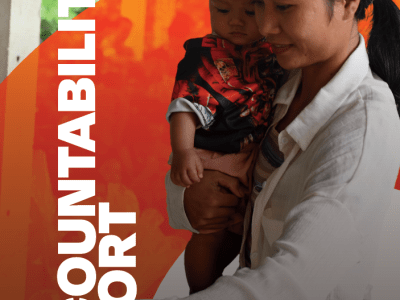
When Equipment Becomes a Key to Quality Care at the Dosso Mother-and-Child Center
Every day, the Dosso Mother and Child Health Center receives dozens of women seeking timely and quality maternal healthcare. However, increasing demand for obstetric and gynecological services had long challenged the facility due to limited medical equipment. To address this need, the Women of World Vision Niger donated essential equipment, including surgical lights, a modern operating table, cesarean and gynecological surgical kits, infant warming lamps, and an oxygen concentrator.
According to Kidarou Hima, General Supervisor of the health center, the donation has transformed the operating theatre by improving the efficiency of surgical procedures and reducing waiting times for emergency cases. Medical teams now have reliable equipment readily available, enabling them to provide faster, safer, and higher-quality care for women and newborns.
The improved working conditions have also increased staff motivation and confidence. Grateful for this support, the health center acknowledges that the donation has significantly strengthened maternal healthcare services and directly benefits the communities it serves through better and more timely medical care.
press release / September 3, 2026
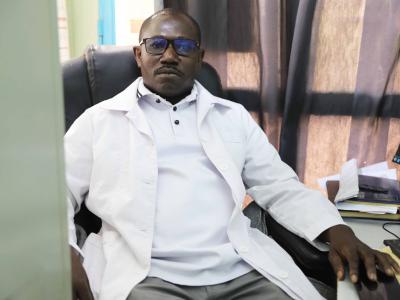
World Vision Lesotho, Government, U.S. Embassy and Health Partners Come Together to Strengthen Faith and Community Health Services in Lesotho
World Vision Lesotho, Government, U.S. Embassy and health partners come together to co-create a roadmap to strengthen faith and community health services in Lesotho.
article / September 3, 2026
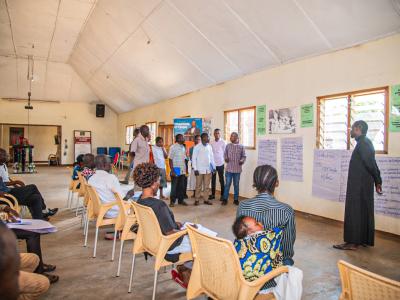
DRC: Mobilizing Faith Leaders to Curb the Spread of Ebola Through Channels of Hope
This article explores how World Vision's Channels of Hope (CoH) approach is supporting the fight against Ebola in Ituri Province by engaging religious leaders and communities. By training faith leaders to deliver culturally relevant health messages, the programme helps build trust, reduce stigma, and encourage the adoption of preventive measures. Through testimonies from health professionals and religious leaders in Nyakunde, the story demonstrates that defeating Ebola requires not only medical interventions but also strong community engagement and trusted local voices.
article / September 4, 2026
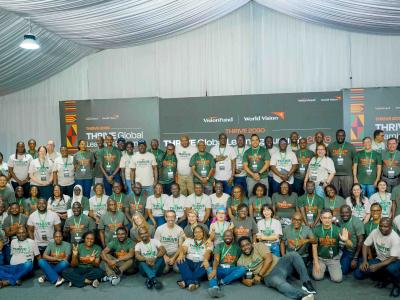
Up the Economic Empowerment Ladder: Ghana Hosts Eleven+ Nations for the THRIVE Global Learning Summit 2026
For five days, from 24–28 August 2026, the Labadi Beach Hotel in Accra hosted the THRIVE Global Learning Forum 2026, bringing together nearly 130 participants from all eleven THRIVE implementing countries, alongside representatives from World Vision International, VisionFund International, World Vision US and donors, under the theme “Up the Economic Empowerment Ladder.”
video / August 26, 2026
From Financial Struggles to a Thriving Farmer
At 31, Busisiwe is building a brighter future through farming after experiencing pregnancy as a teenager. Supported by World Vision’s HIV prevention project and Youth Enterprise Revolving Fund, she is strengthening her livelihood and economic independence.
publication / August 28, 2026
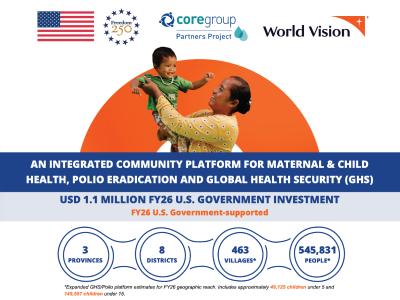
CORE Group Partners Project (CGPP) An Integrated Community Platform for Maternal & Child Health, Polio Eradication and Global Health Security (GHS)
CORE Group Partners Project (CGPP) An Integrated Community Platform for Maternal & Child Health, Polio Eradication and Global Health Security (GHS)
publication / September 8, 2026
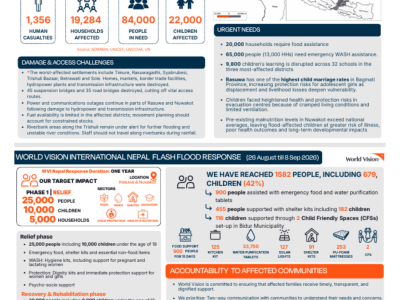
Situation Report 4: Nepal Flash Floods Response 2026
Situation Report 4
publication / August 26, 2026
POLICY BRIEF: Debt for What?
This policy brief on public debt utilisation in Kenya and Zambia, examining how borrowed resources translate into development outcomes