Home

Get Involved

  • Donate
  • Get Involved
English
  • French
  • Spanish
  • Deutsch
  • Georgian
  • Arabic
  • Armenian
  • Bosnian
  • Albanian
  • Vietnamese
  • Portuguese, Portugal

Main navigation

  • Who We Are
    • About Us
      • Our History
      • Our Leadership
      • Our Vision & Values
      • Our Faith
      • Our Partners
      • Our Structure
    • Our Approaches
      • Advocacy
      • Emergency Relief
      • Our Global Strategy
      • Transformational Development
    • Contact Us
      • Careers and Internships
    • FAQ
  • What We Do
    • Focus Areas
      • Child Protection
      • Clean Water and Sanitation
      • Education
      • Fragile Context Programming
      • Health & Nutrition
      • Livelihoods
      • View All Sectors
    • Emergency Response
      • Afghanistan Emergency Response
      • El Niño Drought Response
      • Emergency Mpox Response
      • Global Hunger Crisis
      • Middle East Crisis Response
      • Myanmar Earthquake Response
      • Sudan Crisis Response
      • Syria Crisis Response
      • Ukraine Crisis
      • Venezuela Crisis
      • Yemen Emergency Response
    • Campaigns
      • ENOUGH food for every child
      • Ending Violence Against Children
  • Where We Work
    • Africa
      • Angola
      • Burkina Faso
      • Burundi
      • Central African Republic
      • Chad
      • Congo
      • Eswatini
      • Ethiopia
      • Ghana
      • Kenya
      • Lesotho
      • Malawi
      • Mali
      • Mauritania
      • Mozambique
      • Niger
      • Rwanda
      • Senegal
      • Sierra Leone
      • Somalia
      • South Africa
      • South Sudan
      • Sudan
      • Tanzania
      • Uganda
      • Zambia
      • Zimbabwe
    • Americas
      • Bolivia
      • Brazil
      • Canada
      • Chile
      • Colombia
      • Costa Rica
      • Dominican Republic
      • Ecuador
      • El Salvador
      • Guatemala
      • Haiti
      • Honduras
      • Mexico
      • Nicaragua
      • Peru
      • United States
      • Venezuela
    • Asia Pacific
      • Bangladesh
      • Australia
      • Cambodia
      • China
      • Hong Kong, SAR
      • India
      • Indonesia
      • Japan
      • Laos
      • Malaysia
      • Mongolia
      • Myanmar
      • Nepal
      • New Zealand
      • North Korea
      • Papua New Guinea
      • Philippines
      • Singapore
      • Solomon Islands
      • South Korea
      • Sri Lanka
      • Taiwan
      • Timor Leste
      • Thailand
      • Vietnam
      • Vanuatu
    • Middle East and Europe
      • Afghanistan
      • Albania
      • Armenia
      • Austria
      • Belgium
      • Bosnia and Herzegovina
      • Cyprus
      • European Union
      • Finland
      • France
      • Georgia
      • Germany
      • Iraq
      • Ireland
      • Italy
      • Jordan
      • Lebanon
      • Moldova
      • Netherlands
      • Romania
      • Spain
      • Syria
      • Switzerland
      • Türkiye
      • Ukraine
      • United Kingdom
      • West Bank
      • Yemen
  • Resources
    • News
    • Impact Stories
    • Thought Leadership
    • Publications
      • Annual Report
Home
wvi

Main navigation

  • Who We Are
    • About Us
      • Our History
      • Our Leadership
      • Our Vision & Values
      • Our Faith
      • Our Partners
      • Our Structure
    • Our Approaches
      • Advocacy
      • Emergency Relief
      • Our Global Strategy
      • Transformational Development
    • Contact Us
      • Careers and Internships
    • FAQ
  • What We Do
    • Focus Areas
      • Child Protection
      • Clean Water and Sanitation
      • Education
      • Fragile Context Programming
      • Health & Nutrition
      • Livelihoods
      • View All Sectors
    • Emergency Response
      • Afghanistan Emergency Response
      • El Niño Drought Response
      • Emergency Mpox Response
      • Global Hunger Crisis
      • Middle East Crisis Response
      • Myanmar Earthquake Response
      • Sudan Crisis Response
      • Syria Crisis Response
      • Ukraine Crisis
      • Venezuela Crisis
      • Yemen Emergency Response
    • Campaigns
      • ENOUGH food for every child
      • Ending Violence Against Children
  • Where We Work
    • Africa
      • Angola
      • Burkina Faso
      • Burundi
      • Central African Republic
      • Chad
      • Congo
      • Eswatini
      • Ethiopia
      • Ghana
      • Kenya
      • Lesotho
      • Malawi
      • Mali
      • Mauritania
      • Mozambique
      • Niger
      • Rwanda
      • Senegal
      • Sierra Leone
      • Somalia
      • South Africa
      • South Sudan
      • Sudan
      • Tanzania
      • Uganda
      • Zambia
      • Zimbabwe
    • Americas
      • Bolivia
      • Brazil
      • Canada
      • Chile
      • Colombia
      • Costa Rica
      • Dominican Republic
      • Ecuador
      • El Salvador
      • Guatemala
      • Haiti
      • Honduras
      • Mexico
      • Nicaragua
      • Peru
      • United States
      • Venezuela
    • Asia Pacific
      • Bangladesh
      • Australia
      • Cambodia
      • China
      • Hong Kong, SAR
      • India
      • Indonesia
      • Japan
      • Laos
      • Malaysia
      • Mongolia
      • Myanmar
      • Nepal
      • New Zealand
      • North Korea
      • Papua New Guinea
      • Philippines
      • Singapore
      • Solomon Islands
      • South Korea
      • Sri Lanka
      • Taiwan
      • Timor Leste
      • Thailand
      • Vietnam
      • Vanuatu
    • Middle East and Europe
      • Afghanistan
      • Albania
      • Armenia
      • Austria
      • Belgium
      • Bosnia and Herzegovina
      • Cyprus
      • European Union
      • Finland
      • France
      • Georgia
      • Germany
      • Iraq
      • Ireland
      • Italy
      • Jordan
      • Lebanon
      • Moldova
      • Netherlands
      • Romania
      • Spain
      • Syria
      • Switzerland
      • Türkiye
      • Ukraine
      • United Kingdom
      • West Bank
      • Yemen
  • Resources
    • News
    • Impact Stories
    • Thought Leadership
    • Publications
      • Annual Report
English
  • French
  • Spanish
  • Deutsch
  • Georgian
  • Arabic
  • Armenian
  • Bosnian
  • Albanian
  • Vietnamese
  • Portuguese, Portugal

Get Involved

  • Donate
  • Get Involved

Error message

The page you requested does not exist. For your convenience, a search was performed using the query laos article what does having toilet mean you.

Popular searches:

  • Careers
  • Child Sponsorship
  • Childhood Rescue
  • Emergency Response
Search results: 1 - 10 of 20859
opinion / March 19, 2026

What Does This Investment Do to Children? Rethinking Food Systems Finance

Why food systems investments must be measured by their impact on children, not only by economic returns.
Food Security
opinion / February 23, 2026

What 2026 Could Mean for Children’s Future

Five key risks likely to shape children’s wellbeing in 2026 and the urgency and bold action needed to change the current trajectory.
Agotime Ziope Project Ghana 2025.
publication / March 12, 2026

2025 Child‑Friendly Impact Report

Children are at the heart of everything we do, their voices, dreams, and well-being drive our mission.  We are excited to share that amid the ever-growing humanitarian needs we reached 16.4 Million children in the East Africa Region.
2025 Child‑Friendly Impact Report
article / March 11, 2026

DR Congo: Interview - Does The Fight Against Cholera Require the Mobilization of The Entire Community?

This interview with Dr. Liliane Shacko, Acting Chief Medical Officer of the Manika Health Zone in Kolwezi, discusses the cholera outbreak that began in December 2025 and the response efforts underway to contain it. She explains how the outbreak started in the Mutoshi Health Area, outlines the current situation with more than 200 cases recorded, and highlights the measures taken by health authorities and partners, including the establishment of treatment centres, water chlorination points and community awareness campaigns. Dr. Shacko also addresses ongoing challenges such as high population mobility and the continued arrival of cases from neighbouring health zones. She emphasizes the critical role of partners like World Vision in supporting prevention and community engagement, while urging residents to follow hygiene measures and seek immediate medical care if symptoms appear.
Dr Liliane in her office
opinion / March 19, 2026

An Inflection Point for Our Sector and What Comes Next

Explores why our sector has reached a critical inflection point and the role civil society should play in helping build better systems.
A young Mongolian boy looks at the camera
press release / March 18, 2026

World Water Day 2026: Where Water Flows, Equality Grows

Where Water Flows, Equality Grows
1234
publication / March 23, 2026

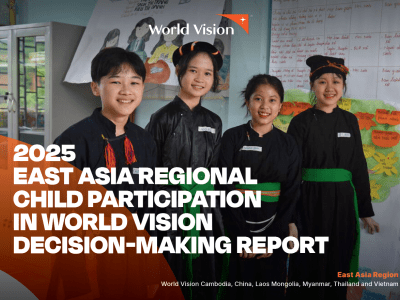
Measuring the Enabling Environment of Children's Groups

A Technical Report on research data from Cambodia and Mongolia, measuring the enabling environment of children's groups.
A young girl looks at a whiteboard with various colored papers and notes taped on. The title of the report is in the middle of the image.
opinion / February 23, 2026

Four Winters In: What Ukraine’s Children Are Living Through

Four years into the war, Ukraine’s children face deep psychological wounds. Explore how conflict reshapes childhood and what’s being done to help them heal.
A young girl in a blue and white striped shirts looks into the camera while holding a small, white bunny stuffed animal.
publication / March 23, 2026

Impact of the Unlock Literacy Project Model on the reading results for girls and boys in early grades in Uganda

World Vision is implementing the Unlock Literacy Model, which aims to empower schools, parents, and communities to support children’s literacy development and to promote strong literacy habits among early grade learners both inside and outside the classroom.
Image
publication / March 23, 2026

Most Vulnerable Chidren Report

The overarching objective for this report was to review alignment to the World Vision strategic imperative in Our Promise 2030 of deepening our commitment to the most vulnerable children (MVC) specifically to; identify the MVC in World Vision Uganda Area Programmes, determine where the MVC are concentrated, examine changes in MVC status in the communities, determine whether World Vision Uganda geographical footprint is in areas with higher concentrations of MVC, identify the most common vulnerability markers affecting MVC and their families, and guide the identification and prioritization of MVC and their families in beneficiary selection and targeting.
Image

Pagination

  • Page 1
  • Page 2
  • Page 3
  • Page 4
  • Page 5
  • Page 6
  • Page 7
  • …
  • Next page Next ›
  • Last page Last »

World Vision

Footer

  • About Us
    • Our Vision & Values
    • Our History
    • Our Leadership
    • Our Structure
    • Our Partners
    • Accountability
    • FAQ
  • Our Approaches to Change
    • Child Sponsorship
    • Global Campaign
    • Our Global Strategy
    • The Role of Faith
  • Work with Us
    • Our Culture
    • Careers & Internships
    • Explore Open Positions
    • Internships
    • Open Tenders
  • Connect With Us
    • Facebook
    • Youtube
    • Twitter
    • Instagram
    • LinkedIn
    • Contact Us
    • World Vision in Your Country/Region
    • Report a Concern

Get Our Newsletter

form-submit-link on the Mailchimp signup in the footer

Accountable Now

Footer Legal

  • © 2026 World Vision International
  • Privacy Policy
  • Terms of Use