
Clean Water Restores Childhood in Rural Mozambique

Under the scorching sun of Guijá, Gaza Province, South of Mozambique, a semi-arid region where temperatures often exceed 40 degrees, stood two young girls, Zaida and Benuvia, aged seven and nine. Every day, they walk more than five kilometres to reach school; but on this occasion, it was not for lessons. During the school holidays, they spend much of their time helping with household chores and were returning from the small farm, located around seven kilometres from their community.
Not long ago, the only source of water was a small tributary of the Limpopo River, near the agricultural fields where their parents grow food. After collecting water, the journey back home was harsh: the blazing sun, the burning ground and their bare feet forced them to seek shade in the tall grass lining the narrow track shaped by generations before them. When their throats ran dry, there was no choice but to keep walking until they reached home.
This was the reality for generations, a legacy of hardship that only ended with the installation of a borehole near a school close to their community. For these girls, the borehole is far more than a water point; it is a true oasis in the desert. A landmark symbolising the shift from a painful history of scarcity to a new chapter where the next generation has a gentler story to tell.
That day, temperatures were forecast at 35 degrees, with a heat index of 37. Despite the labour-intensive work in the fields and the long walk, thirst was no longer a concern: relief was now available along the way.
“Here I drink water, wash my face and wet my clothes. Afterwards I feel less hot,” said young Zaida, her face dripping and her words stumbling as she caught her breath from drinking so quickly.
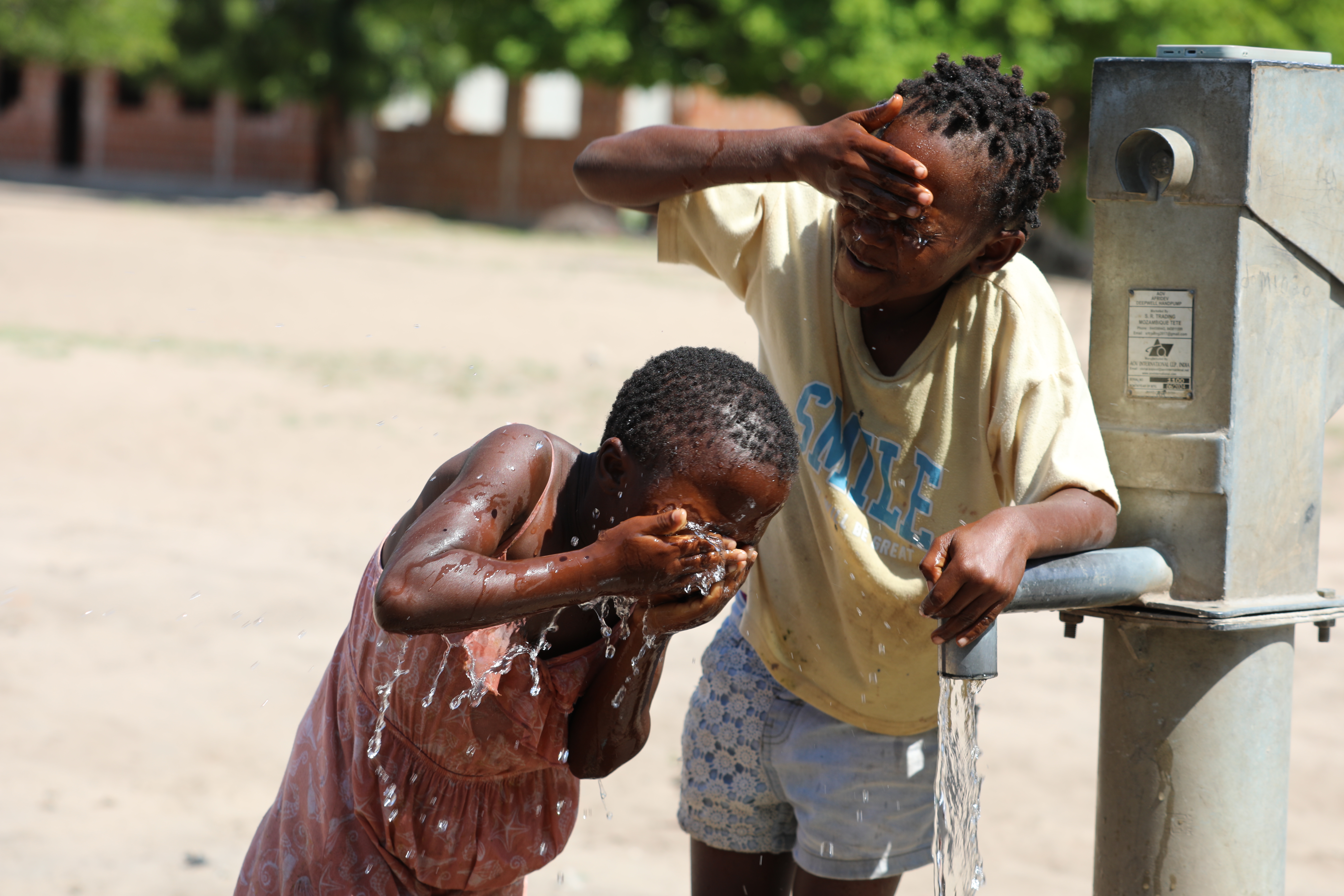
This borehole does more than quench the thirst of girls like Zaida and Benuvia. Previously, the entire community depended on water drawn directly from the riverbed, a serious danger, especially for children who, besides arriving late to school, had to face crocodiles and other wild animals. Today, the effort to collect water is lighter, the distance shorter and the water clean, transforming the daily reality of these families.
“Before, we arrived late at school because we spent a long time fetching water, and the water wasn’t clean. Now everything has changed: we get to school on time and still have a little time to play,” shared nine-year-old Benuvia, with a gentle smile that points to a different future.
The borehole that now serves the community where Zaida and Benuvia live is one of 14 constructed in Guijá and Mabalane as part of World Vision’s WASH activities. In addition to these, five others have been rehabilitated and a new water supply system has been installed.
For these communities, water is more than a resource: it is life itself. It is the evidence of a transformed story, a cycle of suffering broken, giving way to hope and the promise of a fuller life.