


The Future We Owe Them: Reflections from COP30
Matthew Pickard, World Vision’s Southern Africa Region as Regional Leader, reflects on COP30 and challenges leaders to see the climate emergency through children’s eyes.
December 9, 2025.
Last week, my team attended COP30 a gathering held deep in the Amazon, where the heat was heavy and the days were long. In between the thick humidity, the crowded pavilions, and the constant hum of negotiations among more than 56,000 delegates, one truth kept rising above the noise: climate change hit children first and hardest.
And with 2024 now the hottest year ever recorded pushing our planet beyond 1.5°C of warming for the first time every conversation, every handshake, and every dialogue reminded us why we show up: to ensure children are not left carrying the weight of a warming world on their small shoulders.
Children at the Centre, Where They Belong
One of the most powerful moments at COP30 was witnessing five young representatives from World Vision step boldly onto the global stage, three children and two youth delegates, each an inspiring advocate for climate action.
Among them was 16-year-old Mudasana from Zambia, Southern Africa, whose clarity, courage, and conviction captured the attention of many including Zambia’s Minister of Green Economy, who publicly recognised her role and affirmed that “A fight against climate change that does not take into account children and vulnerable groups is not a real fight.”
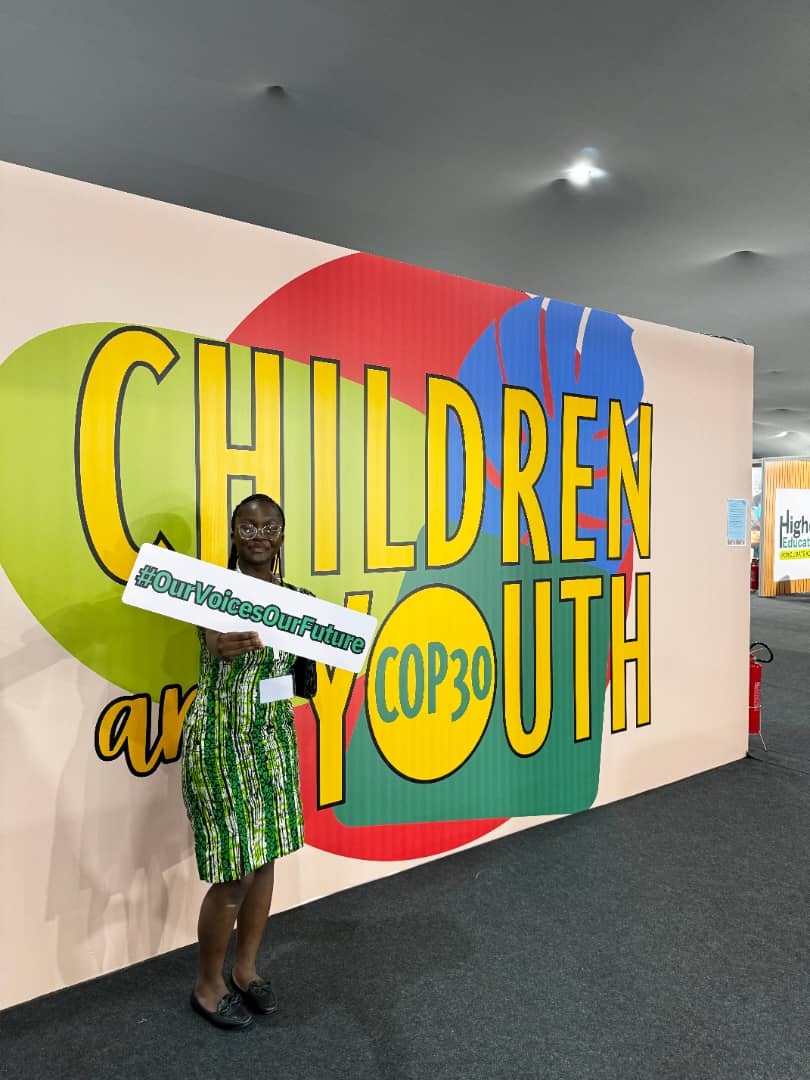
Across the week, her leadership was not symbolic it was substantial.
She spoke at a World Vision side event alongside government officials from Zambia and Malawi, calling for child-centred climate policies, stronger social protection, and meaningful adolescent participation in climate decision-making.
She engaged with the Youth Negotiators Academy, deepening her understanding of global diplomacy and exploring pathways for young people to shape future negotiation tables. She joined youth-led press conferences exploring nature-positive development and ecological governance and took part in climate-education simulations at the UN Brazil Pavilion, strengthening her systems thinking and adaptation knowledge.
She went on to participate in other panels, joining high-level youth dialogues, and became a living example of what meaningful child participation can look like. Her voice, and those of the other young delegates, reminded us of something profound:
Children don’t just deserve a seat at the table. They elevate the entire conversation.
Across COP30, our teams ensured these moments were amplified on global and regional platforms, carrying one clear message: Leaders must act with urgency, ambition, and compassion not someday, but now.
A Breakthrough in Climate Finance: A Chance to Protect Children Where It Hurts Most
COP30 also marked an important step forward in climate justice with the launch of the Fund Responding to Loss and Damage, committing an initial USD 250 million to help communities whose crops, livestock, homes, and infrastructure are being destroyed by climate change.
As World Vision, we hope this mechanism will prioritize the urgent needs of children, ensuring they are at the centre of resilience and recovery efforts. Because when climate disasters strike, children lose the most their nutrition, education, safety, and sense of stability.
Partnerships That Plant Seeds for the Future
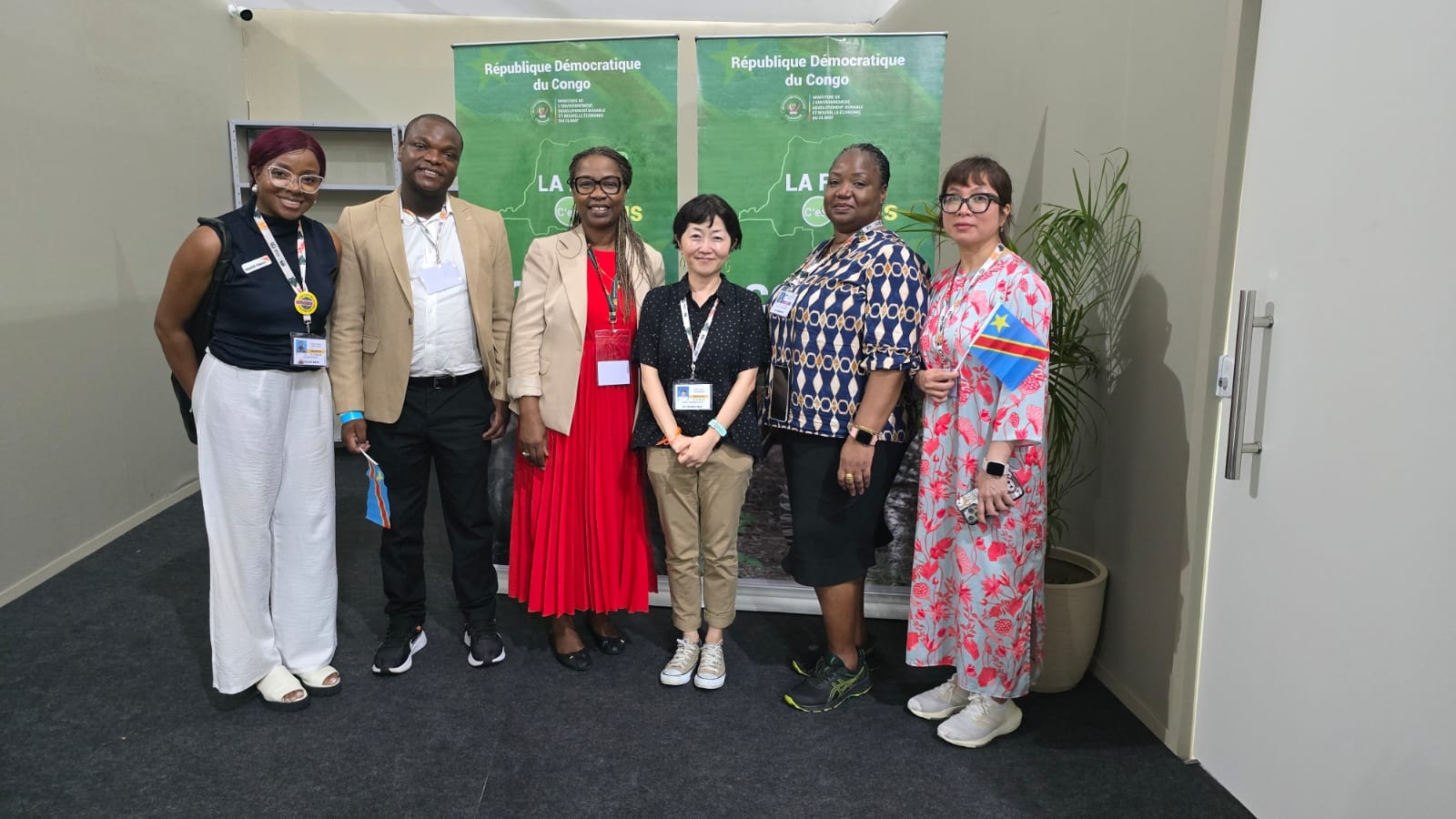
One of the most promising engagements came from our bilateral meeting with the Government of the Democratic Republic of Congo (DRC). The conversation felt less like a formality and more like an invitation to collaborate deeper, and to build a climate-resilient future from the ground up.
We explored ways to support the DRC’s upcoming Nationally Determined Contributions (NDC 3.0) process, ensuring children remain at the heart of national climate ambition. This is crucial as NDCs define how countries will reduce emissions and adapt to climate change.
We also aligned on landscape restoration priorities, building on World Vision’s commitment to restore 27 million hectares by 2033. And we shared updates on our climate programming in the DRC reaching more than 62,000 households and investing over USD 3.4 million last year alone.
A Region That Continues to Show Up
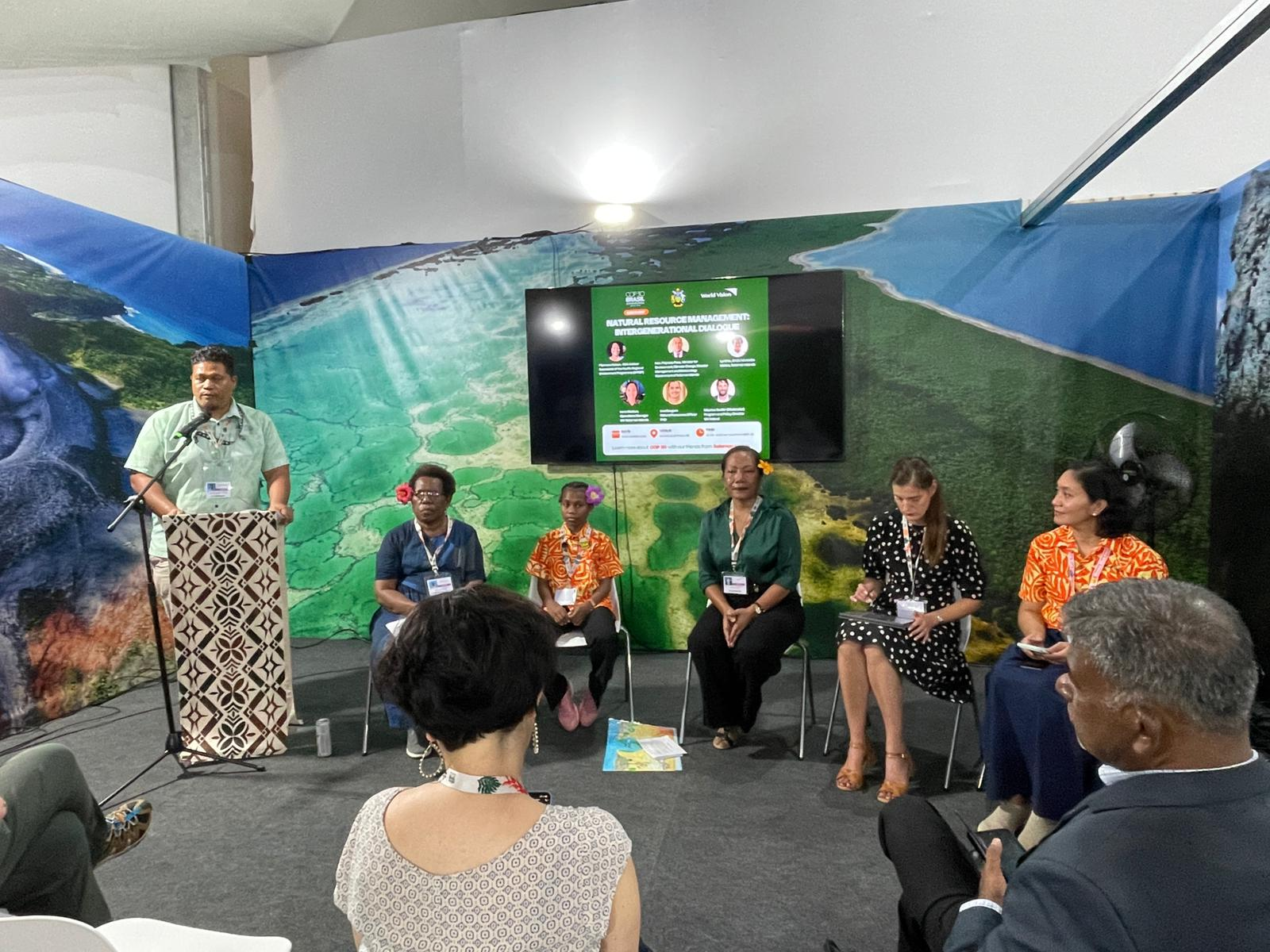
Throughout the week, we engaged with nearly all delegations from Southern Africa, and the message was consistent: communities are already leading, adapting, and protecting their children but they cannot do it alone.
We also met with the Africa Group Negotiation Chairperson, where we elevated child-focused priorities in global climate negotiations.
Two appeals were central:
- Integrating hunger and malnutrition solutions into Nationally Determined Contributions (NDCs) a need highlighted in our Hungry Futures Index, a global analysis showing how climate change is driving hunger and how governments can reverse these trends.
- Calling for a dedicated Intergovernmental Panel on Climate Change (IPCC) Special Report on Children and Climate Change, to ensure scientific evidence reflects the disproportionate risks children face.
Looking Ahead
Right now, 1 billion children are living in extremely high-risk climate conditions and hunger driven largely by climate shocks could rise by 20% by 2050 unless the world acts with greater urgency and unity. In the coming days, my team and I will consolidate the outcomes of COP30, reflecting on what worked, what must improve, and how we ensure children’s voices remain front and centre in global climate decision-making.
As I look back on COP30, what stays with me isn’t the policy language or the negotiation rooms. It’s the faces of children who refuse to give up on the future and who remind us that neither can we.
Because the climate crisis is rewriting childhood in real time.
But with courage, collaboration, and child-first leadership, we can rewrite the ending.
Matthew Pickard is Regional Leader for the Southern Africa Region, bringing over 25 years of leadership experience in international development across Asia and Africa. He previously served as Associate Vice President for Organisational Effectiveness at CARE US and has held senior roles with other global humanitarian organisations.
Subscribe to see more content like this
Related Resources

Has COP30 Really Brought Us Any Closer to Protecting Children from Climate Breakdown?

From Hunger to Hope: Turning Climate Actions into Food Security for a Thriving Future
