

We Keep Asking Young People to Speak. What If We Invested in Their Power to Lead?
We keep inviting young people into the room. But Faith Richelle Bullecer, says the harder question is whether we are giving them enough power to change what happens in it.
24 August 2026
What if we invested more in young people?
Not simply by giving them a microphone or inviting them to another consultation, but by equipping them to conduct research, challenge decision-makers, create solutions, and lead change. After almost two decades in development work, I have worked with governments, ASEAN, UN agencies, and development partners on children's rights. But some of my most important lessons have come from young people themselves.
I have watched them conduct research, engage decision-makers, lead community action, and influence conversations from the community level to global forums. And I have come to a simple conclusion: Young people do not need us to prove their potential. They need us to invest in what happens when that potential is taken seriously.
We have confused participation with progress
For years, child participation has often meant creating spaces for children to share their experiences and opinions. That matters. Listening matters. Evidence shows meaningful participation builds confidence, agency, resilience, civic identity, and decision-making skills. It also improves public services because policies become more responsive to children's actual needs. But listening alone is not enough. A young person can tell us that climate change is affecting their community. A child can explain what it means to live with a disability in a system that was not designed for them. A migrant child can describe the barriers their family faces.
But what happens next? Do we simply record their words in another report? Or do we equip them to ask better questions, gather evidence, analyse what they find, make recommendations, and advocate for change? This is where child-led research changes the equation.
Through World Vision East Asia's Young Minds CAMP, young people are not simply invited to participate in research. They are equipped to lead it. Since a regional child-led research initiative began in 2024, the approach has expanded into country-level studies across East Asia. Most recently, young people in Mongolia led a child-and youth-led research initiative for COP17, engaging approximately 2,000 children and young people aged 12 to 18 to bring their perspectives and recommendations into climate discussions. In Mongolia, Baaska, YMC and child researcher, together with her peers, moved beyond consultation to influence. After leading child-led climate research, they presented their findings directly to the Deputy Prime Minister and engaged in the National Disaster Risk Reduction planning process, where their recommendations were taken into consideration in the development of national plans and budget discussions.
There is a profound difference between saying, “This is what I think,” and being able to say: “This is what children told us. This is what the evidence shows. And this is what needs to change.” That is not participation as a symbolic gesture. That is participation as power.
Young people are already showing us what is possible
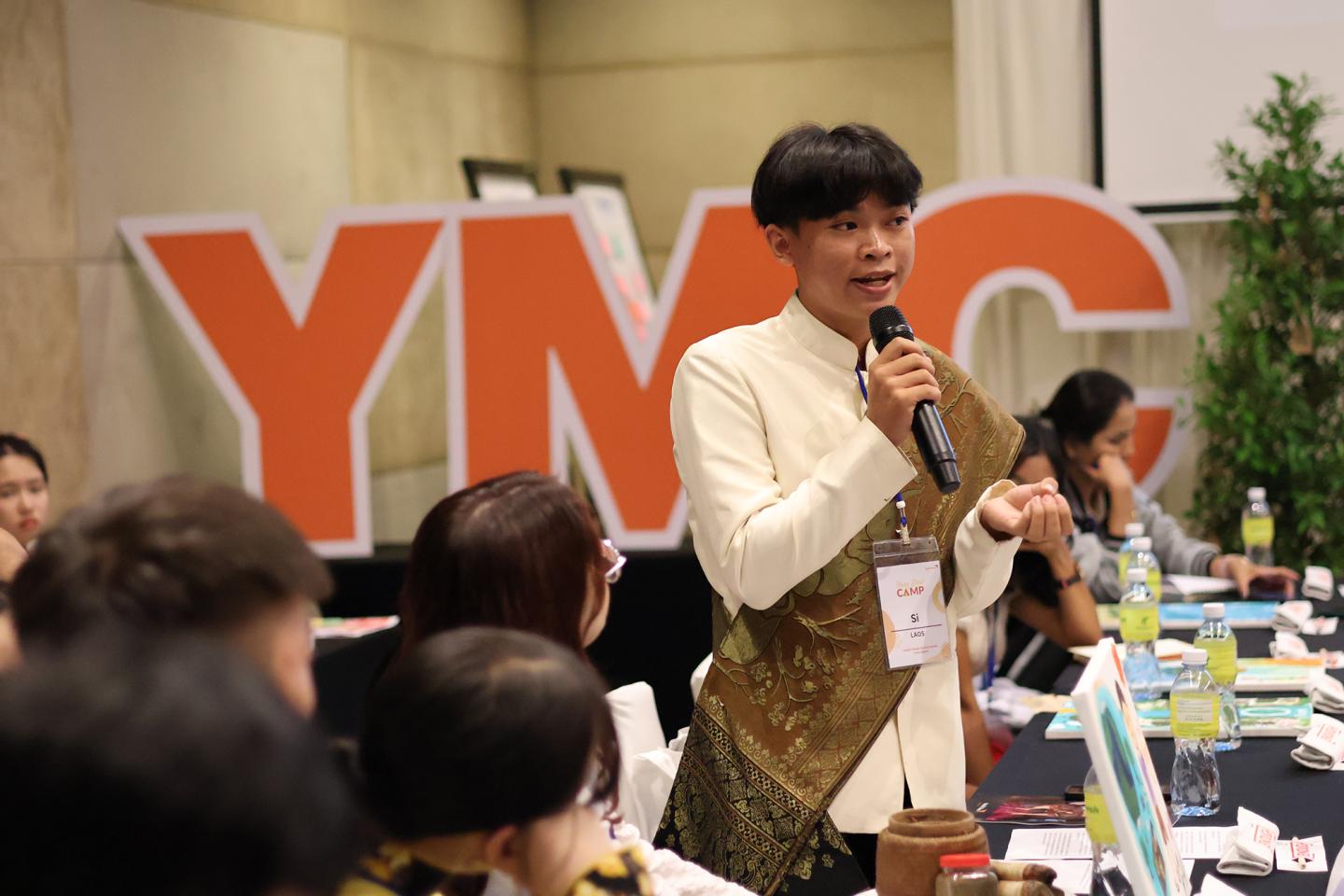
Consider See from Laos. He began as a shy 16-year-old speaking publicly for the first time. Through child-led research and leadership development, he developed the confidence and skills to lead. Today, he is President of SEED at the National University of Laos, has helped spearhead the Laos National Youth Forum on Climate-Resilient and Sustainable Food Systems, contributed to UNFCCC COP simulations and climate policy discussions, and serves as a Project Coordination Intern with FAO Laos.
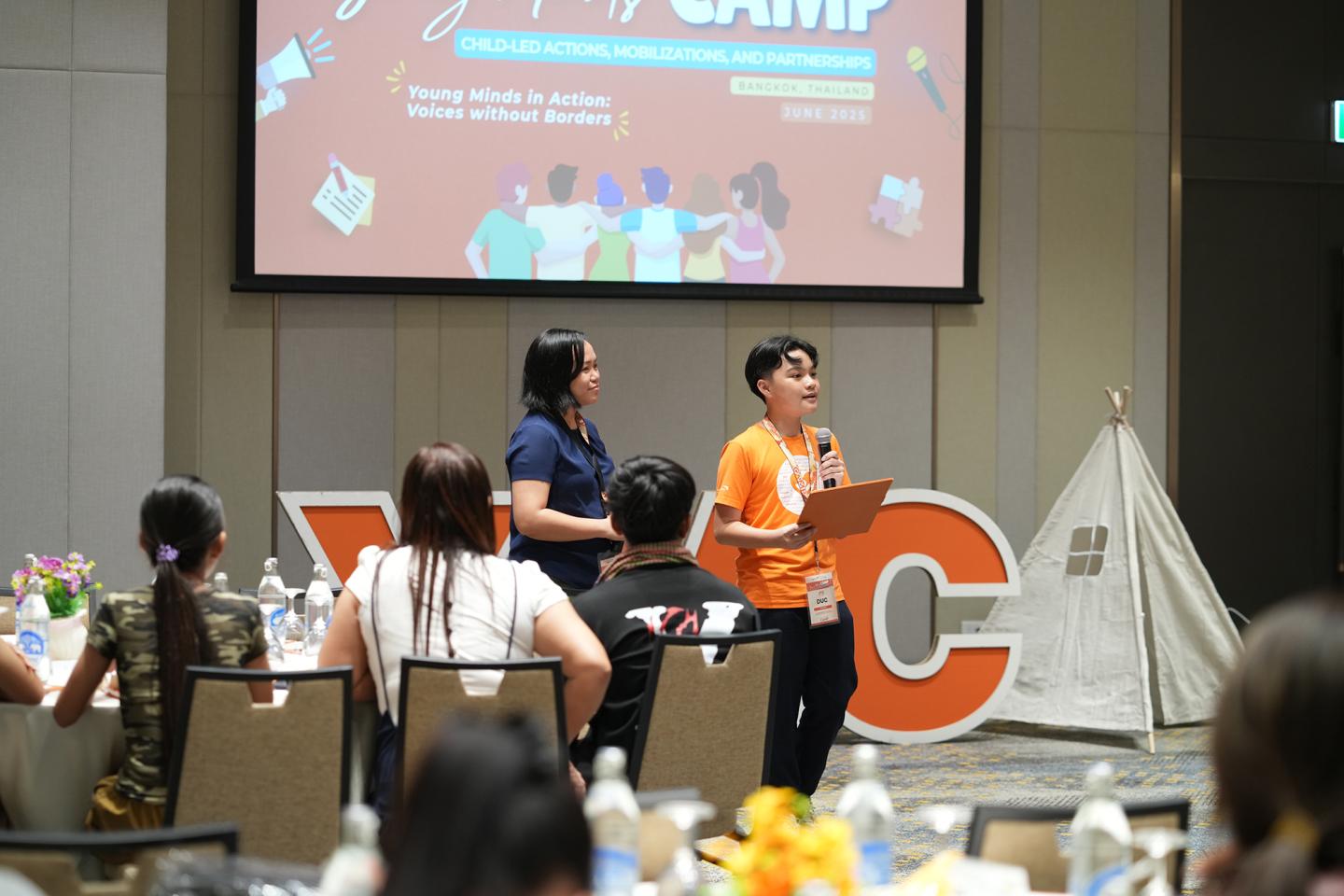
Or Duc from Viet Nam, who at just 11 became the youngest speaker at the first-ever intergenerational dialogue with AICHR in Jakarta. Today, he helps facilitate and train other young people through Young Minds CAMP.
These are not simply inspiring stories. They are evidence of what happens when we stop seeing young people only as beneficiaries and start seeing them as leaders, researchers, advocates, and partners. We invested time. We invested resources. We invested expertise. But most importantly, we invested trust. And trust can be transformative. The real test comes after the microphone is switched off. But there is a warning here. We can celebrate young people's voices while still failing to give those voices a pathway to influence.
I was reminded of this recently at the 9th ASEAN Children's Forum this August 2026, held under the theme “Shielding ASEAN Childhood: Say No to Violence.” During the Intergenerational Dialogue, children directly challenged leaders and stakeholders with questions that were difficult to dismiss.
One asked: “If I were your son or daughter, would you be satisfied with the protection of children with disabilities we have today?” Another asked: “How will ASEAN keep track of whether member countries are really following these recommendations, and how will you let us know about the progress?” These are not simply questions for ASEAN leaders. They are questions for all of us. Because children are not asking only to be heard. They are asking us to act and then come back and tell them what happened.
That is the accountability gap we need to close. Meaningful participation must move from voice, to evidence, to action, to accountability. It cannot depend on a once-a-year youth forum, a consultation before a policy is finalised or a handful of adults who happen to champion child participation. It needs to become part of the systems that make decisions about children's lives.
So, what would it mean to invest more?
It means funding children and youth-led research, not simply research about young people. It means giving young people access to the skills, information, and technology they need to generate and communicate evidence. It means creating genuine pathways for young people to engage with decision-makers and making sure those decision-makers respond. It means deliberately reaching those whose voices are most often missing: children with disabilities, Indigenous children, children in remote and underserved communities, and children affected by migration and displacement. And it means changing our own role as adults. Our job cannot be to lead forever. It is to equip, accompany, and open doors.
We already know young people are capable. We have seen them research. We have seen them question. We have seen them organise. We have seen them lead.
The harder question is whether governments, development organisations, businesses, donors, and institutions are investing enough in them. Buildings deteriorate. Projects end. Programmes move on. But when we invest in a young person, the impact can travel far beyond that individual, into families, communities, institutions, and the next generation. So perhaps the question is not simply: What can young people do? We already know the answer. The question is: What more could they do if we invested even more in their power to lead?
About the Author
With nearly two decades of experience in development across local, national, and regional platforms, Faith Richelle Sy is a strategic advocate for children’s rights and meaningful participation in East Asia. She works at the intersection of policy engagement, digital innovation, and social mobilization, advancing approaches that position children and young people as leaders shaping sustainable and inclusive futures.
At World Vision East Asia, Faith leads regional strategies that strengthen child-led research, intergenerational dialogue, and cross-sector partnerships. She co-developed Reimagining Child Participation: A New Framework to Advance Integrated Action for Meaningful and Inclusive Child Participation, helping redefine participation as a driver of accountability, innovation, and systems change.
Subscribe to see more content like this
Related Resources

Karawa Communities Raise Their Voices for Security Through Citizen Voice and Action

Leadership Begins with Listening: Hanaa's Journey with the IMPACT+ Club
