

Why School Meals Need a Nutrition Accountability Revolution
Martha Bedane reflects on why the next phase of the global school meals movement must focus not only on how many children are reached, but on whether they receive the nutrition needed to thrive.
July 20, 2026.
The global school meals movement is gaining remarkable momentum. Governments invested US$84 billion in school meals in 2024, and 466 million children are now reached worldwide, 80 million more than in 2020. The School Meals Coalition has grown to 113 member states, reflecting a level of political commitment that would have seemed ambitious just a few years ago.
Yet success brings a new responsibility. As policymakers, donors and implementing agencies look towards the next phase of growth, we need to ask a more fundamental question: are we measuring what matters most?
For too long, school meals have been judged primarily by coverage. How many children received a meal? How many schools were reached? How much funding was mobilised? These are important measures. But they tell us very little about whether children are actually being nourished.
The accountability gap hiding in plain sight
Globally, 478 million children, representing 71% of young children, consume foods from four or fewer food groups each day. This is food poverty. Yet in many countries, school meals mirror the same narrow diets they are intended to improve.
The divide is particularly stark between rich and poor countries. According to the Global Child Nutrition Foundation's 2025 review of school meal programmes, children in upper-middle and high-income countries routinely receive more diverse diets, including dairy products and fruit. In many lower-income countries, where rates of stunting and wasting are highest, dietary diversity remains far more limited.
As someone who has spent years working at the intersection of child wellbeing, policy reform and accountability, I have often seen how easily systems gravitate towards what is easiest to count. Coverage is visible. Nutritional quality is harder to measure and therefore too often overlooked.
Children are experts in programme quality
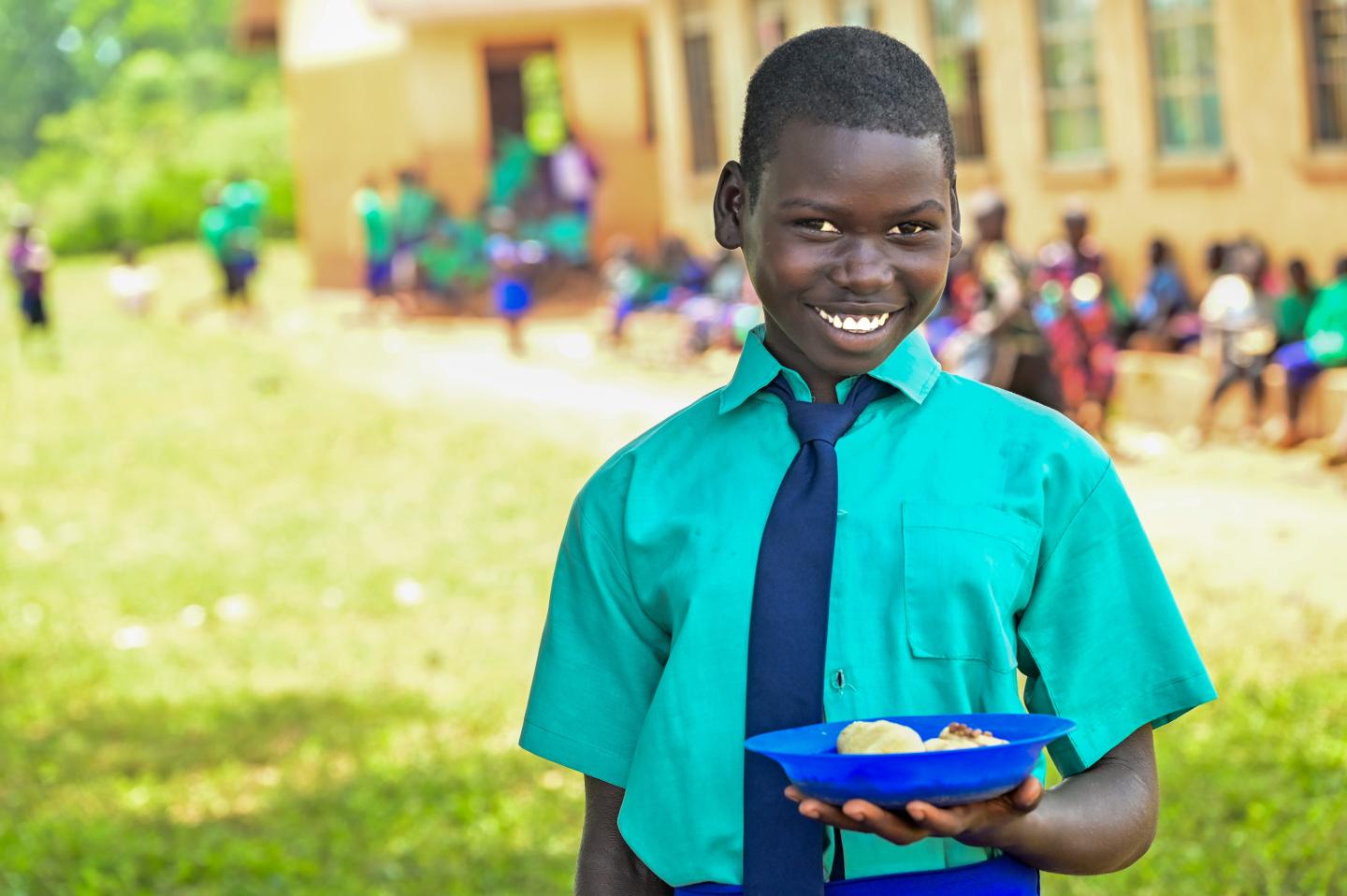
Through the ENOUGH campaign, World Vision supported a child-led research 1,235 children across 13 countries to design and lead their own research on school meals. What emerged was far more than anecdotal feedback, it was a thoughtful and detailed assessment of programme quality from those experiencing it every day.
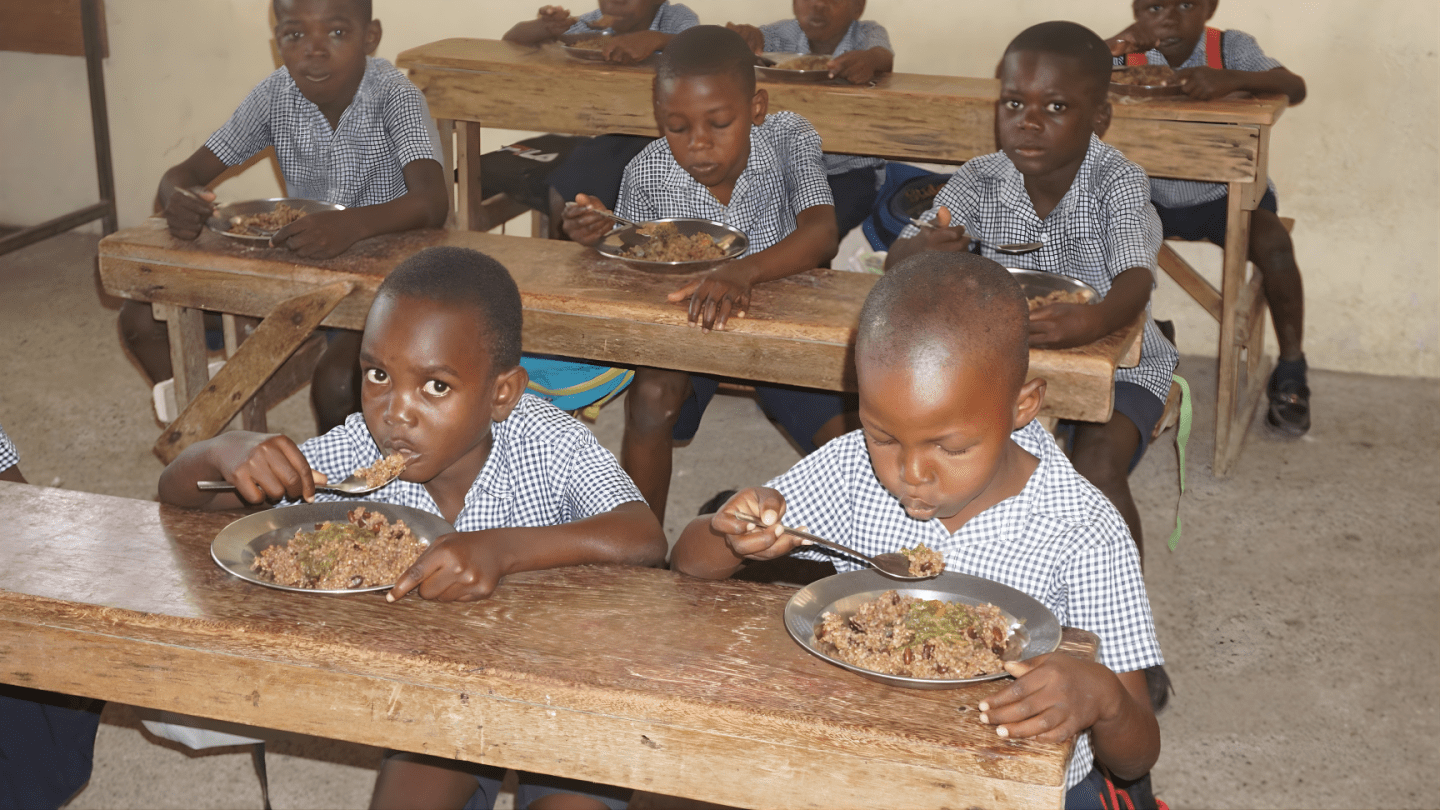
Across countries including Malawi, Tanzania, the Central African Republic and Sri Lanka, children pointed to the same concern: meals were repetitive, largely based on staples like porridge, rice and beans, with limited variety or nutritional diversity.
In Kalemie, in the Democratic Republic of the Congo, two students offer a glimpse of what is possible when nutrition is treated as a priority. Jean-Pierre, aged 12, and Astride, aged 11, participate in a supplementary school meals programme implemented by World Vision in partnership with the World Food Programme and APETAMACO. Their meals include smoked fish, oil and salt, providing between 900 and 1,100 additional kilocalories.
I’m happy to have fish at school today. It’s different from what we usually eat,
Jean-Pierre
Astride put it even more simply:
Since I started eating at school, I feel comfortable.
Those words matter. Not because they are emotional, but because they reveal something important about quality. Children notice when meals provide nutritional value that is missing elsewhere.
Importantly, when children participating in World Vision's research were asked how programmes could improve, they did not ask for unrealistic solutions. They asked for vegetables, fruit, fish, spices and greater variety.
Their recommendations closely mirror approaches already proven to work, including Home-Grown School Feeding models that connect schools with local farmers, strengthen local food systems and improve dietary diversity. The challenge is not a lack of evidence or solutions. It is a lack of accountability for nutritional outcomes.
The next measure of success
At the 2025 School Meals Coalition Global Summit in Brazil, attended by more than 80 member states and 30 ministers, governments made 40 new commitments on school meals. On the Summit's opening day, the Brazilian state of Ceará passed legislation banning the sale and advertising of ultra-processed foods in and around schools.
These developments point towards an important shift: moving from access alone towards quality, health and long-term outcomes.
As Brazil's Minister of Development and Social Assistance, Wellington Dias, noted:
In many schools around the world, there are millions of children who depend on the only meal they eat at school. That's why school meals must have all the nutrients for children to develop and perform well at school.
That principle should be our benchmark. Governments need to set minimum dietary diversity standards alongside coverage targets, while donors and partners track nutritional quality with the same rigour as reach. Procurement systems should reflect this too, rewarding nutritional value not just calories delivered at scale.
The school meals movement has proven it can grow. The next step is ensuring it delivers real nourishment with the same ambition. Success should not be measured only by how many children are reached, but by whether every child receives the nutrition needed to learn, develop and thrive.
About the author: Martha Bedane is World Vision International’s Senior Advisor for Local to Global Advocacy and Impact. With over 15 years of experience, she has led efforts to advance child rights and wellbeing through advocacy, policy reform, and systems change across Africa and beyond. Her career began in law and human rights, and she has since held senior roles at World Vision International and other global organisations
Subscribe to see more content like this
Related Resources

From Hunger to Hope: How Children Voices Are Transforming School Meal Programs

Why Ending Hunger Begins with How We Choose to Act
