


Justice begins when no child goes hungry
Dana Buzducea argues that eliminating child hunger is a political obligation, not a policy afterthought.
20 February 2026.
On this World Day of Social Justice, we must confront an uncomfortable truth: a society that allows children to go to bed hungry violates not only economic logic, but basic human rights.
Hunger is a policy choice
After more than three decades engaging with governments and multilateral institutions, I am convinced of this: child hunger and poverty persists not because we lack solutions, but because we have not prioritised them. We know what works. The World Bank and others have demonstrated consistently that investment in early nutrition yields some of the highest returns in development, improving educational outcomes and lifetime earnings. We understand how food systems shape both livelihoods and diets. We have evidence on school feeding, social protection and community-based nutrition that can be scaled.
What is missing is not knowledge. It is political will. When resources are constrained, priorities reveal values. If millions of children remain hungry in a world of unprecedented wealth, that is not inevitability. It is design.
The human cost behind the data
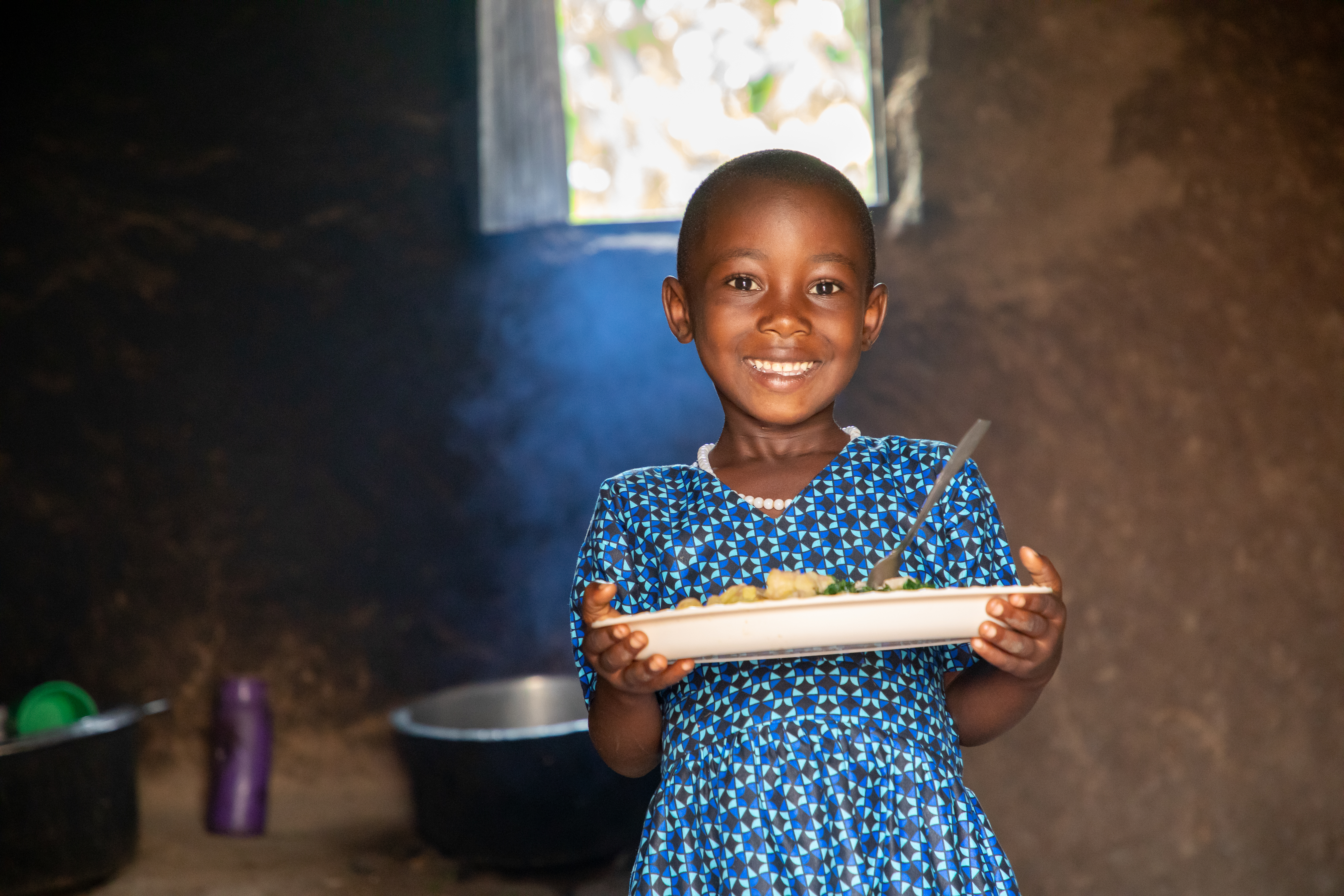
Today, around 181 million children under the age of five - one in four globally- are trapped in severe child food poverty. This is not a marginal issue; it is a global failure unfolding at scale. Statistics like this can make hunger feel abstract. It is not. Mbalenhle, a 14-year-old girl beneficiary of World Vision Eswatini, described it with painful clarity:
“Many of us come to school without eating. When we are hungry, it is hard to listen, learn, or even play. Hunger makes us tired and unable to concentrate in class.”
Her words capture what economic models often obscure. Hunger robs children not only of nutrients, but of attention, curiosity and confidence. It diminishes the classroom before it diminishes the labour market.
At World Vision, we believe every child has the right to thrive and experience the fullness of life. Chronic hunger and malnutrition during critical growth periods undermine cognitive development, limit learning capacity, and reduce educational attainment with lifelong consequences for earnings and opportunity. This is precisely the premise of World Vision’s ENOUGH campaign: eliminating child hunger is not a peripheral social goal, but a core economic and structural priority.
When children go hungry, the impact extends far beyond the individual. Skills acquisition narrows, future earnings decline, and in macroeconomic terms, society faces a negative investment shock. In human terms, it is a child struggling to concentrate in class because her stomach is empty.
Governments that promote competitiveness, innovation, and growth must recognise the contradiction: a dynamic workforce to support the economy cannot emerge from a childhood defined by deprivation.

Justice requires structural choices
I began my professional journey in a world shaped by the UN Convention on the Rights of the Child, which established that the best interests of the child must be a primary consideration in public decisions. That was not symbolic language. It was a standard against which policy should be measured. Today, that standard feels diluted.
We debate fiscal space yet overlook where each pound or dollar generates the greatest long-term return. We design transition strategies to cushion current workers yet hesitate to invest systematically in the children who will inherit transformed economies. If social justice means anything, it must mean correcting structural imbalances that deny children equal opportunity from the outset.
There are credible platforms to do so. The Global Alliance Against Hunger and Poverty offers governments a framework to align food systems reform, climate adaptation and poverty reduction with measurable human capital outcomes. The tools exist. Financing mechanisms are evolving. Partnerships are available.
The question is whether children are embedded in these strategies or appended to them.
A moment of decision
On this World Day of Social Justice, the call is straightforward.
For ministers drafting national transition plans: integrate child nutrition targets into economic modelling and budget frameworks. Do not relegate them to social policy annexes.
For international financial institutions: ensure that transition financing explicitly advances nutrition and food security outcomes, particularly in the most vulnerable contexts.
For political leaders: treat child hunger as the injustice it is, not as collateral damage of complex reforms. Establish children as a shared responsibility across the political spectrum. The results will not be visible at the end of a four-year mandate, but the implications are of tsunami proportions. Both the huge return on investment in addressing child hunger and malnutrition and the risk of allowing this slow onset crisis to affect societies will span beyond mandates and beyond borders sooner than we think.
The next generation is not a distant beneficiary of today’s decisions. They are present rights holders whose health and learning will determine whether our reforms endure. A just transition cannot be built on empty stomachs. If we are serious about justice, we must begin where it is most visibly denied: with the child who goes to school hungry today.
With over 30 years of experience, Dana Buzducea is World Vision International’s Partnership Leader for Advocacy and External Engagement, where she leads global efforts to influence child-sensitive social protection policies, strengthen government and multilateral investments and advance both the Sustainable Development Goals and the Convention on the Rights of the Child.
As published at the Global Alliance Against Hunger and Poverty .
Subscribe to see more content like this
Related Resources

Global Financing for eliminating hunger in 2026: Why Incremental Progress is no Longer Enough

Why Ending Hunger Begins with How We Choose to Act
