publication / March 3, 2026
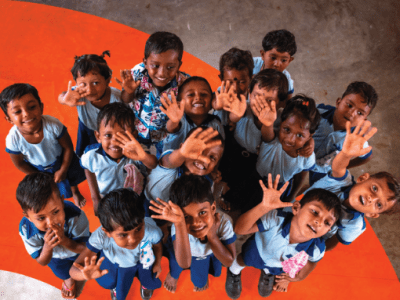
South Asia and Pacific 2025 Impact Report
Rising Together: Hope for Every Child | World Vision South Asia and Pacific 2025 Impact Report reveals how evidence-based programs reached 5.8 million children and 9.2 million people. Explore how we are tackling climate shocks, child hunger, and violence through locally-led solutions for children and communities across 15 countries.
publication / February 12, 2026
World Vision South Sudan FY25 Impact Report
2025 had been a challenging yet productive year for World Vision in South Sudan. Despite funding cuts and growing humanitarian needs, we pressed on—guided by our faith and our commitment to serve. The year had been a testament that when Christ is placed at the centre of our work, hope endures and impact is possible, even in the most difficult circumstances.
article / March 4, 2026
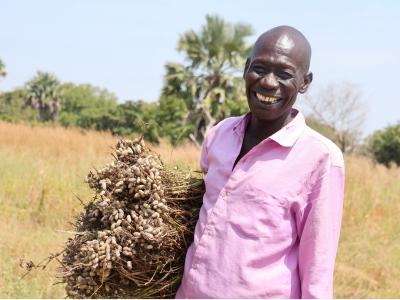
Harvesting hope: A father’s journey towards self-reliance in South Sudan
In Kuac South village in Warrap State, South Sudan, providing for a family of 13 once felt impossible for 45-year-old Joseph Ayok Ayok. But one Sunday in March 2024, during a church service, he heard about the Empowered Worldview program — a moment that would begin to change his life.
article / March 18, 2026
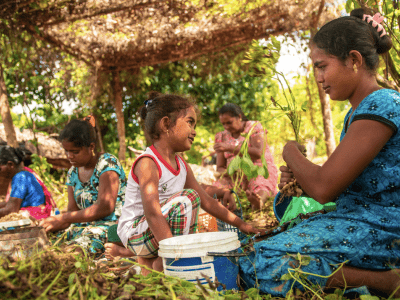
Visible and Undeniable: Validating Women’s Leadership in Rural South Asia through Natural Farming Research
How does natural farming dismantle gender barriers? This DFAT-funded study uses the "River of Life" tool to reveal how women in South Asia are moving from the margins to become primary decision-makers, overcoming the global polycrisis through localized leadership.
publication / March 16, 2026
Lebanon Response Sitrep 2026 #4
The escalation of hostilities in Lebanon has now entered day 15, while regional tensions linked to the wider conflict continued for 17 days, with no immediate indication of de-escalation. Evacuation orders continue to expand across South Lebanon, Beirut, Mount Lebanon, and the Bekaa Valley, with warnings issued by the country to the south instructing residents to evacuate and indicating that return will not be permitted until further notice. Reports state that entire families who chose to remain in their homes in some affected areas have been killed during strikes, highlighting the severe protection risks facing civilians.
In recent days, strikes have increasingly targeted critical infrastructure and transport routes, including two key bridges connecting major towns in South Lebanon, further disrupting civilian movement and humanitarian access. Trucks transporting goods are reportedly warned not to move along the southern coastal road, further constraining assistance delivery. Airstrikes also impacted central Beirut and residential areas in Mount Lebanon, reflecting the continued expansion of hostilities beyond traditional frontline zones.
Meanwhile, displacement continues to rise, and shelter capacity remains under severe strain. With collective shelters overcrowded or at full capacity, many displaced families have been forced to seek alternative arrangements, including unfinished buildings, informal shelters, and makeshift tents along the coastal Corniche from Saida to Beirut. Recent heavy rainstorms and falling temperatures have further worsened conditions, destroying displacement tents and flooding temporary sites, leaving displaced households exposed to harsh weather and heightened risks. The prolonged escalation is also contributing to pockets of civil unrest, as well as heightened social tensions in several areas, with growing fears among communities that prolonged displacement and political polarization could increase the risk of localized sectarian tensions.

publication / March 12, 2026
Lebanon Response Sitrep 2026 #3
The escalation of hostilities in Lebanon is intense and rapidly expanding, resulting in nearly 820,000 forcibly displaced people - more than 200,000 of them children - in less than two weeks. Evacuation orders are expanding, with the country to the south launching the ‘South of Zahrani River’ initiative. Evacuation orders now encompass the entire region south of the Litani River, triggering waves of mass displacement as well as repeated displacement among already vulnerable families.
In several Christian-majority towns in the South, residents initially resisted leaving their homes, but were ultimately evacuated under the escort of UNIFIL for civilian protection. Hostilities are increasingly affecting areas beyond the ‘traditional’ frontline zones, a troubling trend that points to a more aggressive escalation than that of 2024. Recent airstrikes hit the neighborhoods of Haret Saida, Tyre, Aramoun, Ramlet El Bayda, areas deemed safer, in one case targeting a car nearby displaced families staying in tents. Targeting of central Beirut is new - with strikes on hotels and residential buildings that inevidably affect civilians in the surrounding areas. An estimated have been killed, with 81 children killed since March 1. UNICEF estimates that 10 children per day are killed.
Lebanon’s Ministry of Social Affairs reports 822,600 internally displaced people self-registered on the Government’s digital platform, indicating that overall displacement is significantly higher than that captured through collective shelter reporting. In addition, almost 84,000 Syrians and more than 8,000 Lebanese have crossed into Syria since 2 March.
Violations to International Humanitarian Law continue, with frontline responders at great risk. To date, 14 paramedics were killed, including one member of the Lebanese Red Cross, underscoring the growing risks faced by emergency personnel.
article / March 4, 2026
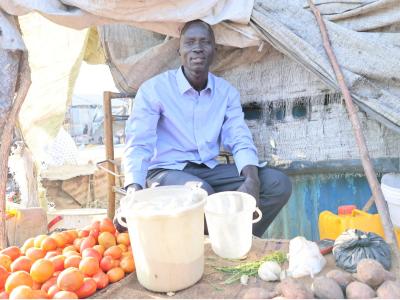
Empowered Worldview: Restoring hope and faith among the displaced in South Sudan
When conflict in Malakal destroyed John Tuk Awi’s business, he lost everything — his income, his stability, and the future he had been building for his family. Years later, the Empowered Worldview program helped him rediscover hope and the confidence to rebuild his life.
press release / March 8, 2026
The drought–conflict reality for women and girls in Sudan, South Sudan and Somalia
International Women’s Day (IWD) 2026 calls for “Rights. Justice. Action. For ALL Women and Girls.” (United Nations). In Sudan, South Sudan and Somalia, these words resonate in contexts where drought and conflict collide - driving displacement, hunger, and protection risks while stretching already fragile services for women and girls. As the Inter-Agency Working Group (IAWG), we issue this joint call to recognise and respond to the compounded realities facing women and girls across these crises.
opinion / February 26, 2026
With every cut to aid and failure to invest in resilience, the future of South Sudan’s children hangs in the balance
Drawing on first‑hand experience from one of the world’s most fragile contexts, Paul Kinuthia, Senior Director, Food, Cash & Markets, Disaster Management, argues that repeatedly cutting food, health and protection services traps communities in endless crisis.
He makes the case that narrowing aid to short‑term survival is a false economy that drives higher costs, deeper instability and repeated emergencies. The solution, the author provides, is urgent investment in resilience alongside life‑saving aid. This investment should be seen as a credible way to protect children and reduce the need over time.
publication / March 4, 2026
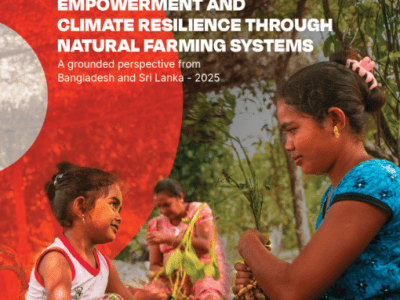
Building Gender Empowerment and Climate Resilience through Natural Farming Systems
Monash University and World Vision study reveals how natural farming drives financial independence and climate resilience for women and their communities in Bangladesh and Sri Lanka.