
Agricultural Extension Services: The Backbone of Bangladesh’s Future Food Security

Feeding a Growing Population
As Bangladesh moves steadily toward middle-income status, ensuring sustainable food production for a growing population has become a national priority. With shrinking arable land, rising climate risks, and rapidly changing market demands, the agricultural sector stands at a critical crossroads. In this context, government agricultural extension services—often working quietly behind the scenes—are emerging as one of the most important drivers of long-term food security.
Major Government Investment in Extension
Over the past five years, the Government of Bangladesh has made significant investments in strengthening agricultural extension systems, allocating approximately BDT 17,000–18,500 crore for advisory services, climate-smart technologies, digital platforms, and farmer support programmes. Annual allocations have increased steadily, rising from around BDT 2,800 crore in FY 2020–21 to nearly BDT 4,500 crore in FY 2024–25.
This sustained investment reflects a clear policy understanding: agricultural productivity and food security cannot be achieved or sustained without strong, responsive, and well-resourced extension services.
Bridging Research and Practice
Bangladesh’s agricultural gains—particularly in rice, maize, and vegetable production—are closely linked to the effectiveness of extension delivery. Extension officers play a vital role in bridging the gap between research institutions and farmers by promoting improved seed varieties, balanced fertiliser use, integrated pest management, and efficient soil and water practices.
As pressure on land continues to increase, the rapid and inclusive transfer of appropriate technologies to farmers’ fields will be essential to maintaining productivity and ensuring national food supplies.
Responding to Climate Risks
Climate change has emerged as one of the most serious threats to Bangladesh’s food system. Floods, droughts, salinity intrusion, cyclones, and erratic rainfall increasingly disrupt agricultural livelihoods. Extension services serve as a frontline support mechanism, helping farmers adopt climate-resilient crop varieties, diversified cropping systems, adaptive calendars, and timely risk-management practices.
As climate risks intensify, the strength and reach of extension systems will play a decisive role in determining the resilience of farming communities.
Promoting Diversification and Mechanisation
Bangladesh can no longer rely solely on rice-based production systems. Agricultural diversification into vegetables, pulses, oilseeds, fruits, and spices is essential for improving nutrition, increasing farm incomes, and reducing dependency on imports. Extension services support this transition by guiding farmers toward diversified production, improved post-harvest practices, and stronger market engagement.
At the same time, mechanisation is becoming increasingly important as rural labour shortages grow. Extension officers help small and marginal farmers access and safely use modern machinery, including through shared service models such as machinery hiring centres, enabling productivity gains without excluding smallholders.
Digital Innovation in Extension Services
Digital tools are transforming the way extension services reach farmers. Mobile advisory services, digital soil maps, farmer registries, and real-time weather updates now complement traditional field visits. When combined with face-to-face engagement, these innovations allow faster, more cost-effective, and more inclusive service delivery—particularly in remote and underserved areas.
NGOs Expanding Reach and Innovation
While government extension services form the backbone of agricultural development, collaboration with non-governmental organisations (NGOs) is increasingly essential. NGOs often work in hard-to-reach and climate-vulnerable areas such as chars, haors, hill tracts, and coastal regions, where public services may struggle to maintain consistent coverage.
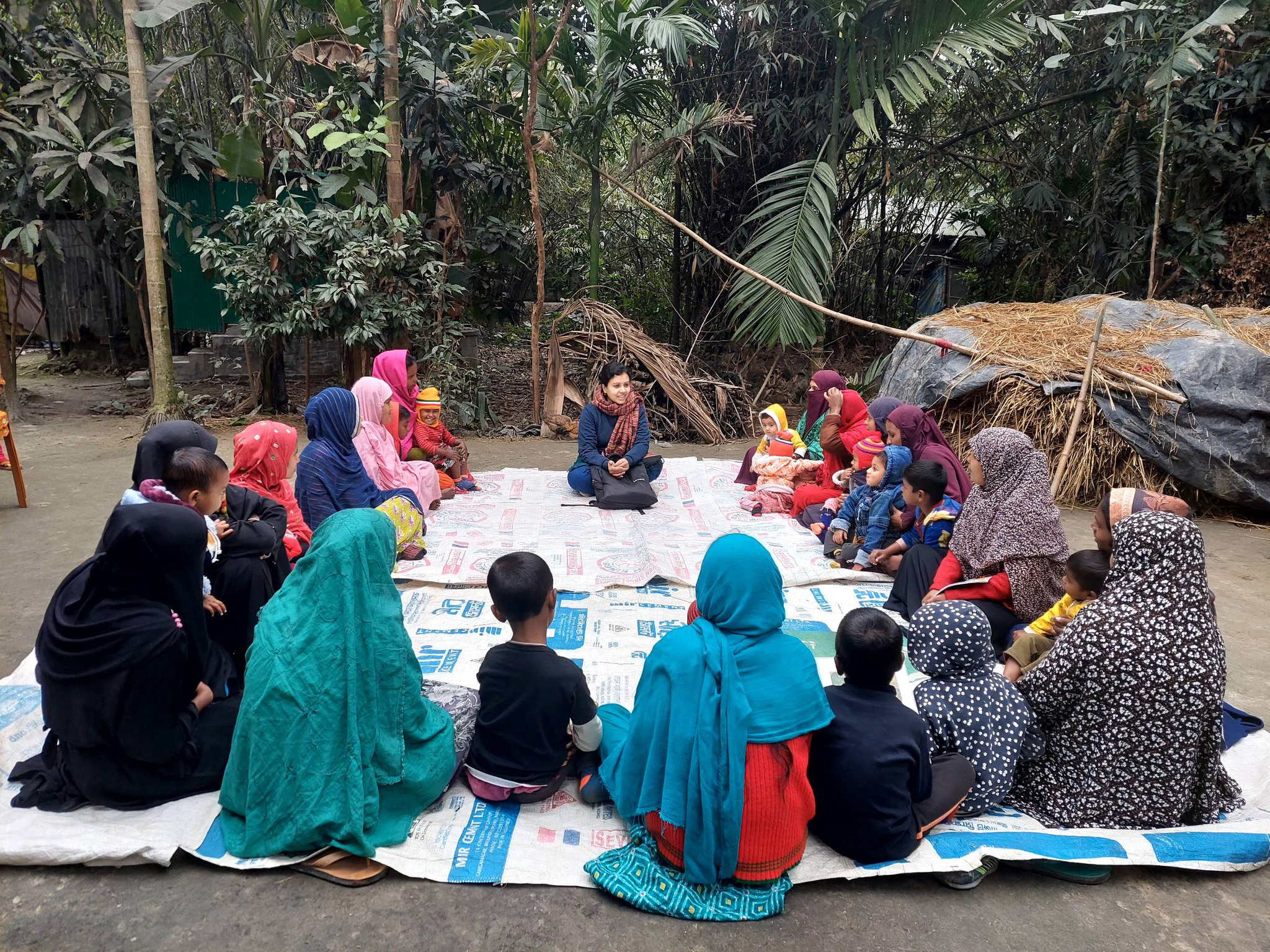
Through long-term community engagement, NGOs help build trust, mobilise farmer groups, and reach women, youth, landless farmers, and indigenous communities who are frequently excluded from mainstream systems. They also pilot innovative approaches such as farmer field schools, nutrition-sensitive agriculture, youth entrepreneurship, and digital advisory models—many of which can later be scaled through government systems.
Stronger collaboration between government extension services and NGOs improves coordination, data sharing, and market linkages, ensuring that productivity gains translate into sustainable income growth for farming households.
Case Study: Kaladaha Nichpara Vegetable Producer Group, Mymensingh
A practical example of effective collaboration can be seen in Fulbaria Upazila of Mymensingh, where the Department of Agricultural Extension (DAE) and World Vision Bangladesh partnered under the Building Secure Livelihoods programme.
Established in 2020, the Kaladaha Nichpara Vegetable Producer Group brings together 40 smallholder farmers producing vegetables such as brinjal, bitter gourd, and beans. Prior to the intervention, farmers faced challenges including traditional production practices, high input costs, weak market access, and limited availability of quality inputs.
Through structured capacity building, organisational strengthening, and business planning support, the group evolved into a functional learning and production hub. Close collaboration with DAE enabled regular technical guidance, demonstrations on improved farming practices, and training on post-harvest handling and resource management. Five trained group leaders now act as lead farmers, facilitating peer learning across neighbouring communities.
In parallel, World Vision supported local government systems by revitalising standing committees on agriculture and development and strengthening capacity on roles and responsibilities alongside DAE’s technical services. This helped identify Bottom-of-the-Pyramid producer groups, better understand their service needs, and inform more responsive service allocation and project design at the central level.
A Sub-Assistant Agriculture Extension Officer involved in the process noted that the group’s strong organisation and two-way communication significantly improved the effectiveness of extension delivery. With DAE support, the group received a low-cost cold storage facility valued at approximately BDT 500,000, reducing post-harvest losses and enabling farmers to secure better market prices. Additional support included quality seeds, agricultural equipment, and model village demonstrations covering vegetables, rice, wheat, and mustard.
Private-sector engagement has also increased, with input suppliers and agribusinesses providing technical advice, quality inputs, and bulk purchasing opportunities—further strengthening farmers’ market access and bargaining power.
Today, the Kaladaha Nichpara group functions as a local extension hub, linking farmers with government services and private-sector actors. Members benefit from lower production costs, improved productivity, stronger market linkages, and greater resilience to climate and economic shocks.
Looking Ahead
This experience demonstrates how effective collaboration between government extension services, NGOs, and local institutions can translate national policies into meaningful community-level impact. Strengthening both extension systems and local governance structures is essential to sustaining these gains.
As Bangladesh continues to invest in agricultural extension, such partnerships will be critical to building a resilient, inclusive, and food-secure future—ensuring that even the most marginal farmers are not left behind.