
From Aid to Enterprise: The Ushindi Group’s Blueprint for Self-Reliance

At just 33 years, Uwimana Antoinette carries the weight of a harrowing past, but also the hope of a brighter future.
A mother of five, Antoinette fled her home from the Democratic Republic of Congo in April 2018 after a violent militia raid tore through her village, destroying property, killing livestock, and claiming lives.
“For over a week, we walked long distances in the wild in search of safety until we crossed into Uganda,” she says. “We were received by UNHCR and resettled in Kyaka II settlement.
It is here in the quiet of new found safety that her family was able to sleep peacefully for the first time in many days.
Just like most refugees, Antoinette initially relied on monthly food aid from the World Food Programme (WFP), and later cash transfers. Yet even with this support, her family often skipped meals, managing only two a day.
Seeking alternatives, Antoinette was introduced to the Ushindi Savings Group by a fellow refugee. “My friend explained how members saved as a little as 2,000 Uganda shillings (approximately 0.6 USD) and could borrow money to start or boost their businesses.” she says. With her husband’s full support, she joined.
Progress was slow. The group struggled with low capital and loan defaults, limiting her access to funds. Still, she persevered, selling basic goods like greens from home, earning modest profits but building resilience.
Her breakthrough came in may 2024, when World Vision extended an Enterprise Development Grant (EDG) of 11.4 million shillings (approximately 3165 USD) to Ushindi Savings Group. With expanded operations, Antoinette finally accessed a substantial loan.
“I purchased a market stall at 100,000 shillings ((approximately 28 USD) and restocked the business with more goods. With higher sales came better income.” she adds.
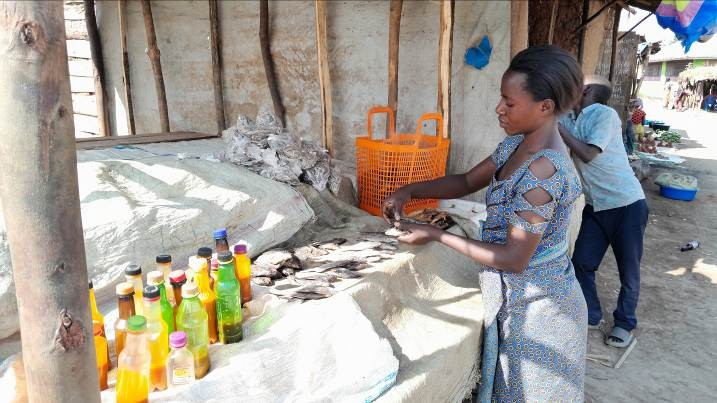
Her profits grew steadily. Her weekly savings rose from 2,000 to 10,000 shillings (approximately 0.6 to 3 USD), and for the first time since arriving in Uganda, she could afford school fees for her children. She bought two goats (now four), ducks and began growing vegetables in her backyard, ensuring her family enjoyed nutritious meals.
Antoinette is one of the 31 determined individuals who came together in 2019 with a shared vision of empowerment and self-reliance. The week began as a weekly savings association, with loans offered at 5% interest. Profits and savings were shared annually.
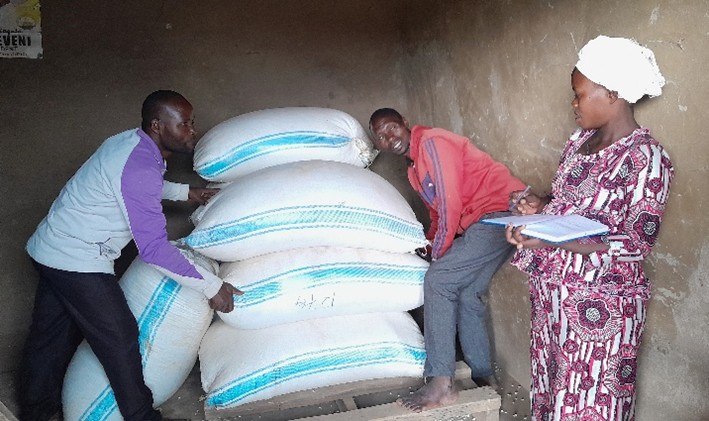
With World Vision boost of the Enterprise Development Grant, the group diversified into maize grain trading. They purchased 4,186 kilograms of maize from local farmers at 800 shillings (Approximately 0.22) per kilogram and sold it to traders for up to 1,400 shillings (Approximately 0.4). They also rented two acres of land to strengthen their production base.
By November 2024, Ushindi had sold all their stock, including harvested maize and processed flour, earning a profit of 3.3 million shillings (Approximately 915.30). They reinvested 40% into capital and shared 60% among members, encouraging each to stat personal income generating activities.
Before receiving a second grant instalment of 5.9 million shillings (Approximately 1636.45), World Vision provided financial literacy training, covering VSLA methods, record keeping, and group dynamics, alongside weekly monitoring.

Key Achievements in 2025
Ushindi Savings Group has made significant strides this year in strengthening its enterprise. The group successfully purchased and stocked 9,607 kilograms of maize grain, milling 1,240 kilograms into flour that was packaged in branded 5kg and 10kg bags, enhancing both visibility and market appeal.
To expand production, they rented five acres of land and hired workers to manage farming activities, while members closely monitored progress to ensure accountability. Their savings scheme also improved remarkably, with members now owning multiple shares and recording zero loan defaults, a testament to the group’s growing financial discipline and resilience.
Future Goals
Looking ahead, the Ushindi Group is determined to build on these achievements. Their priorities include acquiring a maize milling machine to reduce operational costs and better serve the community, constructing improved storage facilities to safeguard produce, and diversifying income streams by expanding into piggery farming. These goals reflect the group’s commitment to sustainability, innovation, and self-reliance.
By: Robert Bawube. Project Assistant, Food Security & Livelihood