
Empowered to act: Nyanyai’s story of becoming a strong woman in South Sudan

When conflict forced Nyanyai Riak to leave her home in Twic County, she arrived in Kuajok with little certainty about how she would provide for her six children. But a simple training in her community began to change how she saw herself — and what she believed she could do.
Nyanyai Riak is 37 years old, married, and a proud mother of six in Warrap State. Originally from Twic County, she was forced to move with her family to Kuajok due to conflict, seeking safety and stability.
Back in Twic, Nyanyai was a housewife, fully dependent on her husband for food, clothing, and school fees. But there were times when he had nothing to give. In her culture, women are expected to stay at home to cook and care for the children. That was the life she knew. Still, Nyanyai did not want to keep asking.
“I knew I had to find a way to help my children and myself,” she says.
In 2020, she heard about the Empowered Worldview program being announced in her community. Curious and hopeful, she decided to join. Alongside other women, she received training in caregiving, life skills, and decision-making.
After the training, she began small. With a few bed sheets packed in her bag, she started resizing and sewing them to sell in the market. The income helped her pay her children’s school fees. She saved what she could to buy seeds and clothes — things she previously waited for her husband to provide.
Later, through Empowered Worldview, World Vision supported her and other women with additional materials to expand their sewing businesses. Her small venture began to grow. For Nyanyai and her family, this was a turning point.
She also joined a savings group of 30 women. Together, they save money, support one another, and share business ideas. Some members now run restaurants and tea stalls in Kuajok market, while others have expanded their businesses as far as Wau and Juba.
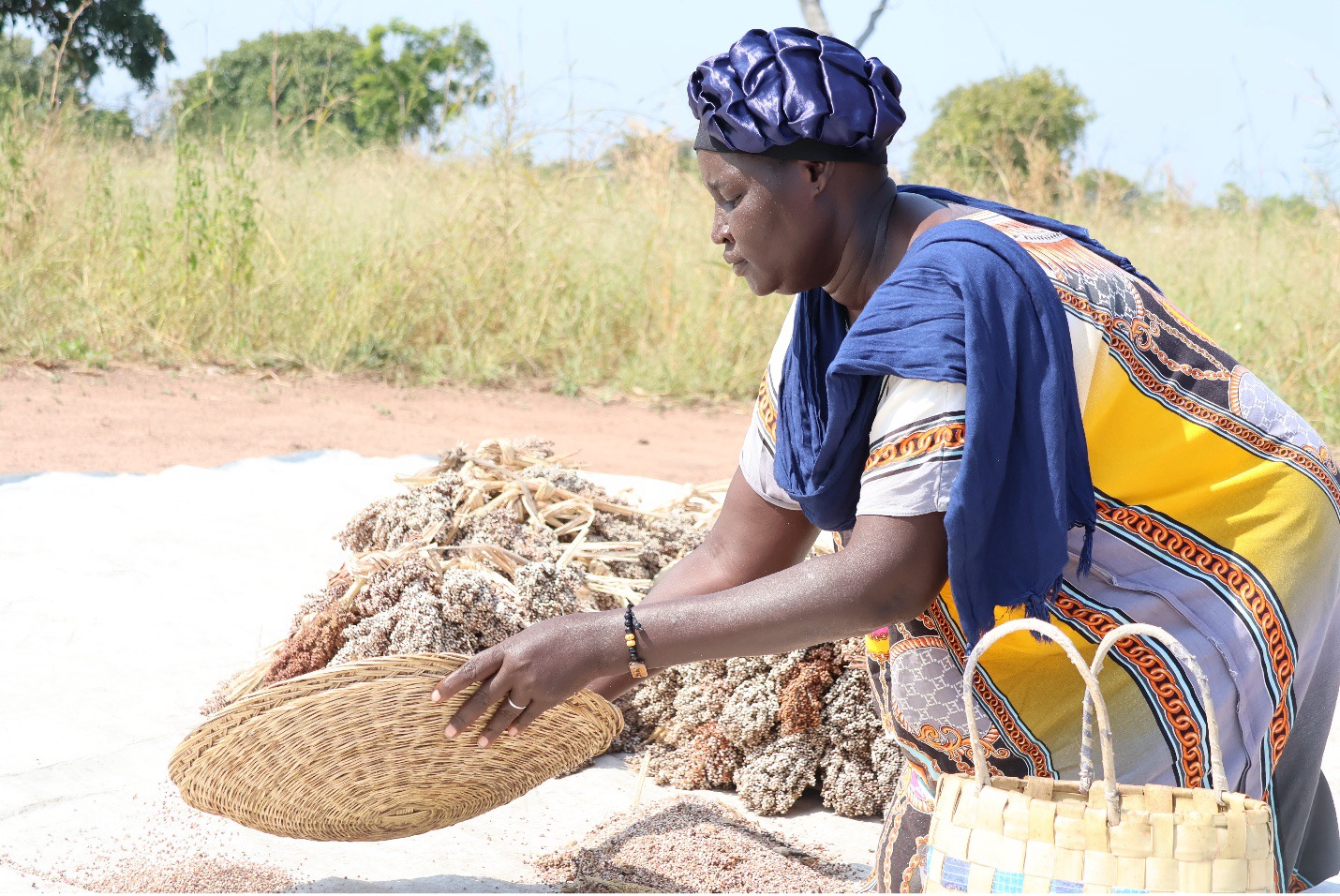
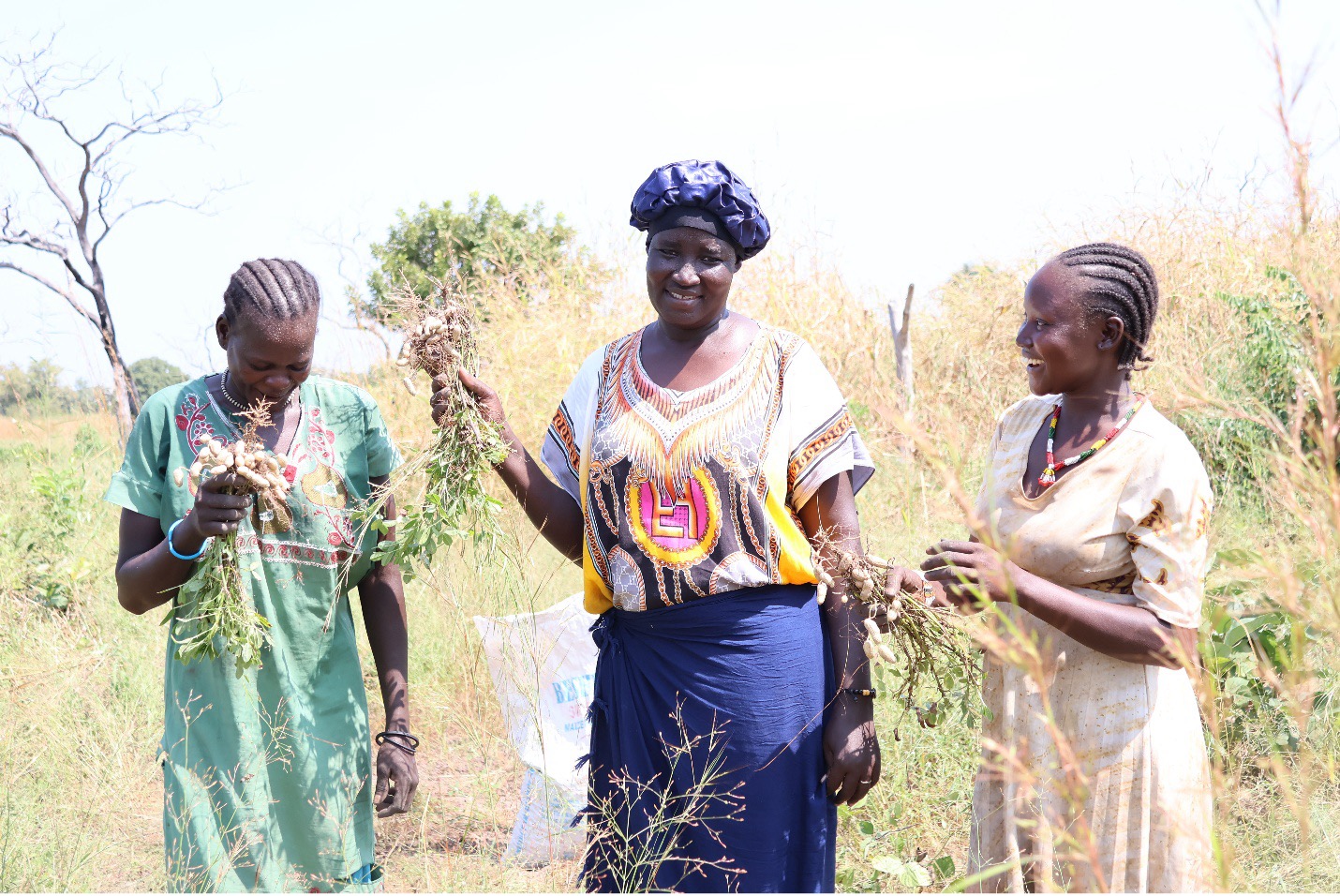
Today, Nyanyai is not only a businesswoman but also a farmer. This year, she harvested 41 sacks of groundnuts and two sacks of sorghum. Her current challenge, shared by many women in her group, is storage — she lacks a safe place to keep her produce.
Even so, she continues to press forward. After finishing work on her own farm, she invites other women to join her so they can earn extra income together.
“Sometimes your husband has nothing. Do not wait. Do something for yourself and your children. “ You can survive,” she adds. “Now, I don’t have to ask my husband for anything.” Even the clothes I am wearing, I bought myself. I can’t remember the last time I asked for something.”
Nyanyai hopes the program will reach more communities beyond Warrap State. “There are many women like me who need this kind of support,” she says.
Joseph Makuac Beck, Faith and Development Officer for Greater Bahr El Ghazal, believes the impact goes beyond individual success.
“If churches are supported at the local level, communities will transform because Empowered Worldview is about changing mindsets,” he explains. “For many years, our communities relied heavily on humanitarian assistance. To shift that thinking, we must start at the grassroots. If we want to change the nation, we must begin with the community.”
Nyanyai’s journey is a powerful reminder that when women are given opportunity, they rise. And when women rise, families grow stronger. Communities grow stronger. The future becomes brighter.
About Empowered Worldview
Empowered Worldview (EWV) is World Vision’s biblically grounded approach to empowering individuals, faith actors, and communities to drive lasting change. Its goal is to mobilise people’s God-given gifts, talents, and resources — spiritual, social, physical, and economic — to improve sustainable child well-being.
EWV addresses dependency mindsets by promoting dignity, personal responsibility, and initiative. Through a curriculum rooted in biblical principles, participants reflect on identity, hope, and vision for the future, building confidence to take action.
In South Sudan, EWV has helped families work together, start businesses, and create brighter futures for their children.
Story and photos by Stella Inyaa/World Vision