
EU-LEAN Savings Boxes drive change in Kassena Nankana West

By: Francis Npong
Several challenges have converged to create complex livelihood crises in rural communities in the Kassena Nankana District of the Upper East Region.
Not only are these communities resource-constrained when it comes to navigating these crises, they also lack access to financial services, which makes it difficult for them to meet their financial needs.
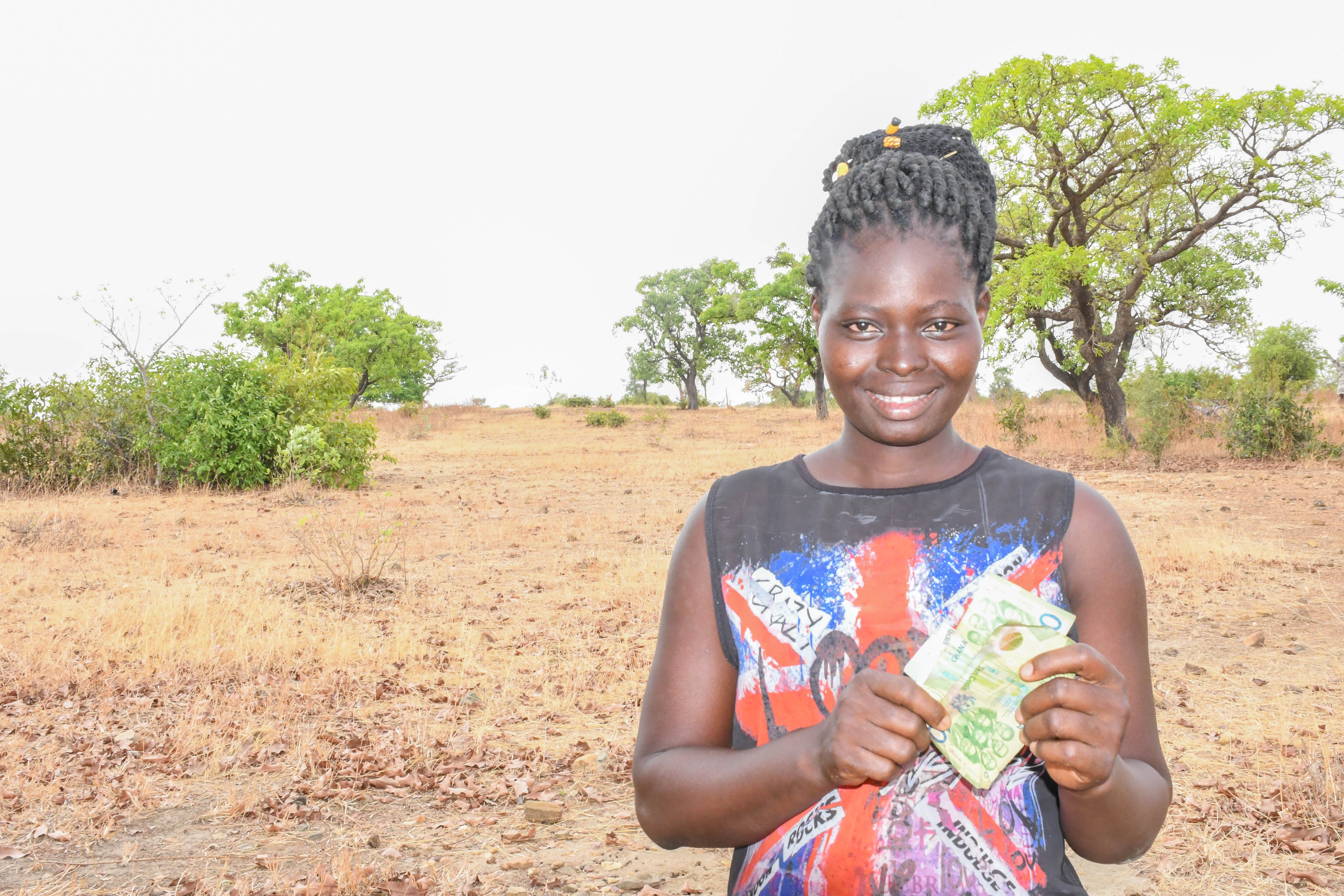
The Landscapes and Environmental Agility across the Nation (EU-LEAN) project, funded by the European Union (EU) and implemented by World Vision Ghana, addressed these complex crises through the Savings for Transformation (S4T) initiative.
This initiative enables smallholders to save money and access loans on flexible terms for investment, consumption and emergencies.
"S4T provides uninterrupted financial services to around 24 communities in the district, improving livelihoods, boosting household incomes and encouraging village-based entrepreneurship", said project officer Joseph Abugri Talata.
'Rural communities depend largely on forest resources, such as tree felling for firewood and charcoal production, as well as agricultural activities, for their livelihoods and income. To prevent them from engaging in these activities, alternative livelihoods and income-generating activities must be introduced, which is why the project introduced S4T to communities," he added.
Previously, farmers found it extremely difficult to access financial support, including loans, to meet their needs. “It was hard to find someone with enough money to lend you to solve critical financial problems. Harvesting firewood was one way I earned an income, but I stopped doing it after joining the S4T group in the Banyono community," said Atongo Cynthia, an S4T member.
S4T beneficiaries Adawona Vivian and Ayedalem Diana both accessed loans to set up shops selling various goods, and now earn an income from trading in different commodities. As a result, they are now able to support their households financially.
"This year, I took out a loan of one thousand Ghanaian cedis. This enabled my husband to purchase supplies for our vegetable farm,” said Vivian.
For Adawona, S4T is providing more than just access to financial services; it is also promoting relationships and fostering peaceful coexistence among households. S4T has also improved women’s leadership and decision-making processes at a household level.
Through EU-LEAN, World Vision Ghana has formed 60 S4T groups in 24 communities. By December 2023, these groups had collectively saved 647,951 Ghanaian cedis, with 1,492 smallholders (1,165 women and 327 men) accessing loans. A total of 72,553.30 Ghanaian cedis was accrued as interest. This has granted financial freedom to smallholder farmers.
To sustain this initiative beyond the EU-LEAN Project, World Vision Ghana recently provided training on group dynamics, leadership, basic recordkeeping, financial management, and business management to key leaders of S4T groups from these communities.
“We have improved financial inclusion and increased women’s access to finance to the extent that they are now making a significant contribution to meeting their households' needs. This improves family cohesion and bonding,” said Joseph Edwin Yelkabong, EU-LEAN Project Manager at World Vision Ghana.
The project supported 1,492 S4T group members in planting 2,984 seedlings, primarily economic trees such as mango and cashew. By adopting these practices, local communities have improved their livelihoods and incomes while contributing to the restoration of degraded land in the Kassena Nankana West District.
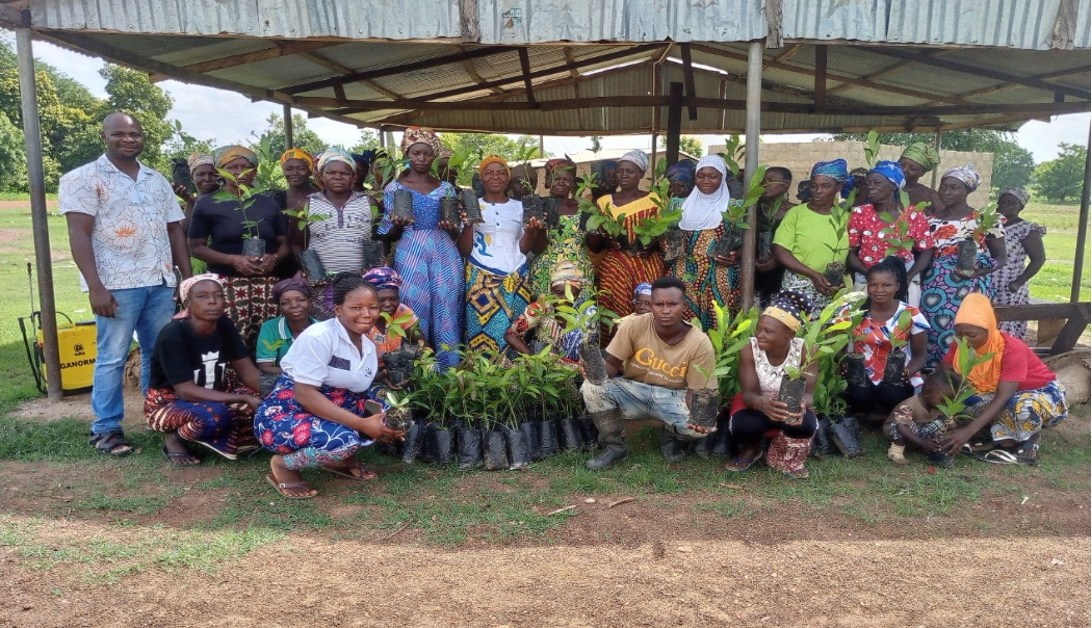
The EU-LEAN intervention has enabled farmers to diversify their livelihoods, improve their crop yields and access better markets by linking them to agricultural value chains through specialised fairs.
This has increased their incomes, allowing them to invest in their communities. The project has made these communities more resilient to climate change and improved biodiversity in their areas.