
From Fear to Dignity: How Access to Clean Water and Safe Sanitation Transformed Senate’s Life

By Reentseng Phephetho, Communication and Digital Officer
In Phamong Village under the Matlameng Area Development Program, daily life was once defined by hardship, fear, and risk. For 13-year-old Senate and her mother ‘Malieketseng, access to basic necessities like clean water and safe sanitation was a constant struggle.
Every day after school, Senate faced a reality that filled her with dread.
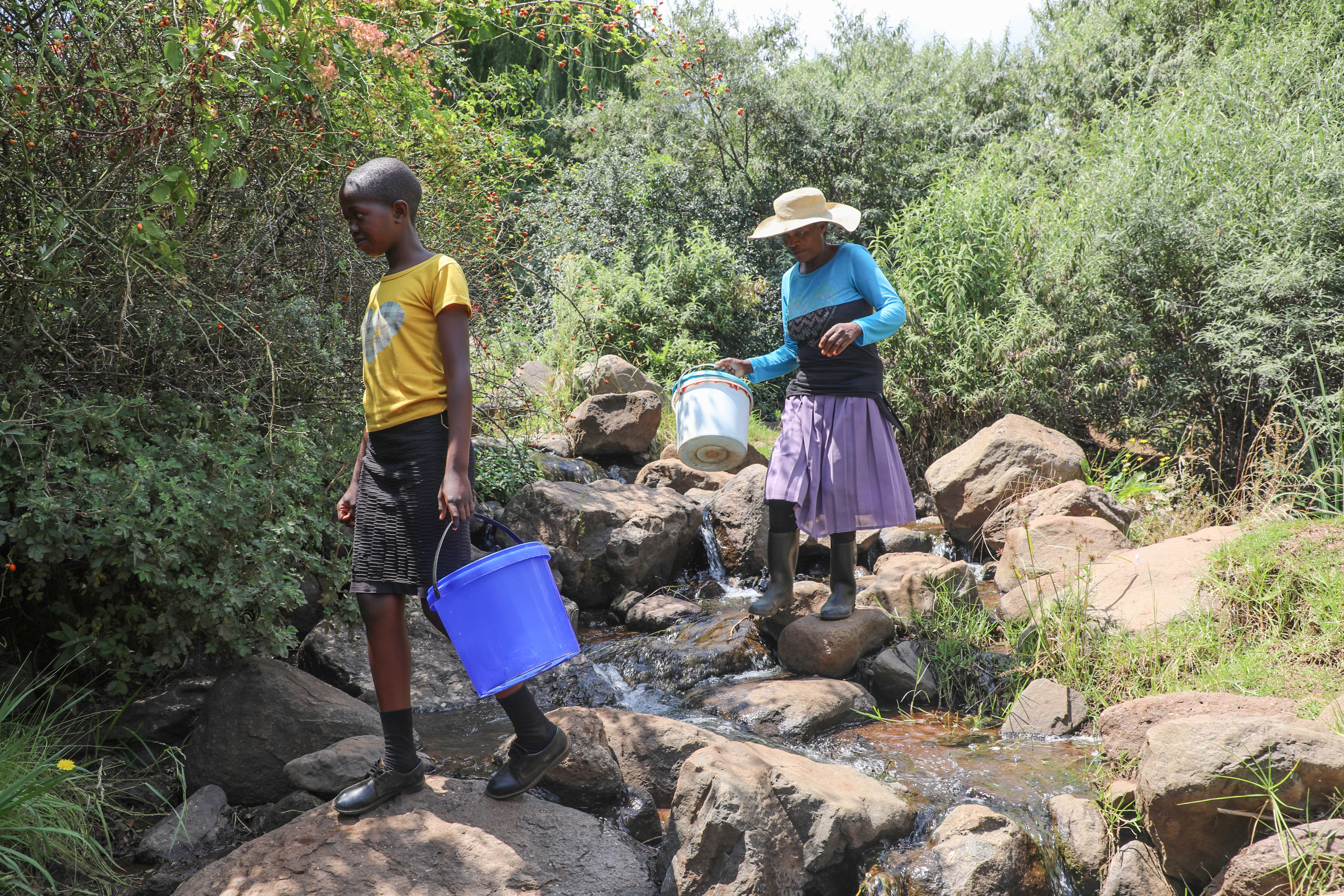
‘Malieketseng and Senate walk through the forest and cross a small river to fetch unsafe water from an uncovered well
To fetch water, she and her mother had to walk long distances, crossing a small river to reach an uncovered well by the river. The journey itself was dangerous. The path led through a dense forest — a place Senate described as terrifying.
“I always felt very scared of what could happen to me every time I had to go and fetch water,” Senate shared.
The well they depended on offered little reassurance. It was uncovered, easily contaminated, and often visibly dirty. During the rainy season, floodwaters dragged mud, debris, and even human waste into the well. On windy days, grass and dirt blew into the water. At times, the water was so muddy and animals also drank from the same source.
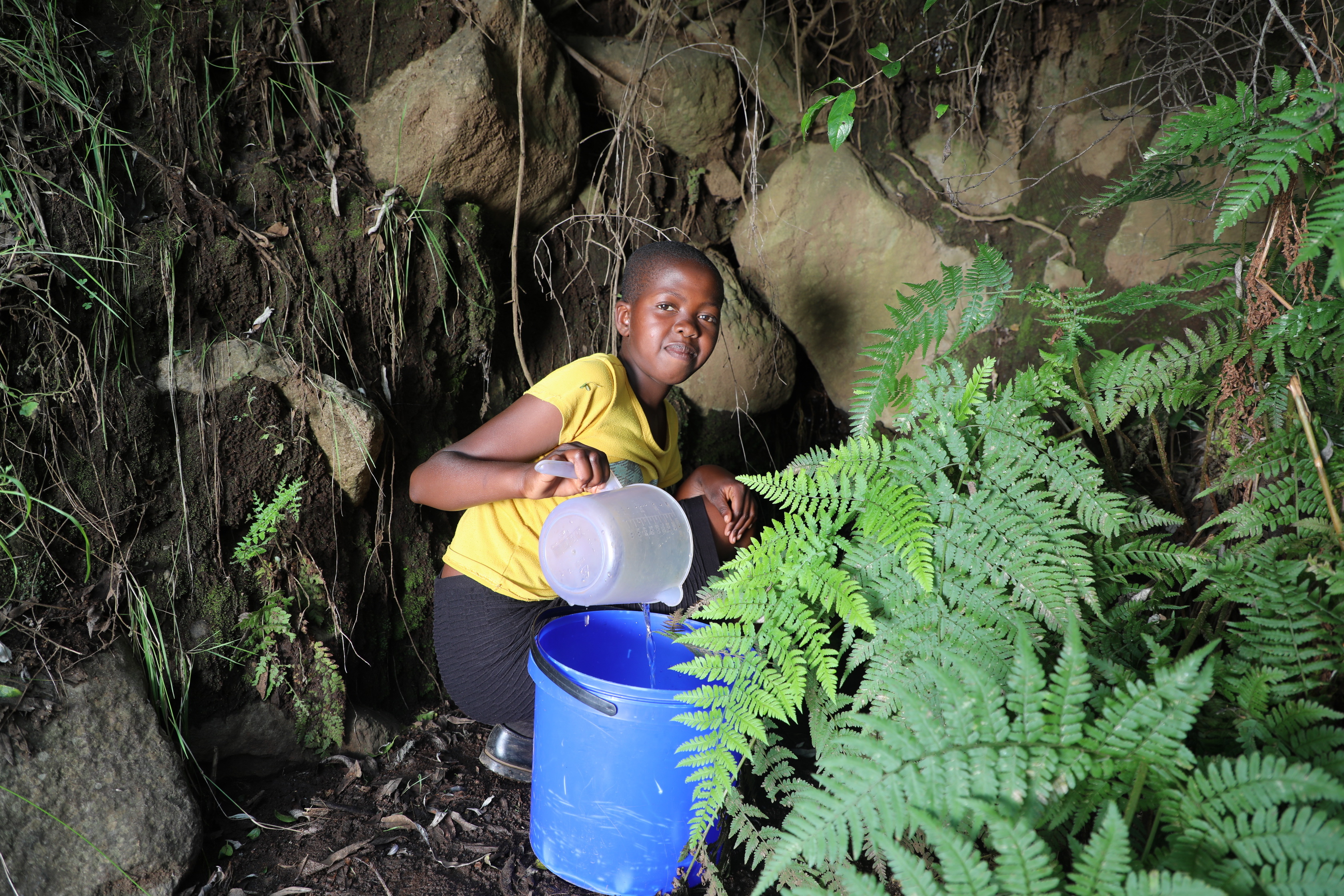
Senate drawing unsafe water from a vulnerable, uncovered well near the river
Despite boiling the water, illness remained common.
Communities frequently suffered from diarrhoea, especially young children. As a Village Healthcare Worker, ‘Malieketseng witnessed the crisis first-hand. “I would get very frustrated at the increasing rate of under-five children suffering from diarrhoea. We still boiled this water before use, but it made no difference,” she recalled.
Water scarcity also made simple household tasks overwhelming. Laundry, cleaning, cooking, and watering plants became exhausting challenges. Hygiene suffered, not from neglect, but from the sheer difficulty of accessing water that was neither safe nor reliable.
Sanitation conditions were equally dire. Without toilets, families were forced into open defecation along the same riverbanks they crossed for water. For the elderly, navigating the forest with walking sticks was humiliating and dangerous. For women and girls, it meant exposure, vulnerability, and fear.
For ‘Malieketseng, menstruation became a deeply stressful experience.“It was very difficult. Anyone could just appear,” she shared.
For Senate, the fear went even deeper. “I was becoming depressed every time nature called because I was afraid I could be abused by the herdboys,” she said. The situation was both physically unsafe and emotionally traumatising for mother and daughter.
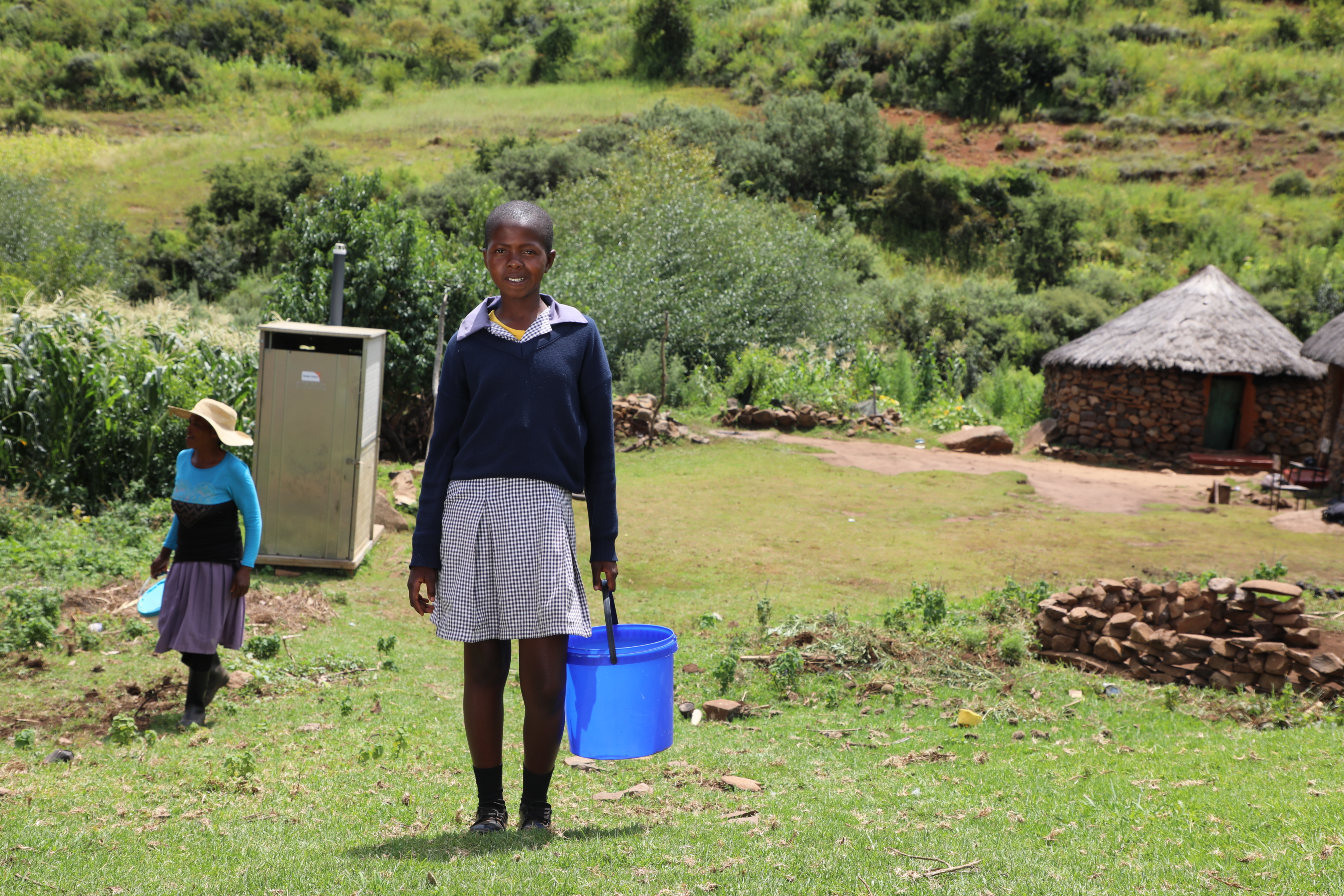
After school, Senate happily fetches clean and safe water close to home
A Turning Point
In 2021, everything changed.
Through its Water, Sanitation and Hygiene (WASH) Program, World Vision supported Phamong Village with a new water system, installing eight community taps. Each household, including ‘Malieketseng’s, received an Amalooloo toilet.
For Senate and her mother, the transformation felt unreal.
The nearest tap now stood close to their home. Clean, safe water was no longer a distant hope but a daily reality. “The day I had access to clean water felt like my life had changed for good,” Senate said with a smile. “Fetching water from the tap has become my favourite household chore.”
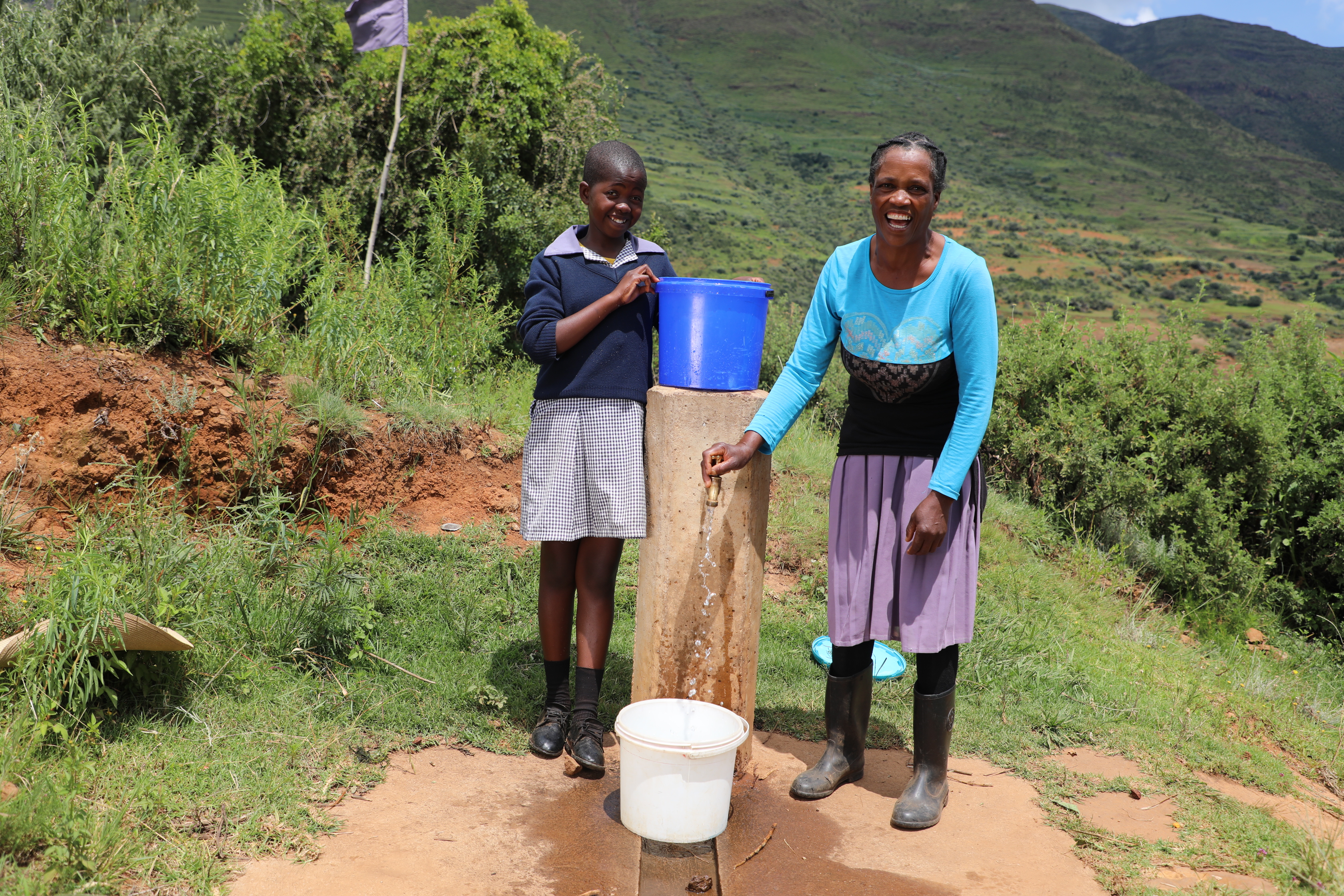
Smiles of relief — ‘Malieketseng and Senate collecting clean water from the tap close to their house
The long, fearful walks through the forest ended. The anxiety tied to rainy and windy days disappeared. Waterborne illnesses declined, and cases of diarrhoea that once plagued the community became far less common.
At home, life grew easier and healthier.
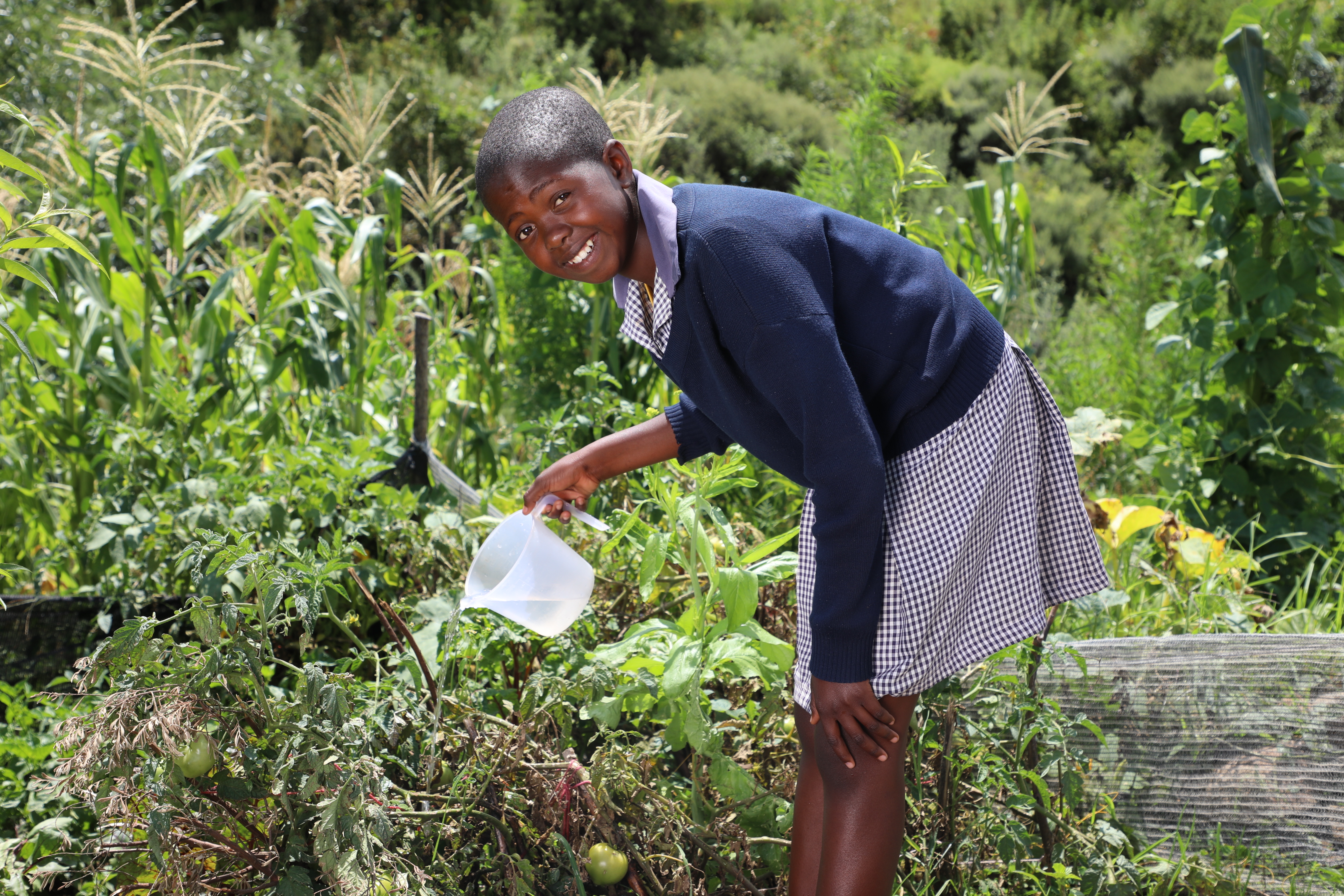
With access to reliable water, Senate now cares for tomatoes in their garden
Cooking with clean water became routine. Laundry and cleaning were manageable. Hygiene improved significantly. With a reliable water supply, the family even began growing plants, using water for irrigation.
Senate now attends school with confidence — wearing a clean uniform and enjoying better health.
Restored Dignity and Safety
The introduction of household toilets marked another profound shift. Open defecation stopped. Privacy, safety, and dignity were restored.
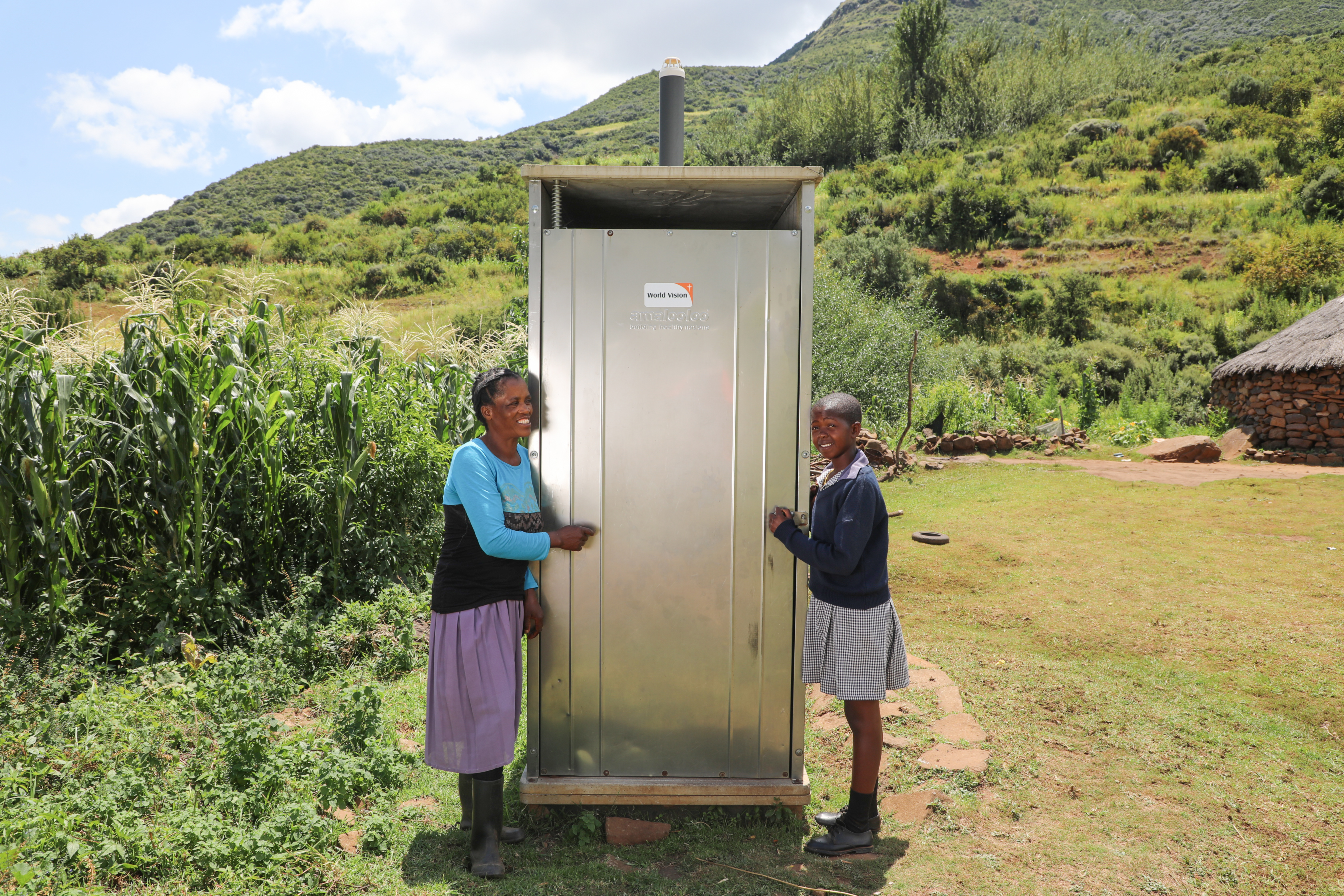
A symbol of dignity and safety — Senate and ‘Malieketseng next to their Amalooloo toilet from World Vision
For ‘Malieketseng and Senate, even night-time brought peace instead of fear. No more dangerous trips into the forest. No more anxiety about who might appear.
“I feel safe in the new toilet. Even at midnight, I can come out and help myself without fear,” Senate shared. The toilet has become more than just a facility — it is a symbol of dignity. Senate takes pride in maintaining it.
“Every day after school, I clean the toilet,” she said.
A Life Transformed
What was once a life shaped by fear, contamination, and vulnerability is now defined by safety, health, and hope. For Senate, clean water and safe sanitation have not only improved her physical wellbeing but also lifted an emotional burden no child should carry.
For ‘Malieketseng, the relief is equally profound — fewer sick children, improved hygiene, and restored dignity for women and elders alike.
Phamong Village’s story is a powerful reminder that access to clean water and sanitation is not merely about infrastructure.
It is about health.
It is about safety.
It is about dignity.
It is about giving children like Senate the freedom to live, learn, and dream without fear.