I Only Lost My Shoe. They Lost Their World.

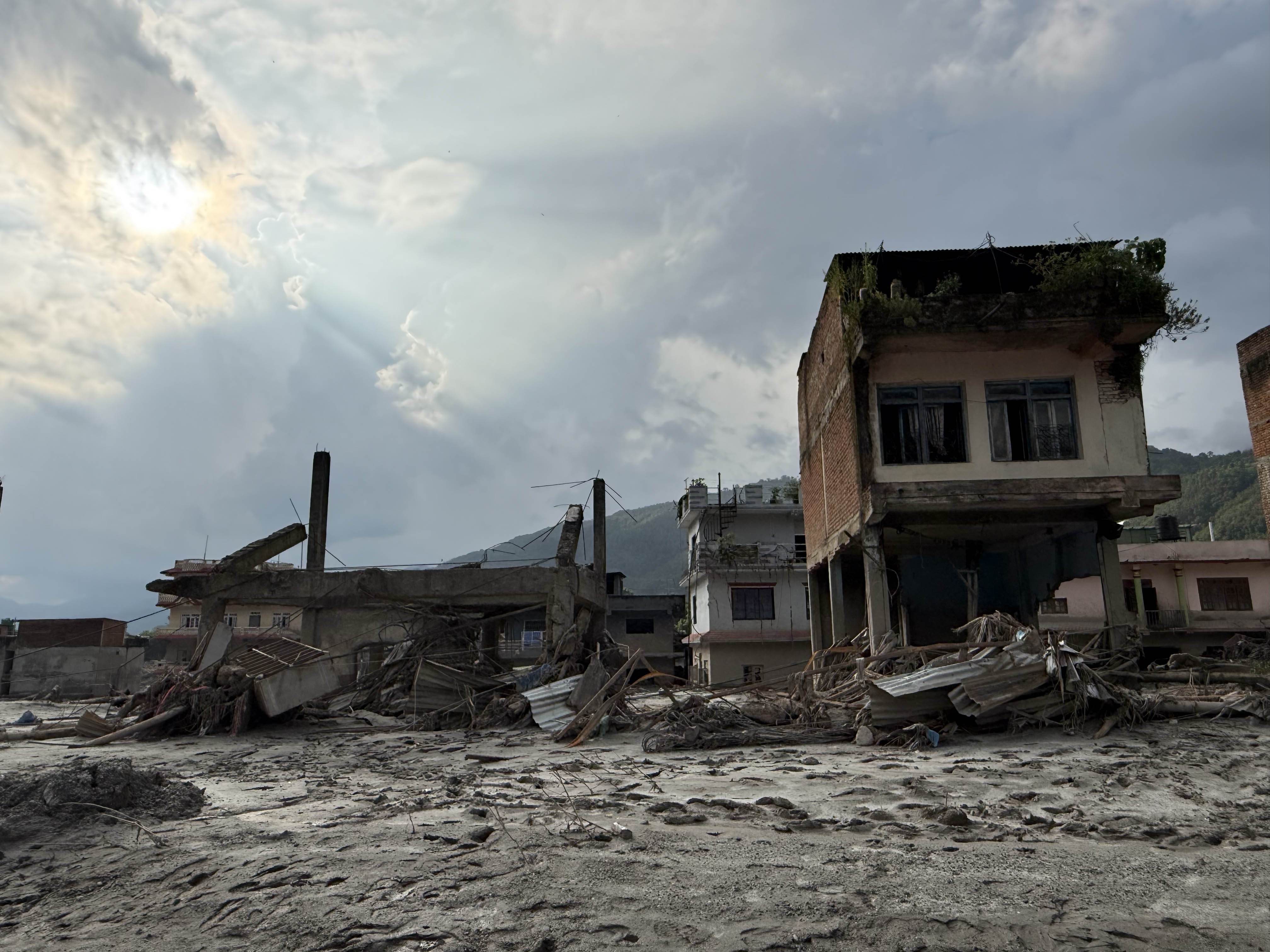
Golden rays bounced off fractured facades, illuminating the ruins in fleeting silhouettes, where beauty and devastation stood side by side in uneasy harmony. Where memories slept beneath the mud. In a single frame, I witnessed nature's paradox: its tenderness and its fury, beauty illuminating the scars left behind. Mangled skeletons of what were once homes, in Bidur, stood half-buried in thick grey sludge, silent monuments to lives interrupted. Their walls ripped open, their foundations exposed, their stories scattered across a landscape of mud and ruin. The mud held the imprints of footsteps from those who had walked these paths, a haunting reminder that entire communities had existed here.
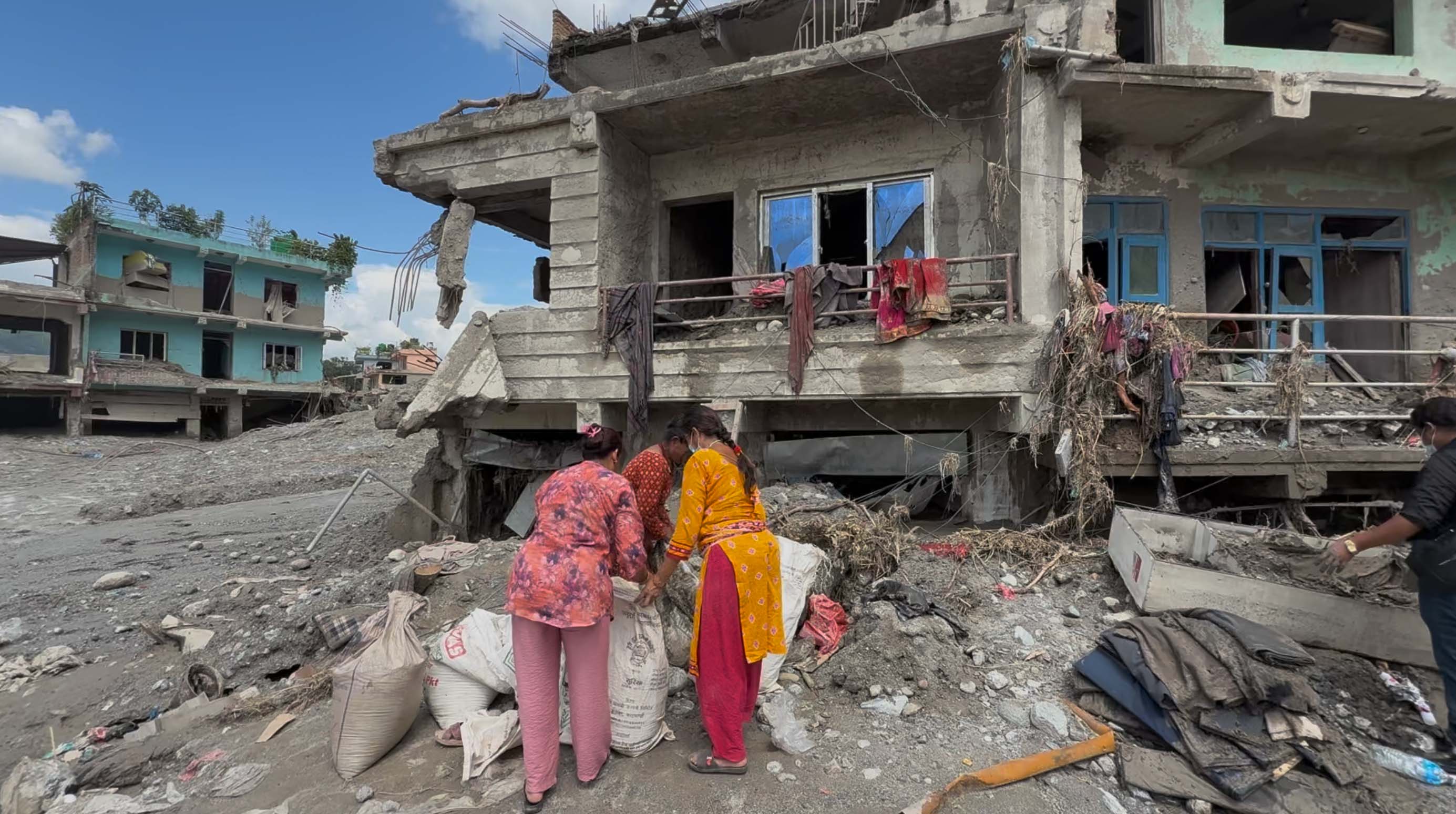
Families had begun returning, carefully sifting through the wreckage with bare hands, searching for fragments of their past. Every handful carried hope and heartbreak in equal measure. A water pot. Blankets. A piece of clothing. Anything that might help them reclaim a small part of what the flood had stolen. Proof that the lives they had built were real, that the memories buried beneath the sludge had not disappeared entirely.
The air was heavy with the smell of death and unimaginable loss. The mixture of stagnant water and decaying debris. Even the wind seemed unable to carry it away.
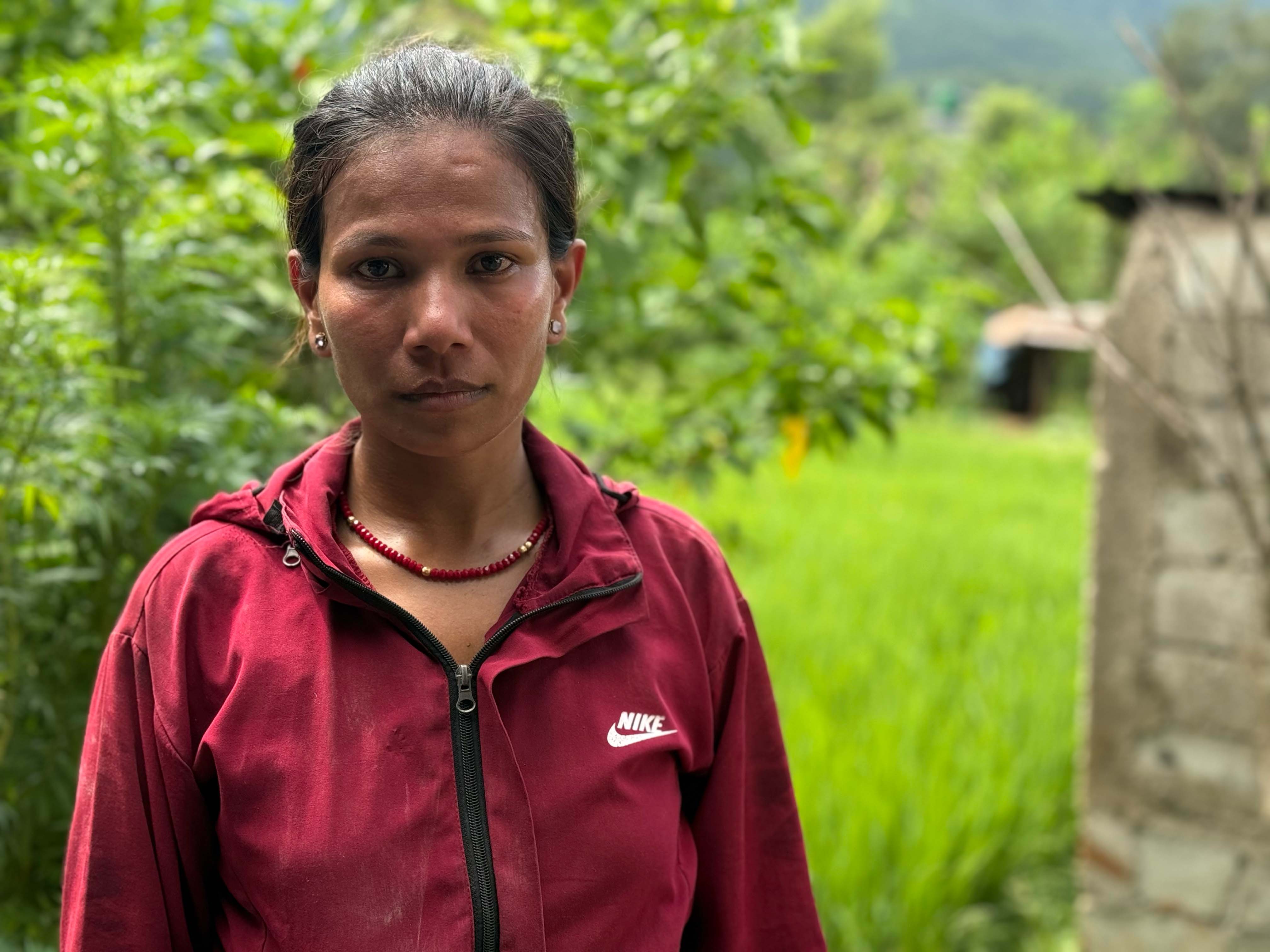
Suddenly, a woman approached one of my colleagues, her eyes drawn to the World Vision logo on our jackets. "World Vision?" she asked quietly. We stopped and began to talk. "My child is a registered child," she said. The lady’s name was Bimala.
She had returned to what was once her home to help her mother recover whatever little the floodwaters had spared. Amid the wreckage, where memories lay tangled in mud and debris, she looked at us gently and asked, "Would you like to see where I used to live?" Without hesitation, we followed.
More than the quantifiable number of those affected, they had a face and a name.
In that moment, it did not feel like chance had brought us together. It felt as though God had placed Bimala in our path. We were not in an area where World Vision operates, yet somehow we met. And through her story, the enormity of this disaster became painfully real.
We walked behind Bimala and her mother along a narrow path lined with houses that bore the scars of the flood. Homes leaned at impossible angles, their foundations weakened, their walls bent and broken by the force of the water. Silence hung heavily in the air, interrupted only by the distant sound of rushing water and the crunch of debris beneath our feet.
Bimala walked ahead of us. Something remarkable lived in her spirit. Amid heartbreak and uncertainty, there was courage. Amid devastation, there was resilience.
And I was reminded once again that behind every emergency are children and families whose lives are forever changed. Their stories may never make the headlines, but they matter. They are the reason we are here. And sometimes, in the middle of a disaster, God places one child in your path to remind you exactly why the work matters.
We reached her maternal home at the banks of the river.
Beside us, the Trishuli River still raged. Its brown waters churned like the waves violently against the banks, carrying volumes of water downstream. The sound was relentless, a deep growl that seemed to rise from the earth itself.
Amidst the devastation, I stood there humbled, struggling to absorb the scale of what lay before me. Every direction revealed another story of heartbreak. Then something caught my eye.
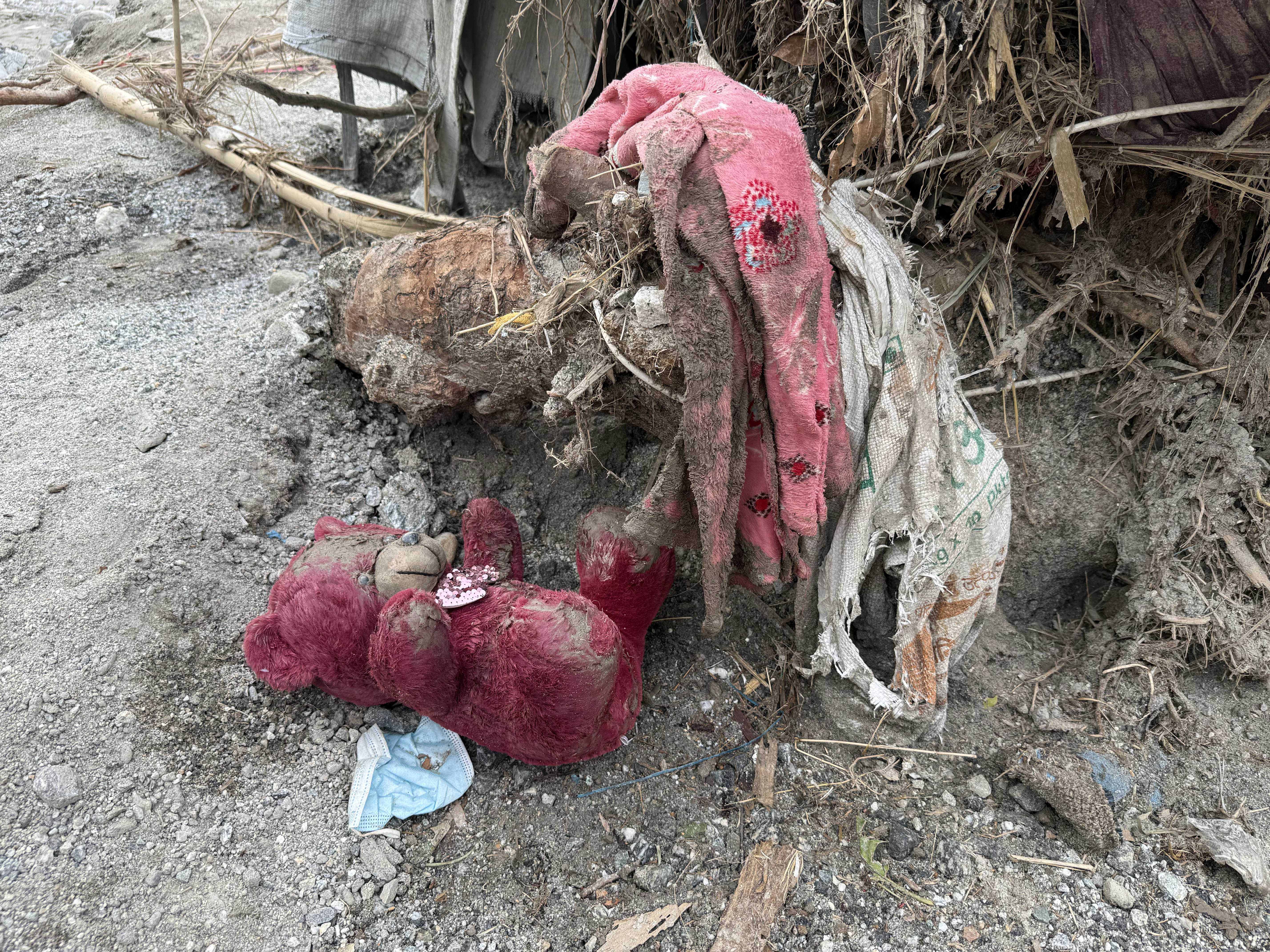
A small red teddy bear lay motionless in the mud beside the twisted roots of an uprooted tree, its bright colour piercing through the grey landscape like a wound. Its fur was soaked and stained, but somehow it remained intact. I couldn't stop staring. Perhaps it had once been clutched tightly in the arms of a child drifting off to sleep. Perhaps it had brought comfort through storms, fevers, and long nights. Now it lay abandoned in the mud, transformed from a treasured possession into a fragile memorial for all that had been lost.
As we listened to Bimala’s mother share her experiences, their words often dissolving into tears, we were erupted by sudden shouting. Voices rose in Nepali. People pointed frantically towards higher ground.
"Run."
In that moment, time seemed to stop. In an instant, conversations stopped. Faces changed. The expressions of people who had already survived the unimaginable returned to the look of those bracing for it all over again.
In that moment, I understood something profoundly human. When disaster steals your sense of safety, it never truly leaves you. Every sound becomes a warning. Every movement of the river becomes a threat, carrying the memory of what happened that morning. We did not yet know what had sparked the desperate call to flee. Yet when you live under the constant threat of rising waters, and fear of another imminent flood being very real, your body learns to move before your mind can understand.
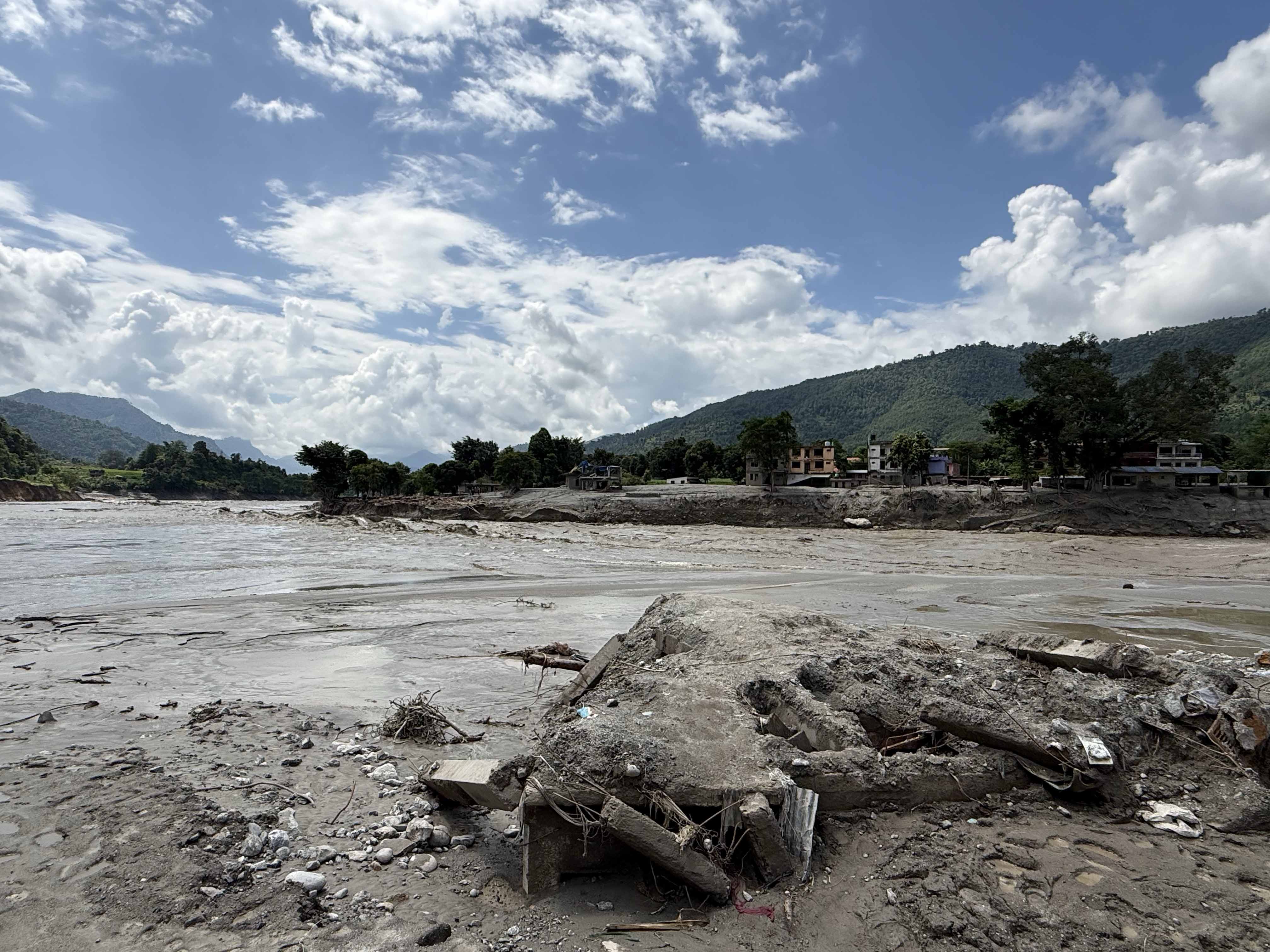
My colleagues and I ran, moving as quickly as we could alongside villagers who knew all too well the consequences of hesitation. Bimala and her mother were behind us.
As I scrambled, the sludge beneath me gave way, swallowing my leg deep into the mud. For a brief second, panic set in. I managed to break myself free, but not before one shoe vanished beneath the surface. Consumed by the mud so completely that there wasn't even a trace of it left behind.
Just moments earlier it had been on my foot. Now it was gone.
Eventually, with the help of local residents, we hitched a ride on motorbikes and made our way to higher ground. In the chaos, we were separated from Bimala. The further we travelled from the river, the enormity of what had happened began to settle in. This was only a glimpse.
Only a fleeting taste of what families here had experienced on that terrifying morning of 26 August. They did not have the luxury of warning. They did not have the opportunity to leave calmly.
Their day began with walls of water and mud racing towards them with terrifying force. Entire communities were engulfed in minutes. Homes disappeared. Farmland vanished. Small businesses were wiped away. Years of hard-earned progress vanished; swept away downstream.
As I stood there, looking back across the landscape of destruction, I thought again of that red teddy bear. A single toy lost in a sea of destruction. And suddenly my own loss felt insignificant.
I lost a shoe.
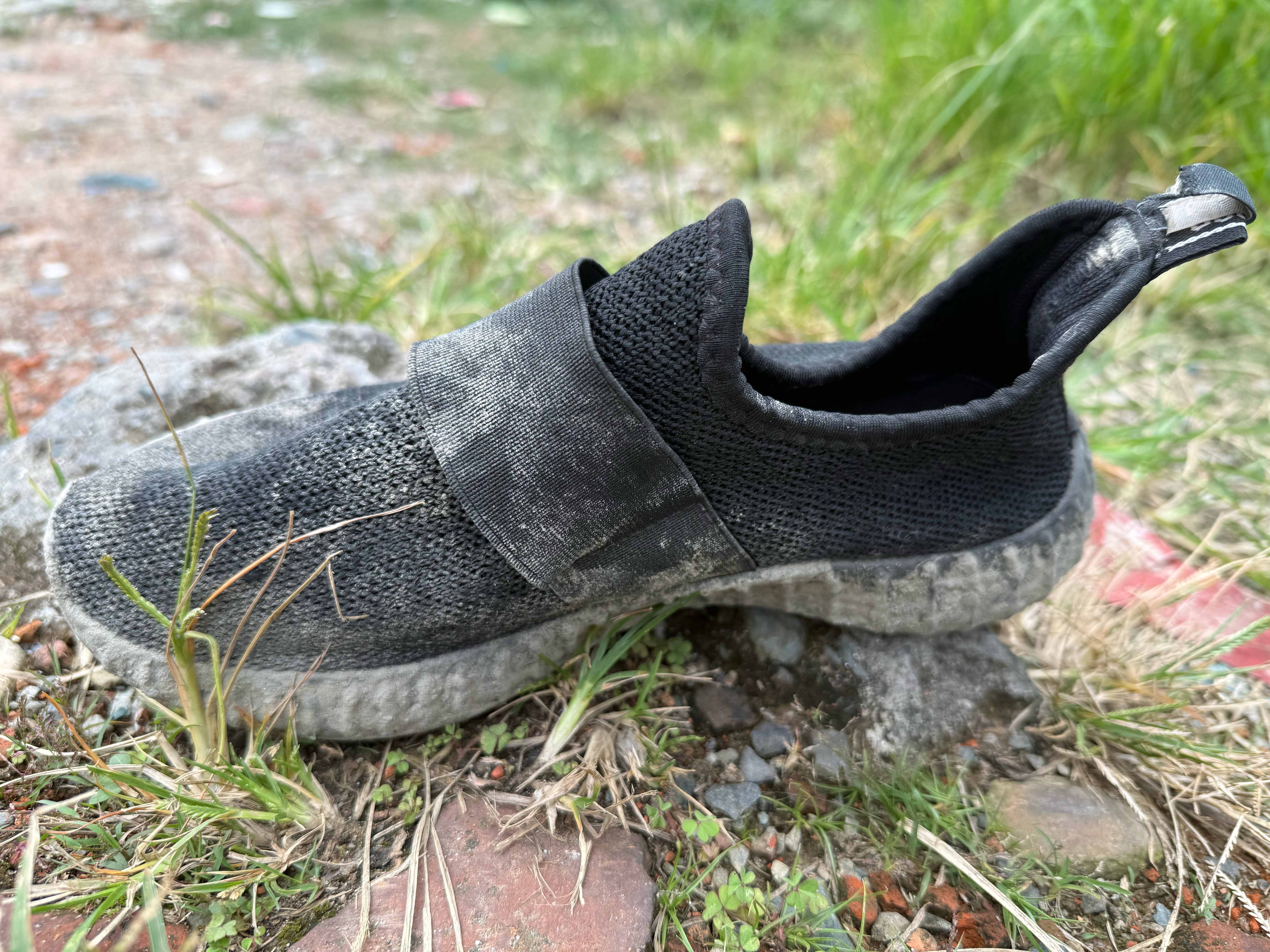
Thousands of families lost their homes.
Thousands of children lost the places where they felt safe.
And in a matter of minutes, entire communities lost their world. For countless children, the future they imagined is riddled with uncertainty now. School books buried beneath metres of mud. Bedrooms vanished. Favourite toys disappeared. Places where children once laughed, learned and felt safe became landscapes of devastation. Today, children who should be preparing for school, playing with friends and imagining bright futures are instead helping their families pick through debris, searching for pieces of the lives they once knew.
In that moment, trying to make sense of it all, the emotions came crashing over me like a tsunami. My heart became an ocean of conflicting emotions filled with stories of heartbreak, resilience, and the fragile hope that still remained.
Then came the glimmer of hope; I spotted Bimala uphill.
The joy that swept through my heart in that moment is difficult to put into words. Knowing they were safe felt like a prayer answered, a weight lifted from somewhere deep within. For a brief moment, amidst the chaos and uncertainty, there was relief. This is what reuniting felt like.
For some families, reunion arrives as tears of relief and hearts finally finding their way home; for others, the silence lingers as they wait, holding tightly to hope and news of those they love. In the shadow of this disaster, joy and sorrow walk hand in hand, while countless families still wait for their miracle.
The road to recovery cannot be measured in days or weeks. It will take time to rebuild homes, restore livelihoods, and heal hearts wounded by loss. But this is why World Vision is here, walking alongside children and families through the hardest days, offering hope where there is heartbreak and standing with communities as they begin to rebuild their future.
In the aftermath of the Nepal Flash Floods, World Vision is providing life-saving assistance to those most affected. In this first phase of our response, we aim to reach 5,000 people, including vulnerable children, across 1,000 households, ensuring families have the support they need not only to survive today, but to find strength for tomorrow.
Somewhere beneath the mud lie lost shoes, broken homes, and the remnants of a thousand ordinary tomorrows. Yet above it all, hope still stands, stubborn as sunlight after a storm, refusing to be washed away.
The flood may have rewritten the landscape, but it could not erase the strength of the people who call it home. And in the faces of women like Bimala, I found a reminder that even after the darkest waters, hope still finds a way to rise.