
A Lifeline for Rural Communities: How an Oxygen Filling Unit is Saving Lives in Qaryout

As violence continues to escalate across the West Bank, access to healthcare has become increasingly uncertain for thousands of families. Unprecedented levels of violence, road closures, and movement restrictions have severely disrupted access to essential medical services, particularly in rural communities. In recent months, ambulances have been targeted, delayed or prevented from reaching patients, healthcare workers have faced growing risks while responding to emergencies, and patients requiring urgent treatment have been stranded at checkpoints. For communities south of Nablus, where repeated road closures have often cut off access to the city and its hospitals, every delay can carry life-threatening consequences.
One recent tragedy illustrates these challenges. On 27 July, a pregnant woman from Qaryout lost her unborn baby after the ambulance transporting her was delayed at a checkpoint. This heartbreaking loss is a stark reminder of what restricted access to emergency healthcare can cost, and of the urgent need to strengthen local emergency response capacity in vulnerable communities.
Against this difficult backdrop, one small piece of infrastructure has made a meaningful difference: the installation of an Oxygen Filling Unit at the Palestinian Red Crescent Society Emergency Centre in Qaryout. By helping the centre prepare for emergencies and rely less on external facilities, the unit is helping ensure life-saving care stays available when communities are cut from hospitals.
Before the unit was installed, the emergency centre regularly faced oxygen shortages. Refilling a cylinder meant coordinating with hospitals and waiting for approvals before transport could even begin. During periods of insecurity and closures, this process often caused critical delays, putting patients at real risk and limiting the centre's ability to respond quickly.
The centre can now produce and refill oxygen cylinders on site, maintaining a steady supply that can sustain emergency operations for several months. It serves not only Qaryout but also neighbouring villages, which now turn to the centre whenever they need cylinders refilled — a modest change that has meaningfully widened access to this essential service across the area.
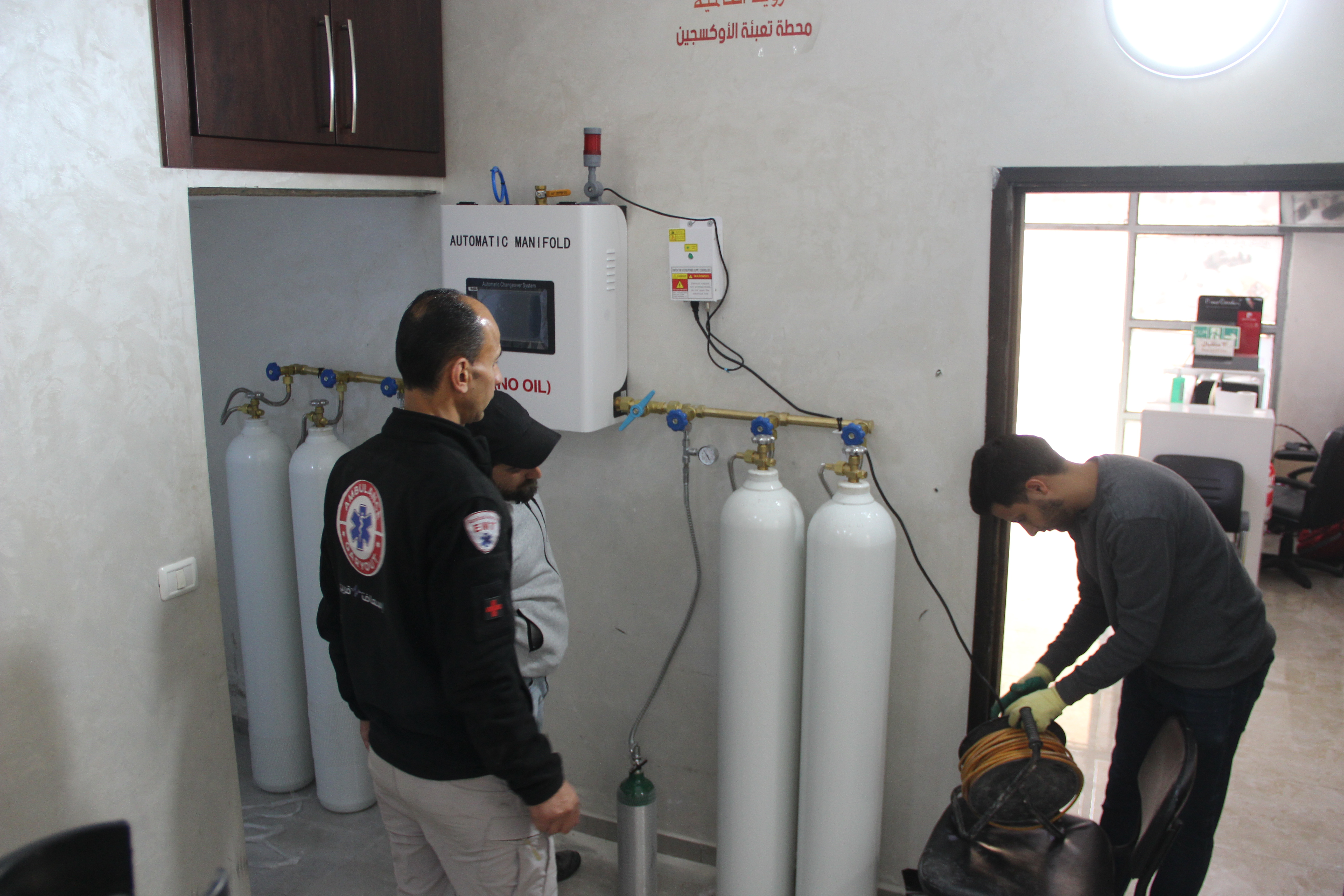
Since becoming operational, the unit has already been used to refill cylinders on three occasions, directly benefiting more than 40 patients from Qaryout and surrounding communities. Just as importantly, it has given local emergency responders greater confidence and readiness to act quickly when it matters most.
The provision of an ambulance and a patient stretcher to the same emergency centre has further supported faster, safer transport for patients in urgent need. In one case, a mother's life was saved thanks to prompt transport to hospital using this project-supported ambulance and stretcher — a simple but powerful example of what timely evacuation can mean for a family.
As Bashar Al-Qaryouti, Director of the Qaryout Emergency and Ambulance Centre and Head of the Palestinian Red Crescent Society's South Nablus Branch, put it:
“Today, we no longer have to wait for oxygen deliveries while lives are at risk. We can respond immediately, even when roads are closed or access to hospitals is severely restricted. This unit has transformed the way we serve our community. It has given us the confidence and capacity to save lives when every minute matters.”
By giving local responders, the tools to operate more independently, this modest investment has left behind a lasting resource that will continue serving the community well beyond the project itself. With the support of World Vision US, World Vision, in partnership with the Palestine Red Crescent Society, established the oxygen filling unit to strengthen local emergency health services in Qaryout. Today, it stands as a lifeline for Qaryout and neighbouring villages, ensuring that life-saving medical oxygen remains available when every minute counts, even as access to healthcare across the West Bank becomes increasingly uncertain.