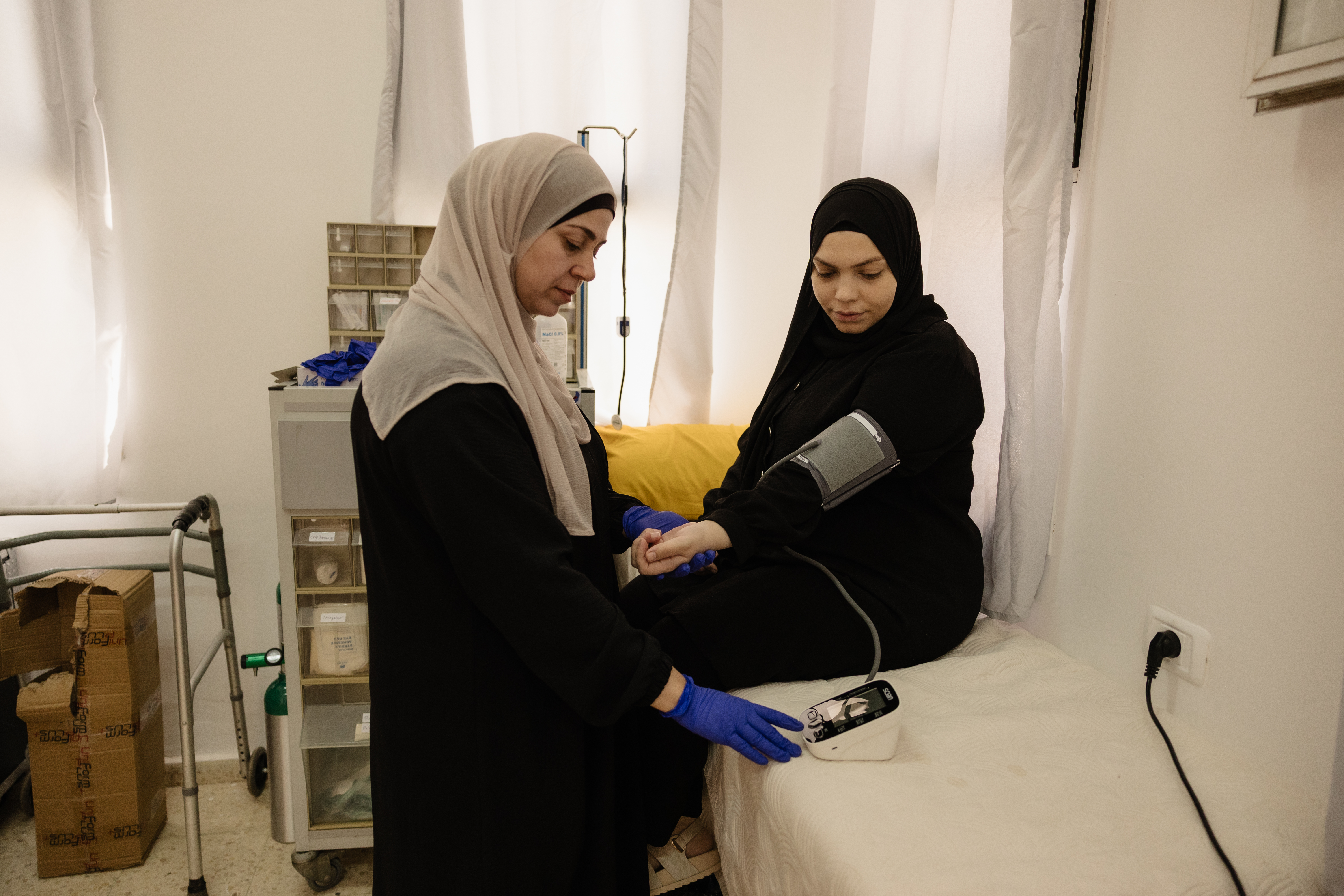
Strengthening Emergency Delivery Care in the West Bank: 121 Health Workers Trained Against All Odds

Across the West Bank, movement restrictions, checkpoints, road closures, and unpredictable security conditions continue to make it difficult for patients—and even medical staff—to reach health facilities when emergencies occur. For pregnant women, the consequences can be devastating. In some villages, the few kilometers to the nearest maternity ward can take hours due to restrictions on movements. Often, the closure of a single checkpoint can determine whether a mother delivers safely—or on the side of the road in life‑threatening conditions.
In this context, local health workers must often manage obstetric emergencies themselves, sometimes without guarantee that an ambulance will be able to reach the health clinic if something goes wrong. This reality makes hands‑on, practical training not just important but essential.
Empowering Health Workers With Lifesaving Skills
In August 2025, World Vision, in close partnership with the Ministry of Health (MoH), and with the financial support of the Aktion Deutschland Hilft (ADH), delivered a three‑week Emergency Delivery Training programme, equipping 121 nurses, doctors, and midwives with the skills needed to respond to maternal and newborn emergencies.
Over the course of the training, participants practiced managing some of the most dangerous complications in childbirth—from postpartum haemorrhage to obstructed labour—building confidence through realistic simulations and guided mentorship. These skills are crucial in the West Bank, where delays caused by movement restrictions often mean that frontline health workers are the first—and sometimes only—responders available to manage critical situations.
Overcoming Barriers to Make Training Possible
Implementing this training was not without obstacles. The team had to adapt quickly to sudden scheduling disruptions, changes in venue availability, and a reduction in official working days in the public sector due to the ongoing financial crisis. Limited staff availability, combined with logistical challenges linked to the movement constraints in the West Bank, required flexibility and rapid coordination.
Despite these barriers, the training was completed on time and in full. Through strong collaboration between the MoH and World Vision, creative problem‑solving, and a shared commitment to strengthening maternal health, all planned sessions were delivered without compromising quality.
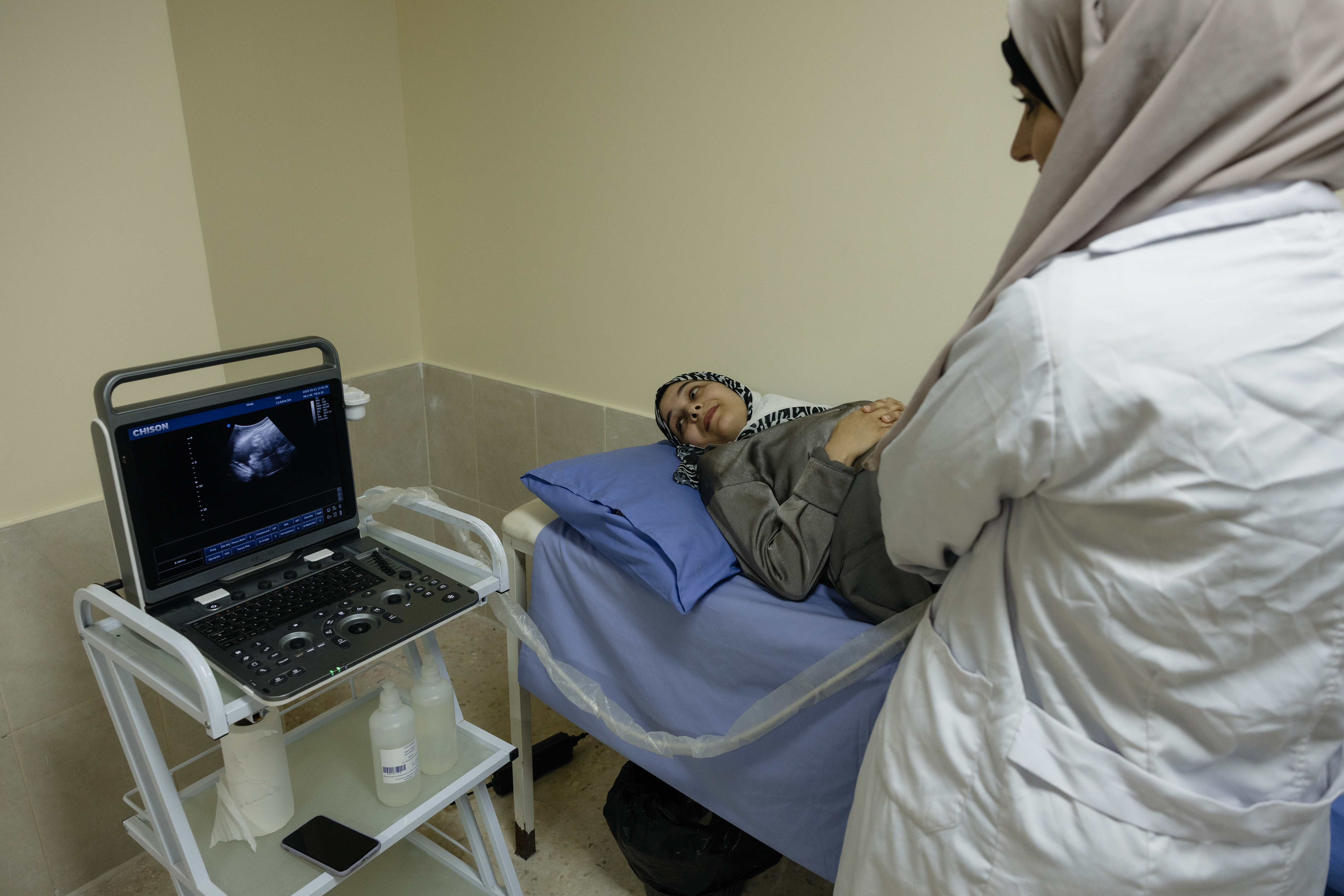
Skills That Save Lives
For many participants, the training was transformative. Manar Al Lahseh, a midwife who attended the sessions, reflected on how the course reshaped her ability to react in life‑threatening situations:
“One of the most important lessons for me was learning how to manage Shoulder Dystocia. I realized that in such cases, every second matters. I learned to act quickly by calling for help, such as requesting an ambulance, while continuing to assist the mother.”
Manar described practicing the McRoberts maneuver—a critical technique that can free a trapped shoulder during birth—along with the application of suprapubic pressure to help the baby pass safely. She also gained confidence in managing postpartum haemorrhage, a leading cause of maternal death:
“I learned to respond immediately by massaging the uterus continuously to stimulate contractions and applying bimanual compression. I also discovered that the hand itself can be used as a temporary balloon to stop the bleeding until medical assistance arrives. These techniques gave me confidence that I can save mothers’ lives.”
For Manar and the 120 other health workers trained, these skills have changed more than just their professional practice—they have strengthened their ability to protect mothers and newborns even when hospital access is delayed or impossible.
Building on the success of this training, World Vision and the MoH aim to expand similar capacity‑building programmes, ensuring that more health workers—especially those in remote or restricted areas—can confidently manage obstetric emergencies.