
Risk of Waterborne Diseases Grows in Flood Survivor Accommodation Centres in Mozambique

Health authorities stationed in accommodation centres assisting flood survivors fear that waterborne diseases may worsen the conditions of families who have taken refuge after being forced to abandon their homes due to flooding.
One of the accommodation centres is located in the Mozambican capital, Maputo, and is hosting more than 450 people. Half of them are children, while dozens are elderly and people with disabilities.
Zelino Bunguane, who is responsible for the accommodation centre located at a primary school in Boane District, said the center is facing several challenges, including limited access to clean water for flood victims and precarious sanitation conditions at the school.
“We have only two latrines at the school. Children and adults—everyone—has to use the same facilities, and we have very limited access to clean water,” he said.
One of the school classrooms is being used by local health authorities to assist an average of 50 patients per day, with most of the reported health issues related to diarrhea. One of the children receiving medical care is the eight-year-old son of Orpa.
“He developed a fever last night, and I thought it was best to take him to see the doctors. I was given medication that will help him recover,” said Orpa.
With only six rooms—one of them used as a temporary health unit—the remaining five rooms are sheltering more than 450 people. Authorities at the center are urgently calling for support with soap, blankets, mattresses, hygiene kits for women and girls, and clothing, as most displaced families were forced to leave behind all their belongings.
These supplies are especially needed by large families such as that of Elsa, who is staying at the center with her six children. One of them is 12-year-old Jaime, who requires additional care because of his disability.
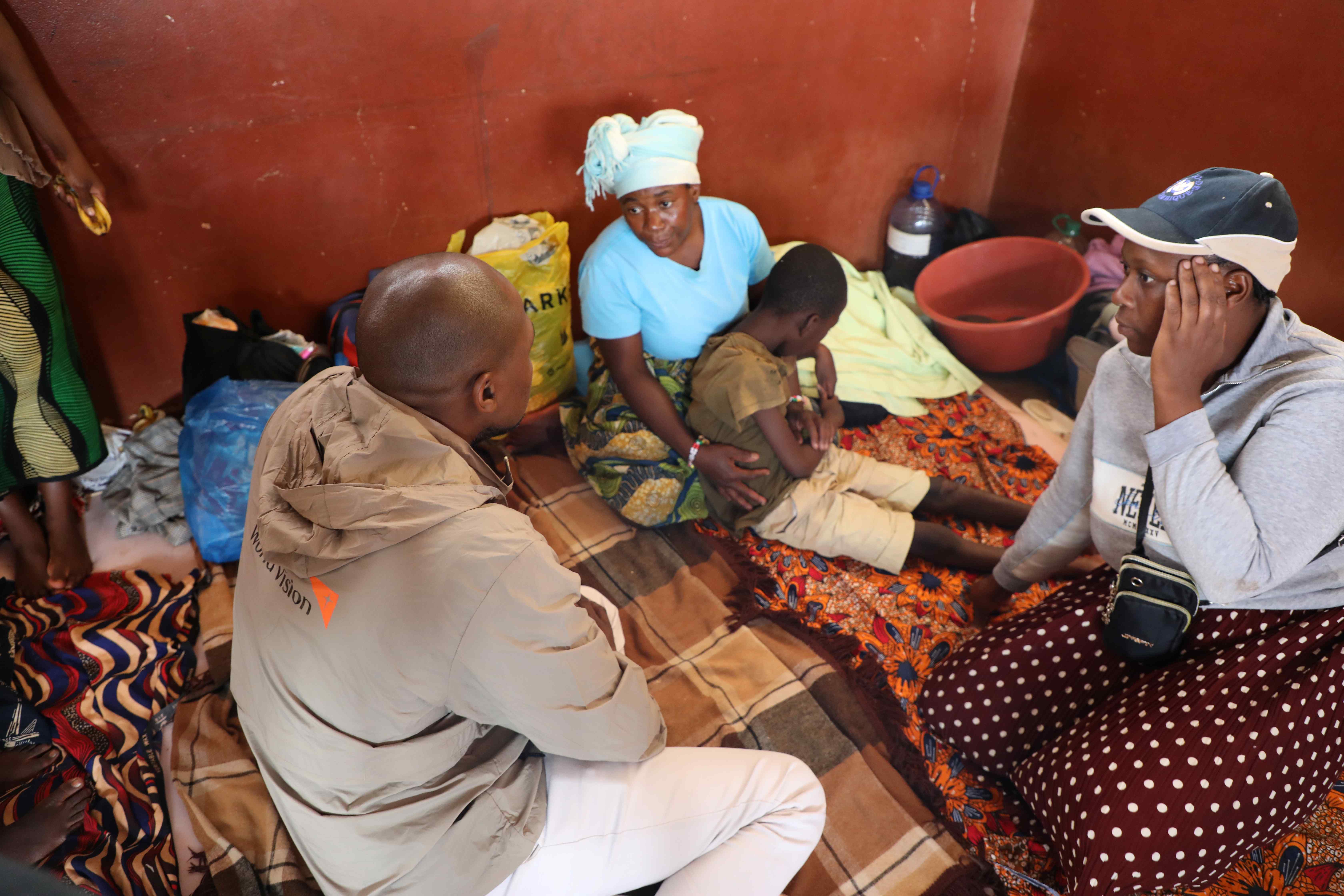
“We all sleep here with my children. This classroom is for women and their children. There are 36 of us, and we do not have enough mattresses, so we share the ones available. For someone like me, caring for a child with a disability who fully depends on me, the situation is even worse,” said Elsa.
Children at High Risk as Child Protection Mechanisms Are Not Yet Established
Angelica Manhica, from the Child Protection Services, said it is urgent to establish Child Protection Mechanism to engage people staying at the center to raise awareness about the importance of protecting children in an emergency context.
“Everyone is sharing the same space—rooms and bathrooms. This creates a high risk of child protection incidents. We need to establish safe spaces where these issues can be discussed with parents, so that children can feel secure and protected,” said Angelica.
Authorities and humanitarian partners continue to call for urgent support to address health, protection, and basic needs in the accommodation centres as flood impacts persist.