
New beginning for Buman: A South Sudanese mother finds strength through the Empowered Worldview

Buman was only 12 years old when conflict forced her family to flee to the Malakal Protection of Civilians site. Growing up in displacement shaped much of her life — until a training through her church helped her rediscover her worth and the strength to build a future.
When conflict forced her family to flee Malakal in 2014, then 12-year-old Buman lost the only home she had ever known. The Protection of Civilians (PoC) site became her new reality — a place of safety, but also of uncertainty — where she witnessed hardships that would shape her family’s future.
Growing up in the overcrowded settlement came with many limitations, but as a child, Buman adapted. It was later, as she stepped into adulthood, that the deeper struggles began.
In 2021, Buman fell in love, married, and gave birth to her first child. Life changed quickly. Her husband, a small-scale farmer and fisherman, earned modestly, but ongoing insecurity disrupted his work. Farms became inaccessible, fishing unsafe, and income nearly disappeared.
Providing for their growing family became a daily struggle. With no stable livelihood and mounting pressure, Buman began to lose hope. She questioned her self-worth and identity.
In 2024, during a Sunday church service, she heard her name called. Her church leader had selected her to attend a three-day Empowered Worldview (EWV) training. At first, she went simply out of respect for the church. But what she experienced changed her life.
“After the training, I felt like this was the one thing I had been missing,” she recalls. “They taught us about our value as people created in God’s image. It gave me hope.”
For the first time in years, Buman began to see her inner strength and the potential she carried to transform her situation. The training encouraged participants to look beyond external assistance and to use the resources already available to them.
“They taught us how to use what we have to improve our lives as people of God,” she says.
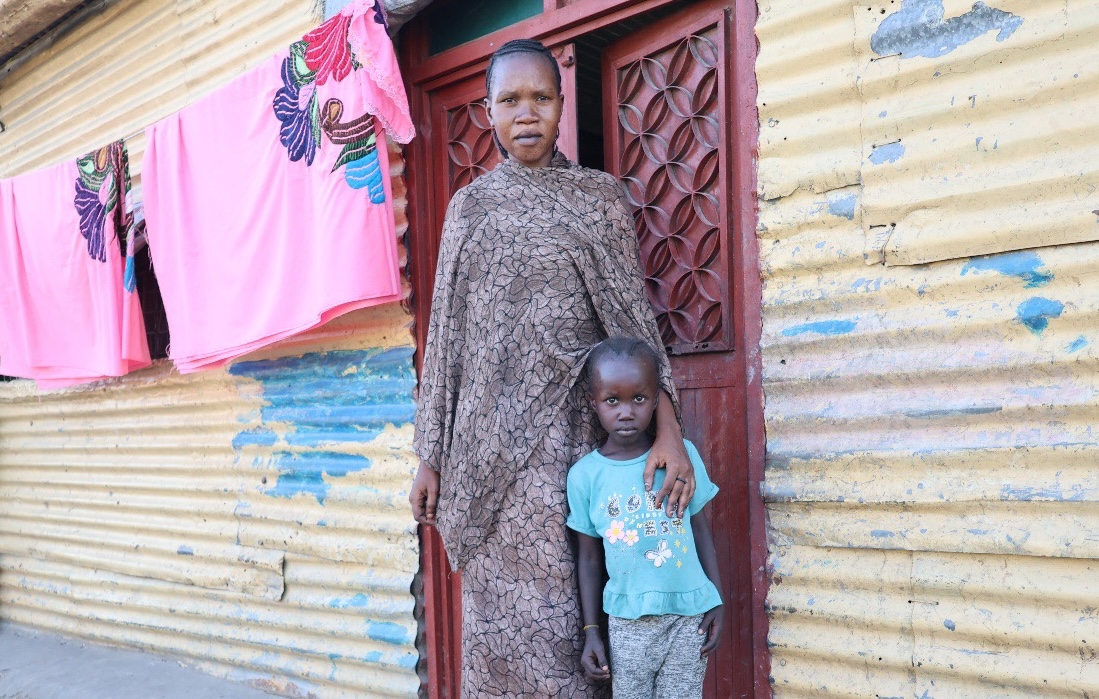
Inspired, Buman returned home determined to act. One morning, she gathered the courage to approach a shop owner who is a friend of her husband, and asked if he could lend her some wheat flour and cooking oil.
She remembered the traditional biscuits she used to make with her mother as a child. With that memory and borrowed ingredients, she began baking from the small veranda of her shelter.
Within three days, she earned 60,000 SSP (approximately US$ 10). After repaying the cost of flour and oil, she was left with a profit of 20,000 SSP (approximately US$ 3)— the first income she had independently generated in years.
Today, through consistency and hard work, Buman earns up to 130,000 SSP (approximately US$ 22) in profit per week from her biscuit business. The income helps her provide food and basic necessities for her children, support her husband during difficult times, and save for emergencies such as illness. With growing confidence, she has also begun making and selling bedsheets, believing her business will expand as more customers discover her products.
She is not only supporting her family; she has become a source of inspiration for other women in the PoC who dream of starting something small but lack the courage.
“I now know who I am,” she says. “I know my value. And I know I can build a better life for my family.”
About Empowered Worldview
Empowered Worldview (EWV) is World Vision’s biblically grounded approach to empowering individuals, faith actors, and communities to drive lasting change. Its goal is to mobilise people’s God-given gifts, talents, and resources — spiritual, social, physical, and economic — to improve sustainable child well-being.
EWV addresses dependency mindsets by promoting dignity, personal responsibility, and initiative. Through a curriculum rooted in biblical principles, participants reflect on identity, hope, and vision for the future, building confidence to take action.
In South Sudan, EWV has helped families work together, start businesses, and create brighter futures for their children.
Story and photos by Alan Leju/World Vision